This article was updated on 1/20/25.
What is it like to be LGBTQ+ professional in a field that provides services to diverse populations, but lacks representation in the field itself?
While future and current practitioners in the field of communication sciences and disorders (CSD) will engage with clients from myriad backgrounds — most definitely including the LGBTQ+ community — the practitioners are predominantly straight, white females.
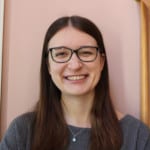
Nora Mahon, an undergraduate CSD major at Cleveland State University, is challenging those norms.
The 21-year-old Mahon is one of the cofounders of the LGBTQ+ Communication Sciences and Disorders Student Association (LGBTQ+ CSDSA), a national student organization that seeks to support the LGBTQ+ community within this field. With members from all across the nation, the LGBTQ+ CSDSA provides a safe space for a diverse group of CSD students to come together and support one another.
“Our main goals have always been to create that national community that our students aren’t finding locally, and to support them in whatever ways we can,” said Mahon, who has also written pieces for The Buckeye Flame.
Mahon stresses the importance of mentorship and how providing support at a national level gives LGBTQ+ students the opportunity to connect with mentors across the country who can help CSD students gain the support and understanding they deserve.
“We want to be the helping hand that lets students have a better experience in their programs,” explained Mahon, speaking to the value of mentorship and support within the organization.
Upon its launch during last year’s Pride Month, this organization has ushered in a mentorship program, social events, online Zoom events, and a website rife with valuable resources. According to Mahon, such resources are integral to help CSD faculty members gain the knowledge necessary to best support LGBTQ+ students. Providing information to faculty members who may not yet understand certain concepts — such as how to navigate pronouns — is pivotal to help bridge any gaps and to help LGBTQ+ students feel at home in their field.
According to Mahon, this organization has garnered nothing but positivity from individuals in CSD. Support has been pouring in from across the country, with LGBTQ+ students, professionals, and allies alike expressing how such a network has been long-awaited and well-needed.
“It’s really good to just feel the weight of the community behind an organization and initiative like this,” said Mahon.
Such a support network is more beneficial than ever in the field of CSD. Future and current practitioners typically notice right away how there are very few male individuals in the field, let alone out LGBTQ+ individuals or practitioners of color.
“We’re in this field that is honestly historic in its lack of diversity,” said Mahon.
Despite the lack of representation among CSD practitioners, Mahon stresses the importance of being more open and inclusive so that all practitioners, regardless of their identity, can spread support, advocacy, and awareness to LGBTQ+ clients. However, with many CSD students believing that knowledge of LGBTQ+ competencies is only necessary when providing gender affirming voice therapy, practitioners often feel that they will not need to be prepared to interact with LGBTQ+ clients in schools or other settings.
“What they’re missing is queer kids in that school or LGBTQ+ adults in any setting that professionals are not supporting as fully as they could be,” cautioned Mahon. “We’re missing that component because people write it off.”
Since practitioners may have an LGBTQ+ client in any setting, Mahon explains that the mentality must shift to a realization that LGBTQ+ people are everywhere.” Such a mentality should lead to cultural competencies and changes ensuring that all individuals in the field of CSD are more prepared to support LGBTQ+ students, clients, and the community at large. It’s up to practitioners to have the competencies necessary to be receptive to the needs of LGBTQ+ clients, which can further help them feel supported, validated, and heard.
Looking ahead, Mahon says it’s up to future and current practitioners to spread awareness of and advocacy for the LGBTQ+ community so that LGBTQ+ students and clients alike can receive the support they deserve. Mahon explains that students joining the field should seize any opportunities available to support them, whether that’s in the form of a mentor, a faculty member, or joining the LGBTQ+ CSDA organization.
“Jump right in,” Mahon says to prospective LGBTQ+ students considering the field of CSD. “It’s an incredible field that has such breadth and depth; there’s really something for everybody in here.” 🔥
IGNITE ACTION
- Learn more about the LGBTQ+ Communication Sciences & Disorders Student Association by going to their website.
Know an LGBTQ+ Ohio story we should cover? TELL US!
Submit a story!