This story was made possible by the support of Pennrose. The John Arthur Flats are currently accepting new leasing applications.
Ron Clemons moved away from Mansfield, Ohio, as soon as he was old enough to leave.
“I knew I had to get out of there,” he says. “That’s exactly what I did, and I never looked back.”
I meet Ron for breakfast at Blue Jay Restaurant in Cincinnati’s Northside neighborhood, where the city’s LGBTQ+ community have largely lived and worked since the 1970s.
The wood-paneled diner is certainly queer friendly. At the counter, regulars hunch over piles of toast and hashbrowns.
Ron, who is also member of The Buckeye Flame‘s board of directors, is waiting in a green, vinyl booth near the door.
Over coffee, eggs and toast with jelly, he talks about reframing his life as a Black, gay elder.
“…I think about taking the path of most resistance,” he says. “When I think about my life, I’ve done that.”

“…I think about taking the path of most resistance. When I think about my life, I’ve done that.”
– Ron Clemons
In Cincinnati, Ron enrolled at Miami University. He came out as gay and was elected president of his dormitory. He graduated, became a social worker, and picked up a camera for the first time as a graduate student.
Over the next four decades, Ron documented life as a Black, gay man in Cincinnati, and participated in it to the fullest — from leather and kink competitions and queer bowling leagues to cruising downtown and weekend picnics around the gazebo at Burnet Woods.
Homophobia, transphobia and racism can make the aging process complicated, traumatizing and even dangerous, particularly for Black queer people.
Too often, LGBTQ+ elders are forced back into the closet in order to receive the care they need as they age.
Ron refuses to do that.
Like many LGBTQ+ people, he isn’t interested in growing older the way most people do.
“People think you have to do certain things or behave a certain way as you get older,” he says. “So I’m always wanting to push back against those kinds of stereotypes.”
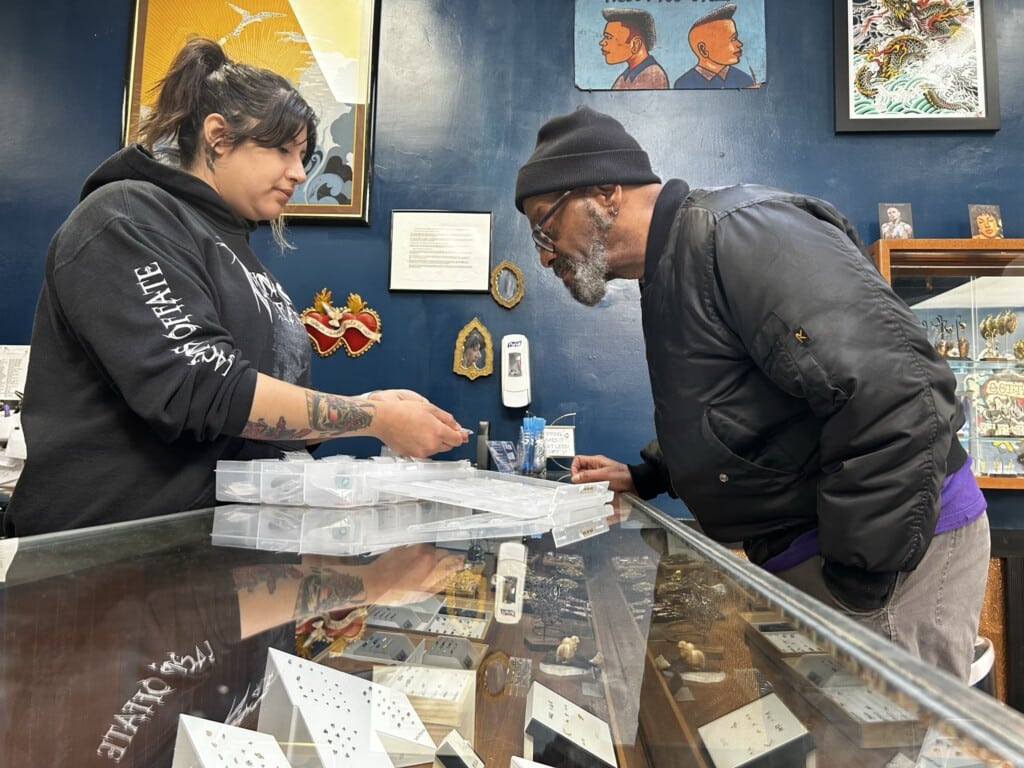
At Skincraft, an LGBTQ+ friendly piercing and tattoo shop in Northside, Ron browses a glass case for new jewelry.
He has been pierced and tattooed at Skincraft before, and will likely return in a few months for another body modification to mark his seventieth birthday.
A few doors down at LGBTQ+ owned clothing store Casablanca Vintage, Ron parses through a row of vintage jackets.
“I remember shopping for the weekend,” he says. “Taking what little I had left over after paying my bills, being a student, and buying that pair of platform shoes just because I was going out to the bars and I wanted to look good.”
“People think we just disappear,” he says. “People think being older can’t also be sexy.”
A longtime member of Tri-State Leather, Ron knows otherwise — and hopes other LGBTQ+ elders know they can age in whichever ways feel best for them, regardless of societal expectations and without fear of ending up back in the closet.

John Arthur Flats is a new, modern affordable housing option for LGBTQ+ people over the age of 55, just a few blocks east of the Blue Jay Restaurant.
Between the two, there is a longstanding corridor of queer nightlife. The Serpent, a famed leather bar where Ron spent many nights and weekends, is now occupied by queer-friendly Tillie’s Lounge.
From the sidewalk, the John Arthur Flats look sleek and modern — within walking distance of the neighborhood’s main business thoroughfare, community spaces like WordPlay Cincy and several bus lines that connect riders to downtown amenities in under 30 minutes.

As LGBTQ+ people are able to live longer, healthier lives, many of their specific needs go unmet by larger society — including accessible housing and healthcare.
Caracole, an HIV/AIDS organization with deep LGBTQ+ roots that brought one of the state’s only harm reduction vending machines to the neighborhood, is just a two minute walk from the entrance to the John Arthur Flats.
Since the John Arthur Flats were completed, Caracole has provided LGBTQ+ residents with care via their onsite clinic, including free HIV and STI testing and access to other harm reduction essentials like condoms and fentanyl test strips.
Currently, Ron serves as the member of Caracole’s board of directors.

At the corner of Hamilton Avenue and Knowlton Street, Caracole’s offices occupy the former Charles A. Miller and Sons funeral home, one of the only death care facilities in the city willing to accept the bodies of LGBTQ+ people during the early parts of the AIDS epidemic.
“It really is a full circle kind of thing,” Ron says, passing portraits he took of former board members and administrators.
“There’s a lot of history here,” adds Caracole CEO Linda Seiter. “We’ve been doing AIDS work together for 30 years.”

Findlay Market — where local vendors sell everything from fresh fruits and vegetables to specialty meats, cheese and baked goods — is accessible by bus from Northside in about 25 minutes.
LGBTQ+ people are more likely than their straight and cisgender peers to experience poverty, housing and food insecurity. As queer people age, those problems don’t just go away. In fact, they often escalate.
At Findlay Market, vendors accept SNAP, produce perks and EBT, which gives many elders access to local, fresh food options.
As an added bonus, we stopped by with LGBTQ+ owned pet store Pet Wants to browse local, organic options for cats and dogs.

Accessible by bus via the 6 line, bLack Coffee Lounge is a queer friendly, Black space just north of downtown serving coffee and hosting community events centering Black artists and musicians.
Around the corner, The Birdcage has drawn the LGBTQ+ crowd downtown for cocktails, dance parties and drag events since it replaced a country-western bar in 2018.
At the counter, Ron orders a hot chocolate.
“I can’t really separate being gay from being Black,” Ron says, glancing at a mural celebrating Black creativity and community. “I wanted to include [bLack Coffee Lounge] for that reason.”
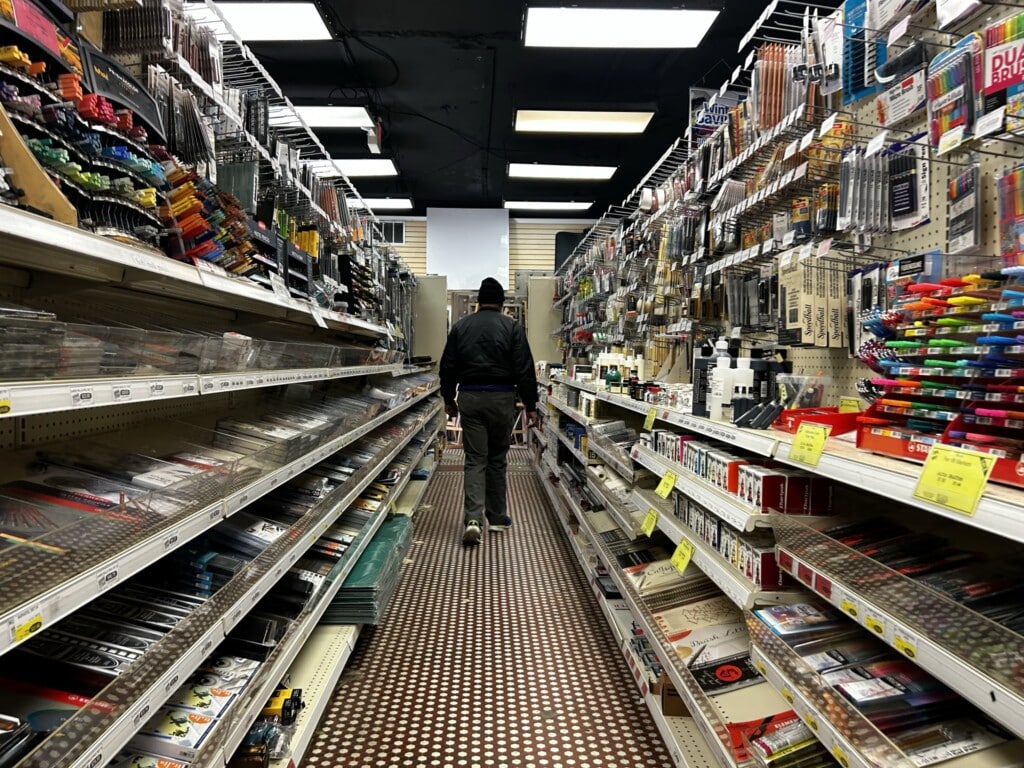
A few miles north in Clifton Heights, we stop at LGBTQ+ owned art supply store, Plaza Artist Material and Picture Framing.
A photographer by trade, Ron looks through a stack of canvases.
“I’ve been thinking of trying painting,” he says.
A few blocks west, LGBTQ+ owned Home Base Tavern offers cheap drinks in a dive atmosphere, drawing loyal queer crowds for drag and karaoke. But our final destination is someplace much quieter.
In the basement of Mount Auburn Presbyterian Church, LGBTQ+ Pride flags line the walls of cozy community space.
TreeHouse Cincinnati is an LGBTQ+ non-profit organization founded in 2020, designed by its root organizations to be a collaborative hub for LGBTQ+ people and programming.
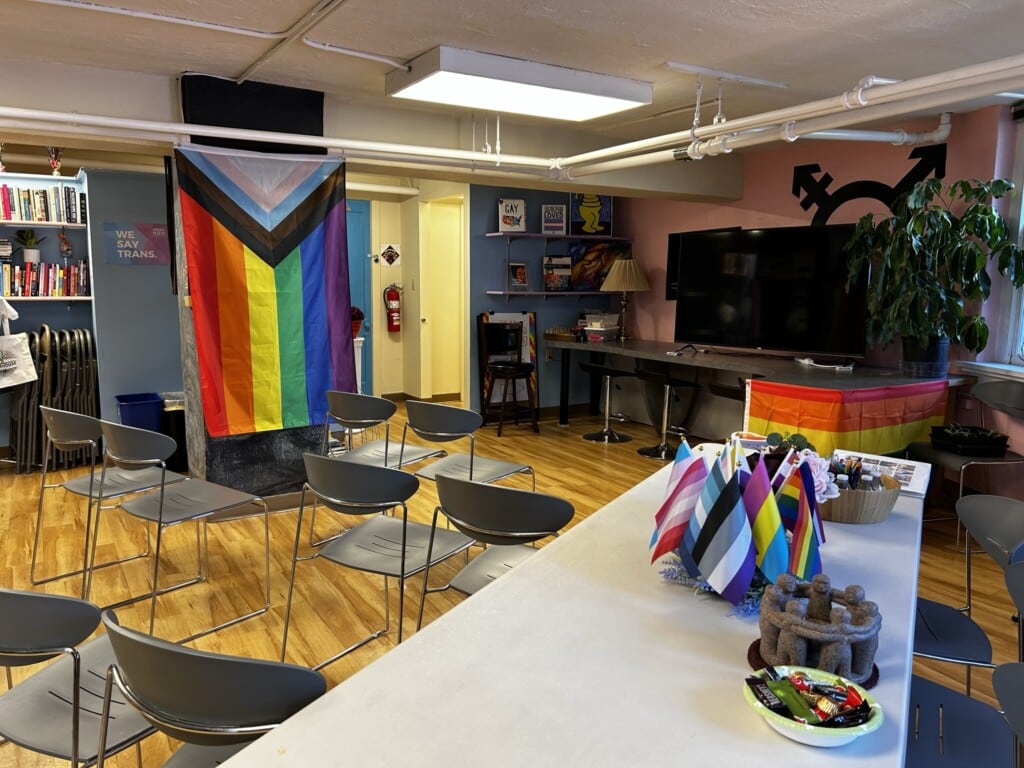
Today, chairs are arranged in a half circle for a viewing of “The Color Purple,” but TreeHouse also hosts weekly LGBTQ+ support groups and monthly wellness spaces
For Ron, places like this one — where Blackness and queerness are embraced — have been life changing over the decades.
Now he wants other LGBTQ+ people, particularly queer elders, to experience the power of those spaces too.
“People say, ‘We lost a whole generation to the AIDS epidemic,’” he says. “But so many of us are still here. We are living breathing people and people act like we don’t exist.”
“I’ve always thought of this as a spiritual thing for me,” Ron says. “It didn’t set the world on fire, but it wasn’t the easiest path to take.”
“I truly followed my spirit,” he adds — with no plans to change that anytime soon. 🔥
ignite action:
- To learn more about leasing options at the John Arthur Flats, click here.

Know an LGBTQ+ Ohio story we should cover? TELL US!
Submit a story!