
An Ohio school board defeats an anti-LGBTQ+ resolution by the slimmest of margins
Public debate raged for nearly two hours, with many speakers asserting that trans bathroom access would enable sexual assault.
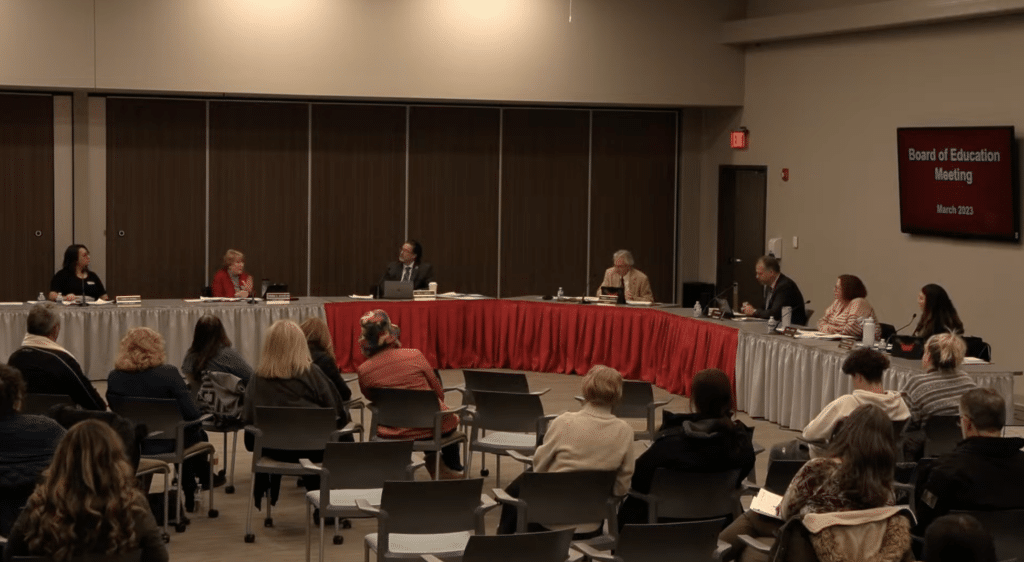
In an hours-long, contentious meeting, an Ohio school board narrowly voted down an anti-LGBTQ+ resolution that was previously passed by Ohio’s State Board of Education in December.
In a 3-2 vote on March 14, the Mentor Exempted Village School District Board of Education declined to approve the “Shea Resolution.”
The school district is located in Mentor, the largest city in northeast Ohio’s Lake County.
Named in reference to Brendan Shea – the conservative Madison County state school board member who originally proposed the language last September – the resolution called for Mentor schools to:
- Oppose the federal government’s application of Title IX that included protections for LGBTQ+ students.
- Support Attorney General Dave Yost’s lawsuit against the Biden administration, joining Ohio with 21 other states seeking to allow LGBTQ+ discrimination.
- Urge the Ohio legislation to safeguard “the inviolable rights of parents, the innocence of children. the rights, privacy, safety, and opportunities of women and girls in schools and athletics, and local control of school districts.”

Superintendent remarks
Before the resolution was debated, Superintendent Craig Heath began the meeting by explaining the district’s policy on surveys regarding students’ names and pronouns. He detailed that surveys would not be allowed in grades K-5, and that they would only be permitted in grades 6-12 if the surveys were shared with families one week prior to their distribution.
“The family has the opportunity to opt out,” Heath said.
Heath further explained that if students in grades K-8 request a different name or pronoun than is on their records, the teacher will work with the principal and the school counselor to communicate with the student’s family. For students in grades 9-12, the teacher will encourage the student to speak with their counselor to work on a communication plan.
Finally, in a nod to the debate that was about to begin, Health said that current case law supports trans students’ rights with regard to bathroom usage. He explained that the school would work individually with trans students to identify the best bathroom plan.
“We will look at all the available options to make sure we are compliant while keeping all of our students as safe as we can,” Heath said.
Public participation
Before the Board debated the Shea Resolution, dozens of members of the local community approached the microphone to share their thoughts.
For almost two hours, the speakers alternated between those attacking and those defending the rights of trans students.
“There are only two genders,” said Michael Williams, the first speaker, whose statement was met with raucous applause.
Multiple speakers invoked the trope of women being assaulted if trans students were allowed to use the restrooms that correspond to their gender identity.
“Sexual predators would pose as transgender people in order to gain access to our female students,” one speaker said.
Others more generally decried the moral decline of a society that would support transgender students.
“What happened to our morals?” one speaker asked. “Our morals are something of the past. We had no LGBTQs back then and no transgenders. So where is this country going?”
Brady Anderson, a trans student, spoke to put a human face on the anti-trans rhetoric that was publicly on display.
“Here I am as one of the scary trans kids some of these parents are worried about. What about my rights?” Anderson asked.
Supporters of trans students’ rights highlighted the bullying that trans children have experienced in Mentor, questioned why such a resolution was necessary and tried to explain the harm in passing such language.
“This is a direct attack on an already vulnerable community,” said one parent of a trans child.
The Board debates
The resolution was brought forward by Board President Thomas Tuttle and Board Member Annie Payne, both Republicans.
When pressed by other board members as to why he was bringing this resolution forward, Tuttle visibly struggled to answer, spending two minutes looking for a report he couldn’t find. When he did respond, he quoted the Alliance Defending Freedom, the notoriously anti-LGBTQ+ legal advocacy group, designated a hate group by the Southern Poverty Law Center.
Tuttle also appeared to struggle with the numbers that were referenced during the meeting. At one point, Superintendent Heath shared that staff at Mentor schools were working with 30 trans students.
“It’s on the increase from 6,” Tuttle jumped in, conflating the current number of trans athletes approved by the Ohio High School Athletic Association with the number of trans students in Mentor.
Heath had to explain the difference in numbers to Tuttle.
Payne repeatedly took charge of the conversation, jumping in when Tuttle paused. She reiterated the fears about predators accessing restrooms before praising the Shea resolution.
“We now have the guidance we have been waiting for from the State Board of Education,” she said.
The other three members of the Board disagreed.
Board Member Virginia Jeschelnig said that letters submitted to the Board opposing the resolution outnumbered those received that supported the language. She also questioned the purpose in passing such a resolution.
“Why do we need to pass a resolution that has no authority to change the law as it exists?” Jeschelnig asked.
Board Vice President Maggie Cook highlighted that LGBTQ+ youth who attend a gender-affirming school experience significantly less attempts of suicide. She said that the anti-LGBTQ+ language creates an unsupportive climate.
“This resolution is not protecting our district,” Cook said.
Board Member Mary Bryner said the Board’s job was to be focused on moving the district forward and that the resolution stood in opposition to that.
“This type of resolution is morally reprehensible,”Bryner said.
Tuttle and Payne voted for the resolution. Cook, Bryner and Jeschelnig voted against, narrowly defeating the motion.
The results of the vote were announced to a loud mix of applause and booing. 🔥
Know an LGBTQ+ Ohio story we should cover? TELL US!
Submit a story!
Author

Related Articles
Ohio gets a failing mark on sex education policy from national group
Ohio’s curriculum stresses abstinence as a general policy and requires only some instruction about sexually transmitted infections.

Trans kids are vulnerable to eating disorders. This therapist knows what they’re going through.
Penny Gautreaux knows that anti-trans policies and social media are adding fuel to the fire, but she says there’s still help available.

Author Peyton June channels her Ohio childhood into sci-fi horror novel ‘The Monsters We Made’
“I feel like teenagers – especially with times like these, especially queer kids – are either going to want something that’s wish fulfillment, light and fluffy to escape or something that reflects the horrors that they feel are happening.”
