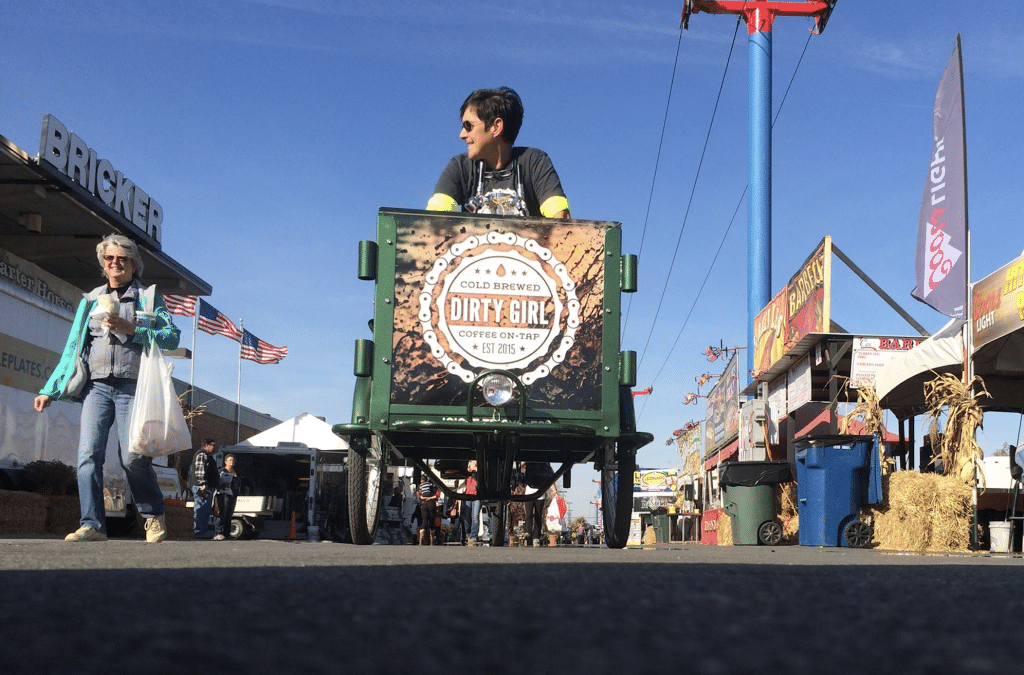
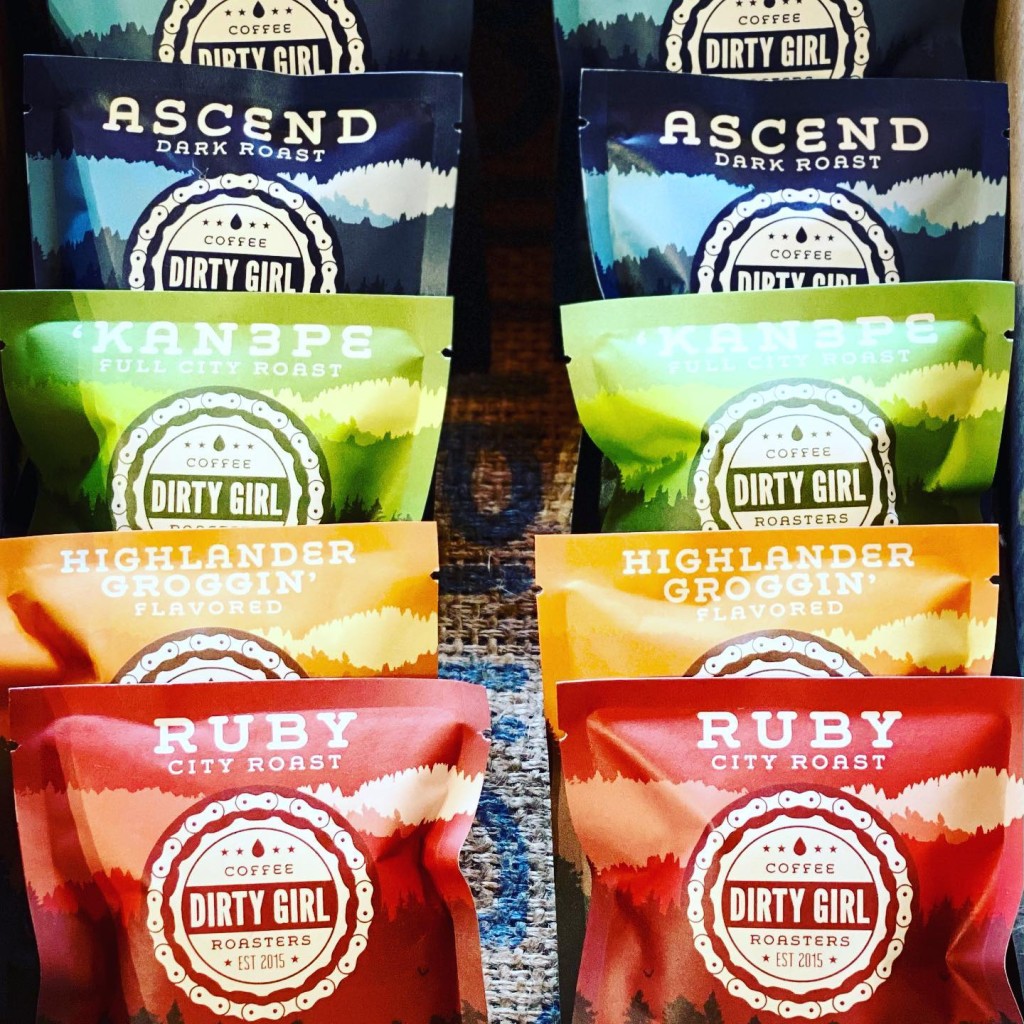
Dirty Girl coffee is an LGBTQ+ owned small-batch coffee roaster based in the village of Glouster in Athens County, Ohio—and it’s so much more. The roastery, which expanded into a storefront this June, sells coffee and teas with a mission to promote women’s economic prosperity in Appalachia.
Owner Jane Cavarozzi began Dirty Girl Coffee as a home project, selling nitro cold brews at the local farmer’s market. “I like beer. I like coffee,” said Cavarozzi. “This is coffee that pours like beer. This is super fun. I’m in.”
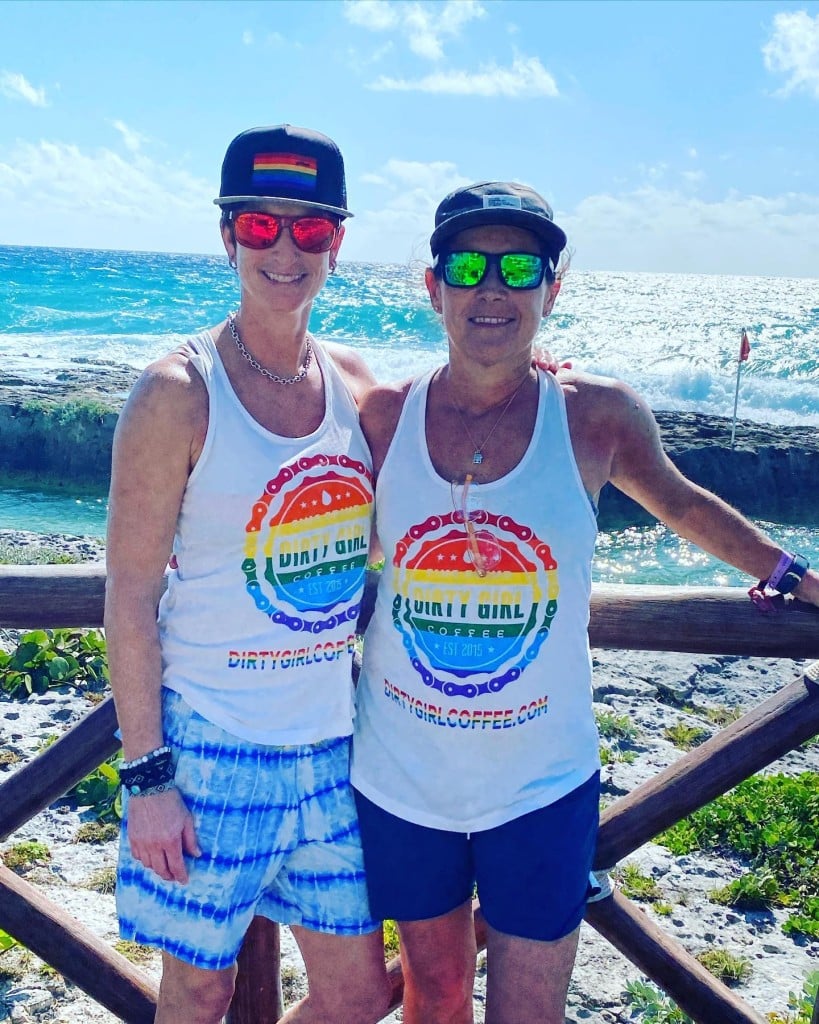
After several unsuccessful spitballing sessions where she and her wife, Kara Tripp, tried to name the business, they landed on “Dirty Girl” after a day on the lake at nearby Burr Oak State Park.
Their rescue dog, Gypsy, had come running onto the boat, covered in muck—and shook herself clean. Cavarozzi, Tripp and their friends were all splattered.
“We’re a bunch of dirty girls,” Cavarozzi recalled them saying. That was it.
“There are so many stories [of powerful women] in this community, we thought it would just be a great way to honor that,” said Cavarozzi.
For Cavarozzi, the coffee business’ prosperity goes hand in with the community’s prosperity. While she has been growing the coffee company, she has simultaneously become active in the community, working to bring more jobs and businesses to the area and improve the quality of life for women. As Dirty Girl’s mission statement reads, “where women thrive, communities thrive.”
Revitalizing Glouster, Ohio
Cavarozzi decided to start her company and community efforts in Glouster during a break from corporate life. She’d been offered a golden parachute by the company she worked for, and she and Tripp decided to take a two-week vacation to their second home, a lake house near Burr Oak State Park.
Tripp soon convinced Cavarozzi to make the two-week vacation a year. But just 10 days into the relaxation and pontoon-boating, a chance encounter sent Cavarozzi on her next journey.
“I had an interaction with a woman at the gas station who was clearly in need of resources,” said Cavarozzi. “She probably had developmental disabilities and, and in this town at the time, and even now, buildings are crumbling, nothing was open, there were no resources or safe spaces for this person. And it just was very concerning. And so I thought, well, let’s figure out why this place is so economically distressed.”

She decided to look deeper into the community. “When you come into a vacant town with nine empty buildings that are in significant disrepair, you get a chance to say, ‘What does this community need?’”
Glouster is what the U.S. Department of Agriculture designates a low-income, low-access area: meaning the annual income is at or below 200% of the federal poverty threshold and to obtain food, locals have to travel more than 10 miles.
According to the latest U.S. Census data, the median household income in Glouster is less than $35,000. With a scarcity of local jobs, the average commute time to work for a Glouster citizen is 30 minutes.
“This town in particular is a typical coal town, so the jobs left and the town crumbled,” said Cavarozzi. “So the thought is, if we can bring in an economic base, then the town can recover.”
Swinging for the fences
Cavarozzi’s idea was to attract companies from the West Coast to the area. She lined up three companies who were willing to bring jobs. The plan, however, ultimately didn’t receive any traction. To the people in power in the county at the time, she was a flatlander (someone not from Appalachia) who surely couldn’t actually pull something like that off.
“I didn’t have the street cred,” said Cavarozzi. “And so that really contributed to Dirty Girl Coffee.”
Cavarozzi used Dirty Girl Coffee to get into the farmer’s market and get to know the local economic players. She has since earned roles on local boards like Athens County Foundation Board, the Ohio Women’s Coalition board and the Glouster Revitalization Organization (GRO).
GRO has been able to start multiple projects with the help of local government and donations and grants for community development from places like Finance Fund of Central Ohio and Ohio Southeast Economic Development. GRO also received a $1.7 million grant from the Governor’s Office of Appalachia.
That influx of money has helped fund projects like the purchase and planned renovation of the historic Knights of Pythias building in Glouster. The first floor of the building will feature a food co-op with capacity for up to six local food vendors, giving locals better access to fresh food. The second floor will host a remote work center and community co-working space to support entrepreneurial endeavors in the community.
After the demolition of a structurally unsafe building in town, GRO installed the Sedalia Crossing Park—a community park and event space where the village now hosts Glouster First Fridays, which include live music, food trucks and local vendors.
A nearly vacant town needs things like a coffee shop, a source of food, a place to work and a place to gather, said Cavarozzi. So that’s where they’ve started.
“So when kids graduate high school, instead of having to leave town, they can take living wage jobs in that building, making 50 grand a year,” she said. “And we think that if we can create that economic cornerstone, that’s going to help the residential sector in this community.
In the future, Cavarozzi hopes to use what she’s learned in Glouster to keep changing the world one pour at a time.
“It’s a big strategy. It’s a kind of swing-for-the-fences, and we hope it’s a model for other communities.” 🔥
Ignite Action
- Learn more about Dirty Girl Coffee (and shop their products!) by going to their website. Follow them on Facebook and Instagram too.
- To support the Glouster Revitalization Organization (GRO), go here.
Know an LGBTQ+ Ohio story we should cover? TELL US!
Submit a story!