In the past several years, and especially since COVID, our communities have gotten better at talking about mental health. And I’m grateful, because I am what’s called “dual diagnosis.” This means I have a severe mental illness (SMI) diagnosis, and a substance use disorder (SUD) diagnosis.
In the past, many mental health providers were only equipped to deal with one of those diagnoses. I am glad that progress in the behavioral health sector has meant more providers are more prepared for people like me.
As I walk my own journey of access to care, and as I walk alongside others as a queer community organizer in Cleveland, I am seeing the stigma we are all familiar with play out in our health and in our lives.
For bi+ community members, especially those like me who need to seek out specialized healthcare, it can feel that there is no safe space. I have never had a healthcare provider who understood my identity, body or lifestyle. I have always had to coach, offer new knowledge, provide direction and advocate for my specific needs.
Health outcomes for bi+ people are different, and so are our experiences: our closet looks different, and what keeps us in the closet—or pushes us back in when we try to come out—is different.
Adding to the oppression
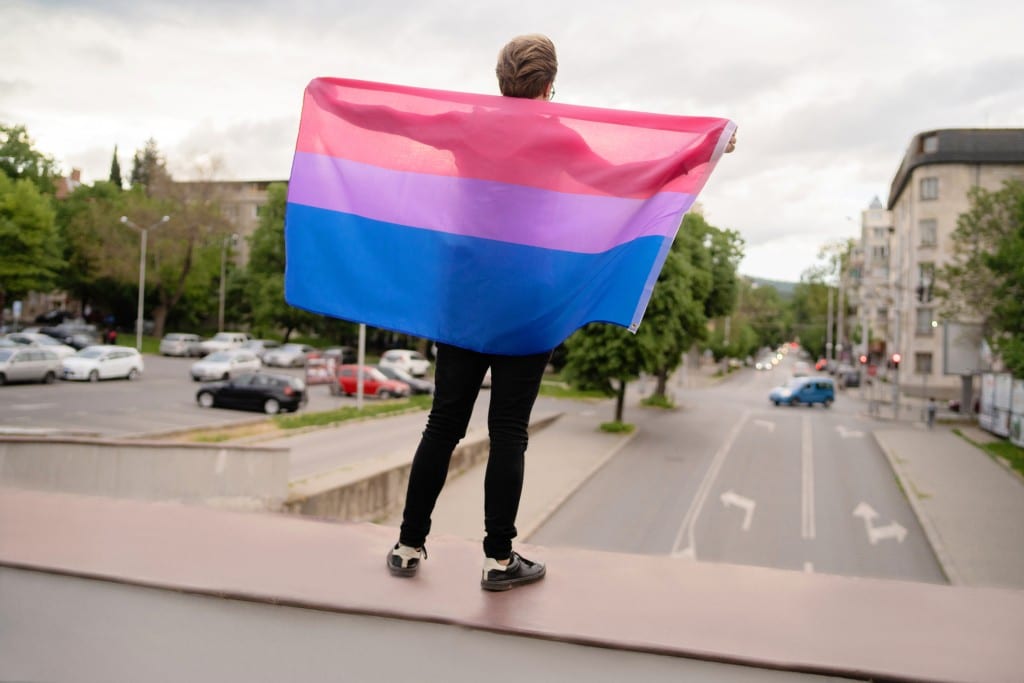
Bi+ people are told we’re not gay enough for the gay club, and not straight enough for other social spaces. Bi+ people like me have our sexual identity assigned to us by onlookers based on the gender identity of whomever we are in a relationship with, rather than what we express as intrinsic truth about ourselves. We are often accused of switching teams, not picking a side, not knowing who we are or deliberately misleading others. Many people have assumed that I am poly just because I am bi+, as though there is a single way all bi+ people would choose to experience relationships.
This creates all kinds of health impacts for bi+ people: we have a higher rate of substance abuse than our gay/lesbian or straight counterparts. We have a higher rate of severe mental illness than our gay/lesbian or straight counterparts. And we are far more likely to have attempted suicide than our straight counterparts. Notably, when bi+ sexual identity is combined with a female or femme gender identity, rates of mental health issues are far higher than any of our counterparts.
This bi+-specific stigma adds layers to the structural oppression that harms every member of the queer community. We experience ignorance, misunderstanding, hate, fear and direct harm at the hands of providers, agencies and practitioners who seem able to serve only gay community members or only straight community members.
Flawed portrayals
I live in a city that is lucky to have a sobriety and recovery center that focuses specifically on the queer community. (So many more spaces like this are needed!) But recently, I saw some of the advertising that they were putting out that was aimed at bi+ femmes.

The flyer veered into the same old stigma. My bi+ sexuality was termed “girl on girl,” and the way statistics were presented implied that I have substance use disorder because I identify as bi+, not because of the biphobia I experience every day. Even to this provider, who should be more fluent in the intricacies of our community, bi+ people are easily portrayed as hypersexual, unstable or aggressive.
The rate of substance use among bi+ people is not a measurement of the impact of being a bi+ person. It is a measurement of the impact of being overlooked, derided, bullied, harmed and traumatized from so many directions in the world around us. It is a measurement of the level of ignorance others have about who bi+ people are.
What I have learned about substance use disorder is that most people with diagnoses like mine have experienced trauma, and that substance use and trauma are clearly linked—not substance use and queer identities.
Some progress
National decisionmakers are finally starting to catch up to what our queer family has always known. The federal Substance Abuse and Mental Health Services Administration (SAMHSA) just announced a new study that looked specifically at substance use rates among different segments of the queer community.
“We know that statistically, lesbian, gay and bisexual Americans face increased risks for mental health and substance use issues, which is often related to stress caused by stigma, discrimination and harassment,” said Miriam E. Delphin-Rittmon, assistant secretary for mental health and substance use at the U.S. Department of Health and Human Services.
Dr. Delphin-Rittmon is right: bi+ people do experience substance use at a rate greater than the total population. We also experience higher rates of intimate partner violence, higher rates of HIV and higher rates of anxiety, depression and mood disorders.
None of these outcomes are caused by being a queer person. These outcomes are linked to the stigma, oppression and indignities we suffer as a result of walking around this world as our beautiful bi+ selves.
Service providers and practitioners who want to be fluent in helping queer community members should seek specific knowledge about bi+ individuals, just as they seek out resources to improve care for trans individuals or any other subset of the community.
All of us will benefit. 🔥
Know an LGBTQ+ Ohio story we should cover? TELL US!
Submit a story!