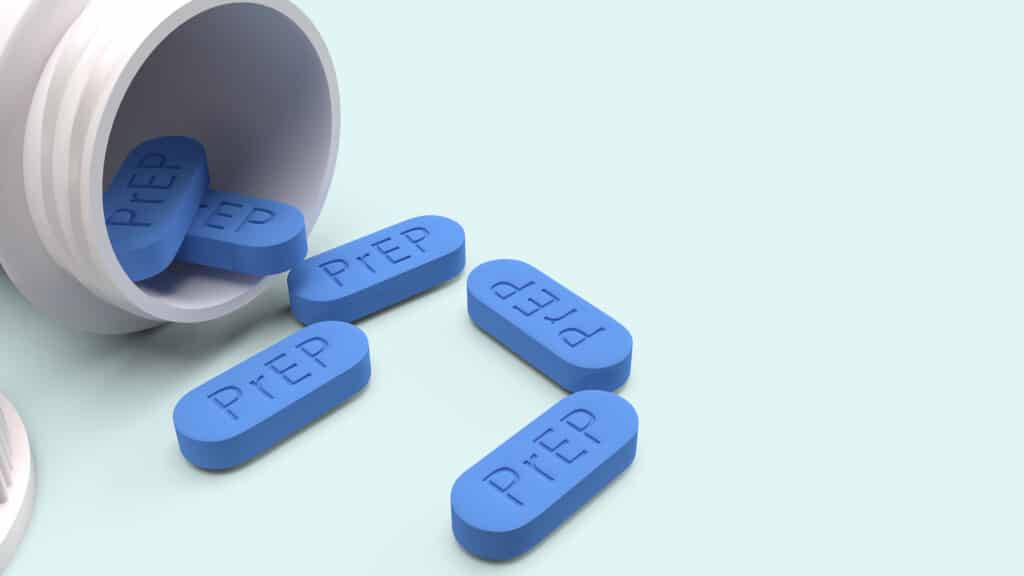
How often does your primary care physician talk to you about PrEP, (Pre-exposure Prophylaxis), a medication that is nearly 100% effective at preventing the transmission of HIV?
For many reading this, the answer is likely that you don’t have a primary care physician–and if you do, they may not have heard of PrEP or feel comfortable prescribing it.
Neighborhood Family Practice, a multi-location health center in Cleveland, is working to change these gaps in community care with the support of grant funding specifically for primary-care HIV prevention.
Not only does NFP want every Clevelander (and beyond) to have a relationship with a primary care doctor; they want every Clevelander to have an ongoing conversation about HIV prevention and PrEP with that doctor. In addition, NFP wants every primary care doctor to be prepared for the conversation.
“We could end HIV,” says Dr. Brian Bouchard, NFP’s clinical lead for HIV prevention. “There’s no medical reason why another person should receive an HIV diagnosis. We have the medicine to suppress the virus.”
This statement is optimistic, of course–but it’s actually medically possible to end transmission of HIV with universal PrEP treatment.
Even more compelling a case for universal PrEP: It is one of only four “Grade A” medications recommended by the United States Preventive Services Task Force (USPSTF). The other three are eye ointment for newborns, tobacco-cessation medications and prenatal vitamins.
So if PrEP is safe, effective and recommended with the same confidence as prenatal vitamins, why isn’t every doctor recommending it?
HIV Prevention and Primary Care
“It just so happens that we have a really strong HIV care program embedded in the rest of the primary care that NFP does,” said Dr. Lisa Navracruz, NPF’s medical director of HIV services. “This is the perfect place for us to be.”
Navracruz brought the primary care HIV team to NFP about four years ago, when it was no longer able to sustainably operate in its former clinic.
Navracruz’s top takeaway when it comes to HIV prevention and awareness is that “undetectable equals untransmittable.” If an HIV positive person has undetectable viral levels, they are unable to transmit the virus. Knowing this helps reduce fear and stigma around HIV.
“We as a community don’t need to fear folks who are living with HIV any more than we need to fear folks living with diabetes or hypertension,” she said. “If we approach those folks and welcome them in, it can change people’s lives.”
Stigma also impacts the conversation between doctors and patients. Dr. Bouchard treats the discussion of sexual health–including HIV prevention—as part of the overall primary care of his patients. “The patients I see are not trying to hide their fears of STDs or their sexual habits, they’re just afraid of judgment. This is why, as a healthcare provider, [talking openly] matters.”
Bouchard’s goal for the grant is not only to increase PrEP prescription rates in Cleveland communities, but also for every practitioner within the NFP system to be comfortable opening the discussion and prescribing PrEP.
When NFP submitted its application for the HIV prevention grant in January 2022, the practice had 66 patients with active PrEP prescriptions. As this number grew, the practice realized that not all patients with an active prescription were taking the medication, so the list was updated to only reflect ongoing use of PrEP. Now the number is 83.
Despite the early inconsistency in reporting, Bouchard is confident that PrEP numbers are on the rise, and the rates will now be more effectively tracked. The grant program has also included inclusive advertisements and pop-up test centers throughout the Cleveland area. Bouchard hopes to see “a 50 to 100% increase” in PrEP rates by the end of the grant’s second year.

Bouchard’s less measurable—but just as important—goal for the grant is to raise provider comfort with prescribing PrEP. “As primary care doctors, our primary currency is trust. I never want anyone to come and say ‘I’d like to talk about PrEP,’ and their provider has no idea what they’re talking about.”
The Community Value of Primary Care
According to a 2022 report from the Primary Care Collaborative, the percentage of Americans regularly seeing a primary care provider has decreased 10% in the past two decades–from 84% in 2000 to 74% in 2019.
Factors include rising costs, barriers to access, a rise in alternative care sources like telehealth and urgent care, and physician shortages in rural and urban communities. In their mission to bring reliable, consistent primary care to Greater Cleveland, Neighborhood Family Practice offers support to their patients to overcome these barriers, including transportation and assistance with housing and food access.
“Care for folks with HIV came up in the adolescence of managed care back in the 80s,” Navracruz said. “We didn’t have medication to treat people, so funding started going toward ‘How can we look at whole people?’ Do we need to walk their dog? Do we need to provide housing? What can we do to take care of people?’ Now we have effective medications to treat and prevent HIV, but still, at the core of it, we value all those wraparound services. I firmly believe all of our patients deserve all of this from the health system, no matter what condition brings them in.”
Ignite Action
- Talk to your primary care provider about PrEP at your next general checkup or sexual health appointment.
- If you don’t have a PCP, schedule an appointment with Neighborhood Family Practice or, outside the Cleveland Area, check with your insurance provider for in-network PCPs.
- Learn more about Neighborhood Family Practice’s HIV prevention, care and services by going here.
Know an LGBTQ+ Ohio story we should cover? TELL US!
Submit a story!