In a statement released Monday, the American Civil Liberties Union (ACLU) of Ohio officially announced plans to file a lawsuit challenging the provision in Ohio House Bill (HB) 68 that would ban gender-affirming health care for transgender youth across the state beginning April 23.
“We are prepared to go to court and defend the rights and dignity of transgender youth with every tool available,” Chase Strangio, the national ACLU’s deputy director for Transgender Justice, said in the statement.
The ACLU said it would file the lawsuit before the bill takes effect, and would share more details soon.
“Transgender youth, together with their doctors and parents, should have access to evidence-based medical care just like anyone else,” stated Freda Levenson, ACLU of Ohio’s legal director. “Families should be able to make these private, personal decisions based on the advice of their physicians, and free from interference by politicians. HB 68 is not only cruel; it violates the Ohio Constitution and must be challenged.”
For most young transgender people, gender-affirming healthcare includes primary care visits, therapy, counseling and some social changes, like using a new name or different pronouns at home or in school.
As they grow, transgender people may require hormone replacement therapies (HRT) and hormone blocking medications to help slow the onset of puberty – two evidence-based medical practices commonly targeted in bans by conservative Republican lawmakers.
Background on HB 68
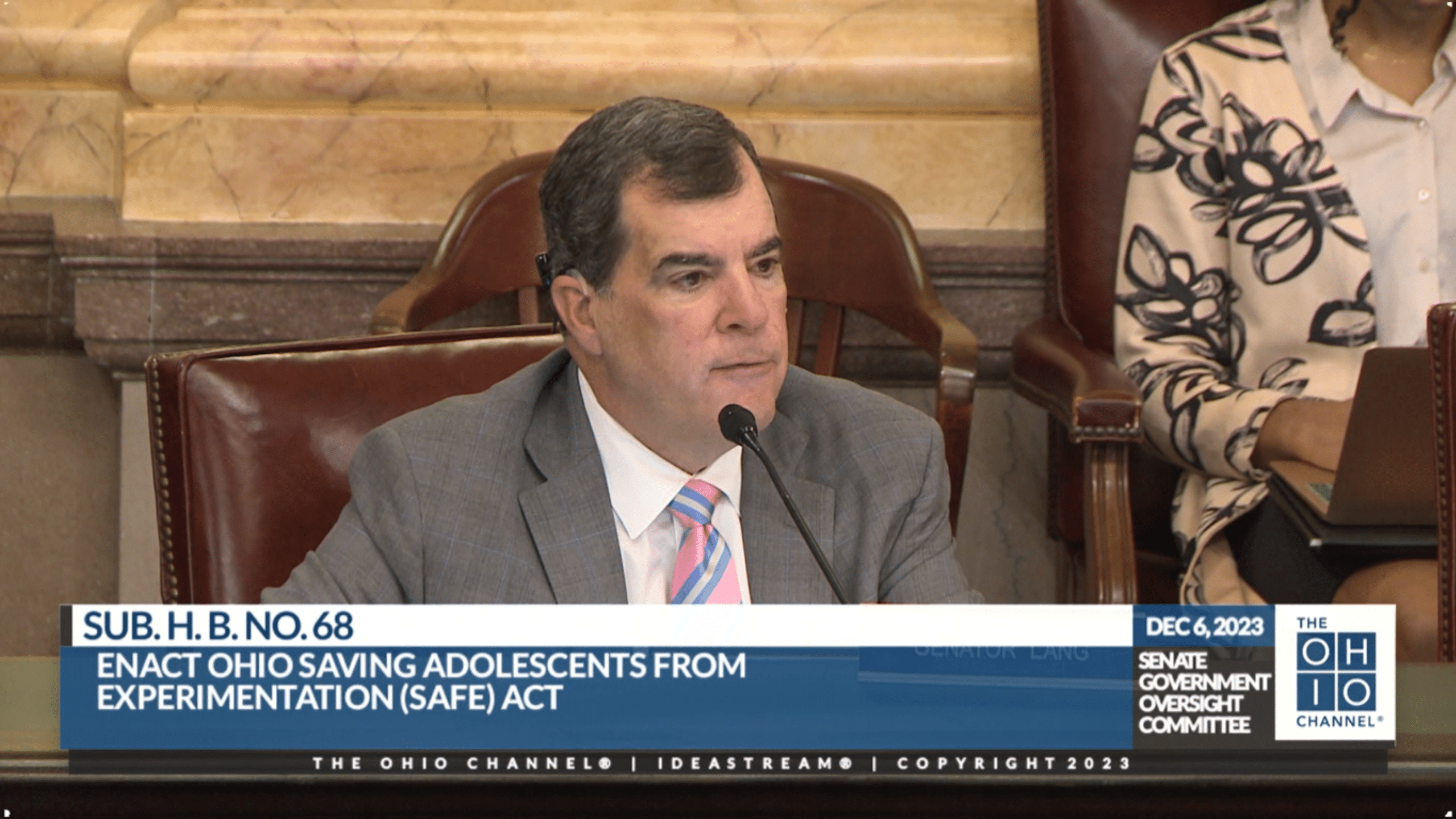
Part of an unprecedented national wave of anti-transgender legislation, HB 68 rejects the medical consensus of every major healthcare authority – including the American Medical Association (AMA), the World Health Organization (WHO) and the American Academy of Pediatrics (AAP).
The bill is based on model legislation drafted by two powerful designated anti-LGBTQ+ hate groups.
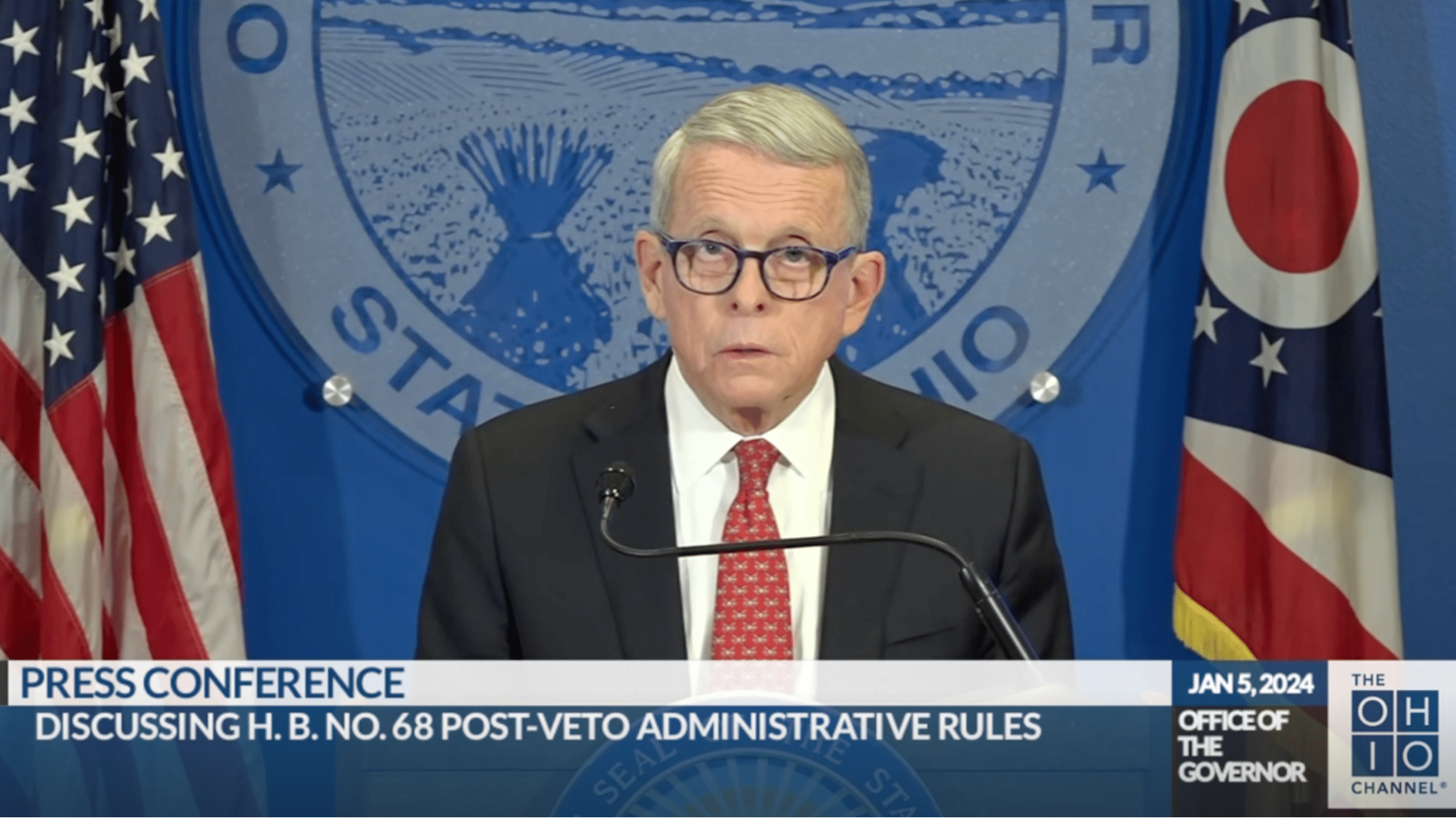
In December, Ohio lawmakers passed the bill via a Republican supermajority in the legislature, delivering it to Gov. Mike DeWine’s desk for a final signature. DeWine, however, vetoed the bill, and instead proposed a set of administrative rules that would restrict access to healthcare for transgender Ohioans, including adults.
In January, the Ohio House and Senate voted to override the governor’s veto, marking 90 days until the pediatric healthcare restrictions become law.
Bans in other states
Ohio is now one of 23 states to pass a legal ban or restriction on healthcare for transgender youth, many of which have been directly challenged by the ACLU in federal district courts.
Since Arkansas lawmakers passed the nation’s first healthcare ban bill in 2021, hundreds of pieces of similar legislation have appeared in dozens of state legislatures – jumping by more than 425% last year alone.
In 2023, a U.S. District Judge issued a permanent injunction on Arkansas’ law, declaring it unconstitutional and marking the first time a federal judge overturned a state healthcare ban for transgender people. However, district courts in other states have not always followed suit.
In more than a dozen states, federal judges have temporarily blocked healthcare bans from taking full effect – sometimes blocking certain sections of a bill and allowing others to be enforced.
But in Georgia, Kentucky and Missouri, federal judges and a federal appeals court panel allowed near total healthcare bans for transgender youth – as did the Texas Supreme Court.
Doctors and healthcare providers in Kentucky and South Dakota could see the state revoke their medical licenses as punishment for providing certain types of healthcare to transgender youth. In Idaho, North Dakota and Oklahoma, lawmakers voted to criminalize healthcare for transgender youth – making it a felony to provide any type of healthcare considered “gender-affirming,” including certain types of talk therapy and family counseling.
In December, a federal judge blocked the Idaho law from taking full effect, but Maria Bruno – public policy director for the LGBTQ+ advocacy group Equality Ohio – expressed concern around language in HB 68 that could criminalize Ohio doctors and healthcare providers, too.
What happens if the ban takes effect?
Legal experts and transgender advocacy groups said they are still unsure exactly how Ohio’s ban will affect overall access to healthcare for transgender youth.
HB 68 explicitly bans transgender-specific surgical procedures for transgender people under the age of 18, which doctors, surgeons and children’s hospitals repeatedly testified are not currently performed at any hospital or clinic in the state of Ohio.
The bill prevents healthcare providers from initiating new care plans for transgender youth beginning in April, but does contain a “grandfather clause,” allowing some transgender youth to continue their current plan of treatment.
However, it is unclear how the bill might affect treatment for transgender youth as they age – whether they will have access to hormone-blocking medications and hormone replacement therapies as they become teenagers and adults.
The Ohio Children’s Hospital Association (OCHA) – which provided public testimony in opposition to the ban – represents each of the state’s six major children’s hospitals, three of which operate health care programs specifically designed to treat transgender youth.
According to legal experts, individual doctors, healthcare providers, clinics and hospitals will be tasked with interpreting HB 68 internally. Meaning, some doctors and healthcare providers may choose to continue offering certain types of healthcare to transgender youth, while others may opt to stop offering care entirely.
Additionally, Gov. DeWine’s proposed administrative rules may also prevent healthcare providers from providing referrals to transgender patients seeking care in other states, including “in any way facilitating such care at another facility or providing any resources or information on where or how to receive such care.”
Currently, healthcare organizations recommend transgender Ohioans and their caregivers contact their healthcare providers directly to discuss any potential changes in ongoing treatment plans or access to certain types of medications.
Restricting healthcare for transgender adults
Legal experts and LGBTQ+ advocacy groups said they expect further restrictions for transgender adults in Ohio, based on similar legislation in other states.
In Ohio, Gov. DeWine’s proposed administrative rules would:
- Require doctors, surgeons, clinics, healthcare providers and hospitals that provide healthcare for transgender-specific healthcare to directly employ or have “a contractual relationship” with both an endocrinologist and a bioethicist.
- Limit doctors’ ability to diagnose gender dysphoria in transgender adults
- Restrict doctors’ ability to prescribe hormones and other medications to transgender adults.
- Restrict how, when and where transgender adults are able to access hormone replacement therapies (HRT) and gender-affirming surgeries and procedures such as top surgeries and facial feminizations.
- Require “a written, comprehensive, multi-disciplinary care plan” for all transgender patients.
- Require transgender people under the age of 21 to undergo “a comprehensive mental health evaluation at the hospital seeking to provide treatment” lasting “not less than six months” before accessing most types of healthcare.
- Require healthcare providers to share “de-identified” data from every transgender patient with the Ohio Department of Health (ODH) every 30 days.
In newly leaked audio, HB 68 primary sponsor and Baptist pastor Rep. Gary Click (R, Vickery) discussed with Michigan lawmakers the possibility of the total criminalization of healthcare for transgender adults.
Click told lawmakers he was “pretty happy” to see that HB 68 led to the governor to propose rules restricting healthcare for transgender adults in addition to transgender youth.
In the same conversation, Michigan state Rep. Josh Schriver (R, Oxford) suggested a total ban on healthcare for all transgender people, calling the general medical consensus of every major healthcare authority in the world “wrong for everyone.”
“Let’s be in touch,” Click told Schriver, “[…] so we can make sure that Michigan can follow Ohio’s lead.” 🔥
ignite action
- To register to vote or to check your voter eligibility status in the state of Ohio, click here.
- To find contact information for your Ohio state representative, click here.
- To find contact information for your Ohio senator, click here.
- To access the full Trans Legislation Tracker, click here.
- For more information on active designated hate groups across Ohio, click here.
- If you are a young person struggling, contact the Trevor Project: 866-4-U-Trevor.
- If you are an adult in need of immediate help, contact the National Trans Lifeline: 877-565-8860
Know an LGBTQ+ Ohio story we should cover? TELL US!
Submit a story!