Kade Hirth wants to be the therapist for everyone who has never gotten much out of therapy. When they first started practicing in Central Ohio seven years ago, Hirth quickly grew bored of the traditional talk therapy environment: sitting in an office with the client on a couch, staring at the ceiling while Hirth took notes on a clipboard. “It all feels the same,” they tell The Buckeye Flame. “It feels stale. It feels boring.”
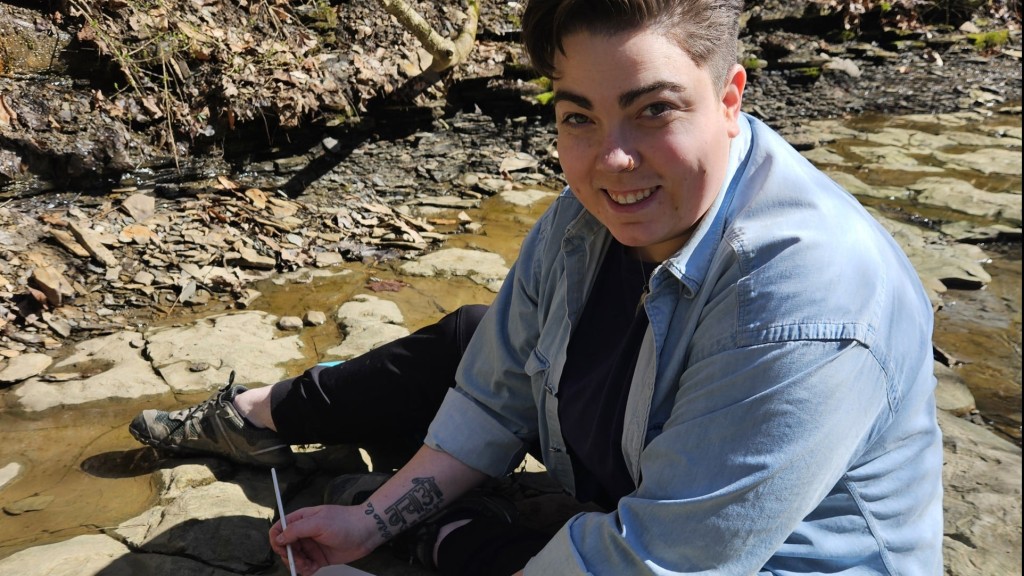
Looking for a change, Hirth began practicing what’s known as “expressive arts therapy” after being introduced to “experiential therapy,” a tradition in which patients engage in therapeutic role play with props to help address the root causes of their trauma. Rather than employing puppets or dolls as vehicles for communication, Hirth instead uses art and nature. Their practice takes place in the woods, where clients create paintings and sculptures through the use of found objects discovered outdoors, such as rocks, twigs, acorns, leaves, twigs, shale or clay from the creek banks. Sessions begin, Hirth explains, with an invocation to “pick up items that stand out to them as we walk along the trails,” before pausing at a comfortable point to begin the process of creation.
Creating their own dyes and making their own paints helps patients tap more deeply into emotions they might have buried or may struggle to verbalize, Hirth says. For instance, Hirth might sit down with a client and instruct them to create an artwork that symbolizes their relationship with their parents. When it’s completed, the two of them can then dialogue about the specifics of the work: Why is their family rendered in this particular manner? What does it represent?
“Maybe a conversation with your parents actually isn’t feasible or it wouldn’t be productive,” Hirth says. “Maybe they’re not around, but we can sit down and have a dialogue around something that represents their parents. That can then lead to processing and healing from that trauma.”
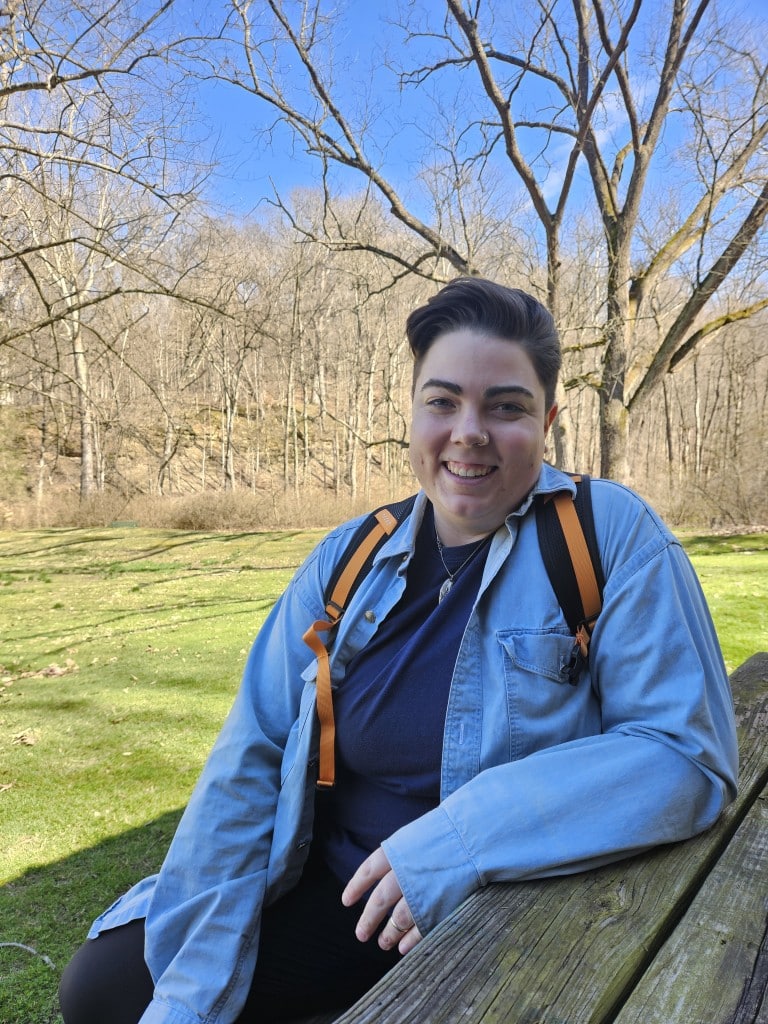
Hirth says that many of the clients who seek them out have struggled to find a safe place to talk about the issues they face: from family rejection to being a queer person in rural Ohio. Although Hirth sees patients through a group practice centered in Columbus, the clinic they founded last year, Catalpa Counseling, is based in Licking County, where former President Donald Trump swept 63% of votes in the 2020 presidential election.
Hirth says that when they see a new patient, the sessions often begin with asserting—over and over again—that they have a right to their own feelings, then helping them name those emotions. Clients often struggle with the idea that their thoughts and perspectives make them a bad person because that message has been reinforced for their entire lives. Hirth can relate: They grew up in a repressive religious environment where they always felt like they were the one at fault.
“Queer people often feel like we don’t have a voice,” they say. “Our voices are often silenced. Expressive arts therapy is fantastic for that. Being able to actually put something into existence, really put your soul into it, and be doing that alongside a therapist who is able to validate and affirm and witness what you’re creating can be really powerful for people.”
Catalpa Counseling is still new, with just a handful of clients, all hailing from the LGBTQ+ community. Hirth hopes to add workshops and group therapy sessions. For patients who feel isolated and alone in a conservative area, group settings can be a critical means of realizing: “I’m not the only one experiencing this.” Hirth’s dream is to one day purchase a plot of land and build a tree house where they hold therapy sessions, creating the refuge that patients might otherwise lack in their everyday lives.
As they work toward those goals, Hirth has been encouraged by their clients’ progress. A patient in Hirth’s former practice sought out expressive arts therapy to deal with childhood trauma, and nearly every session, they would watch the client have “new lightbulb moments.” The patient slowly began to embrace that they were allowed to feel angry and allowed to express that anger, even through making art in the mud.
“I love being able to share that with clients in that moment of realizing: They’re not broken,” Hirth says. “Their story deserves to be heard, whatever that looks like, whether it’s them talking about it or creating something that shares their story. They are not wrong or bad for feeling whatever they feel.” 🔥
IGNITE ACTION
- Learning more about Kade Hirth and Catalpa Counseling by visiting their website.
Know an LGBTQ+ Ohio story we should cover? TELL US!
Submit a story!