SingOUT Cincy not only has songs to sing, but also a distinct way of making sure a wide array of singers are just plain heard.
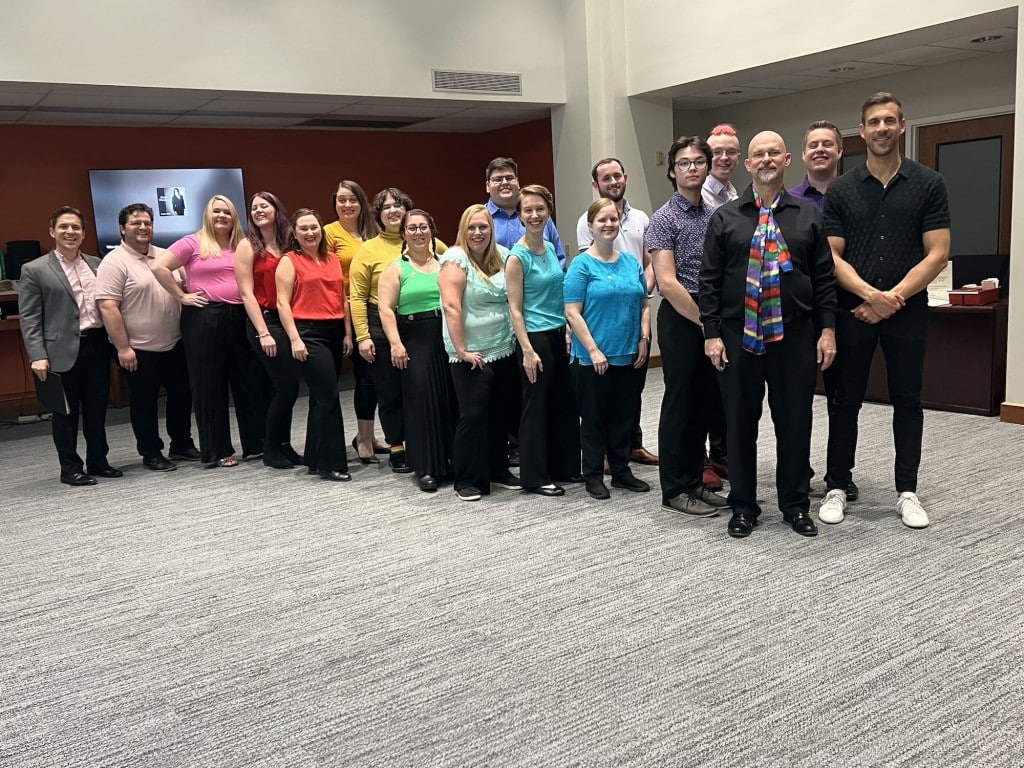
Launched in 2023, this Cincinnati-based multigenerational, queer-centric singing organization has a core mission of highlighting voices of the LGBTQ+ community, bridging generational divides and showcasing music by and for LGBTQ+ individuals.
To pull that off, they are embracing opportunities to bring together singers of all ages.
“It’s important to have that connection,” said Angelo Sylvester, SingOUT Cincy’s artistic director.
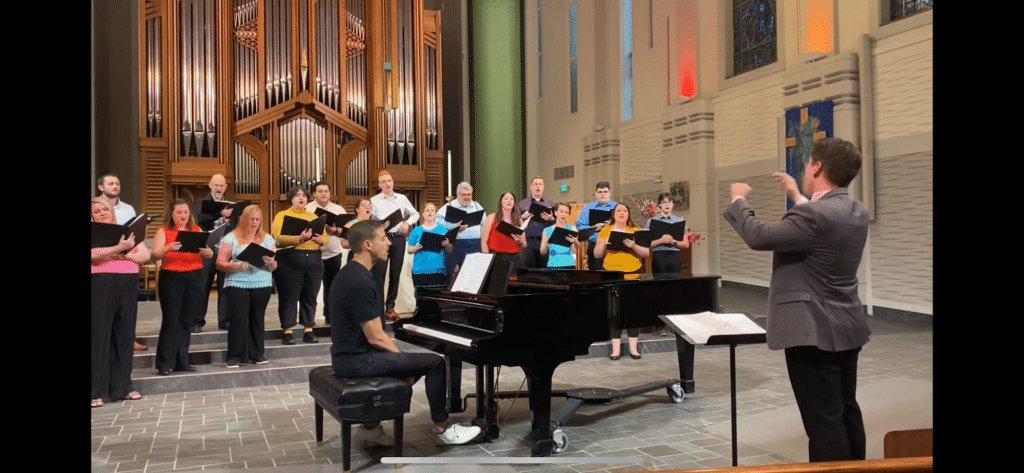
From June 14th to June 18th, all are welcome to the SingOUT Cincy Festival Chorus, which will bring together volunteer singers as young as ninth graders with no upper age limit in a four day festival choir extravaganza to celebrate LGBTQ+ composers and works.
The Buckeye Flame spoke with Sylvester about the recent founding of the chorus, the importance of intergenerational work and how everyone should come sing some notes at the upcoming festival. To listen, click play directly below or read our (edited) conversation beneath the audio link.
For folks who have never heard of SingOUT Cincy, give us the quick backstory.
Angelo Sylvester: So a little over a year ago, I was dreaming of an opportunity for queer folk to get together, sing and to be in community. That was our first ever Festival Chorus, just last June. It was a really exciting time. We had some great turnout and sang some wonderful repertoire. It was a beautiful event.
The energy behind that event was so strong that everyone came back and said, “What’s the next thing? When are we getting together again?”
So we went ahead and formalized and became an official 501c3 non profit. This second festival will conclude our first full year of programming, which included not just the choral festival, but also a solo cabaret during the season and a singalong event that took place in December.
One of my favorite topics to talk about within the LGBTQ+ community is that aspect of being intergenerational. Can you talk a little bit about how important it is to be doing this work intergenerationally?
As younger generations come along, we forget that the road has been paved for us by those that came before us, and so it’s important to have that connection. I also think that as we see changing language and changing landscapes in queerness and our movement, it’s good for older generations to connect with younger generations as they tend to be a little bit more in touch with contemporary times. And so, by bringing generations together, I think we can share our experiences.
There are a lot of spaces carved out for queer folks that are generation specific. Especially when it comes to organizations, sometimes things will take place in maybe a bar that’s inaccessible to younger queer folk. And I think having young people feel normalized in their identity and seeing an older generation be successful is really important to their development.
I feel 100% percent confident that at some point during the past year, someone has come to you and said, “Oh, thank God that this exists now” and that it’s been an amazing experience for them. Give us one of those stories of someone who just said, “This was a lifeline for me.”
Absolutely. Even last year when we were starting our festival, we had someone that came up and said, “I don’t actually sing. I don’t sing anywhere. I was just looking for a place to connect with other people, be in community and be in this town. Having an opportunity to get together in a low pressure environment was the highlight of my summer.” And that was really special to hear.
Let’s talk about this year’s festival. How amazing will this be?
It’s going to be really spectacular. As far as singers go, we already have more than double the number of singers than joined us last year, so the energy is really high. We also have some really wonderful music on the docket this year, with a pretty good array of composers.
We accidentally themed [the festival] around hope. There are four songs that are all themed around the concept of hope, which felt like the stars aligned for us because that was not on purpose. But as I was choosing the music, it kind of happened that way. And I think it’s going to be really meaningful to have 30 or 40 singers coming together with a theme of hope for the future and what that looks like for us.
And the festival culminates in a concert?
Yes. It’s a festival style event, which means we have just three or four rehearsals in four days. And then at the conclusion of those four days, we put on a concert. This is different than maybe your typical community chorus, where you might rehearse once a week for six or eight weeks. We rehearse every day for four days and then put on a festival. So this way it’s a one weekend commitment that you don’t have to necessarily commit to long-term.
What do you hope attendees get out of the festival?
For the singers, I hope they find community as well as artistic fulfillment. I think the music is both challenging enough for established vocalists to feel good, but accessible enough for non-singers to be included. I want them to find people and each other and the ability to connect.
For our audience, I’m hoping that they discover that there is queerness all around us: everywhere we are, in our art and in our music. All we really want is to be together and to be seen and recognized.
One of the sentences that you all sent to me when we were setting this up was, “There is truly no better place to build something like this than Cincinnati.” Talk to us a little bit more about that.
Cincinnati is often ranked one of the best arts communities in America. This city is so supportive of arts organizations, especially for being a midsize city in the Midwest. There are new arts organizations popping up often –several of them a year we see – and they’re all really well received by our community. So it’s really fortunate for us to be in Cincinnati trying to create art because the town didn’t even blink an eye. We’ve just felt really welcomed.
Finally, give us a song for Pride Month. What should we all be listening to that would inspire us, particularly in that area of hope?
One of the pieces we’re singing is “Hope On” by Michael Bussewitz-Quarm, a trans composer. It is written with a string quartet and we’re going to have a full string quartet playing with us.
I think the sentiment of this piece is that no matter who you are and what you’ve experienced, continue to have hope, hope for the future and hope on. That’s the piece that I would recommend someone take a listen to and kind of get their pride feel goods as they move through June. 🔥
IGNITE ACTION
- Learn more about SingOUT Cincy by visiting their website and following them on Facebook and Instagram.
- Mark your calendars for June 14 – 18, 2024 for SingOUT Cincy Festival Chorus. More information here.
Know an LGBTQ+ Ohio story we should cover? TELL US!
Submit a story!