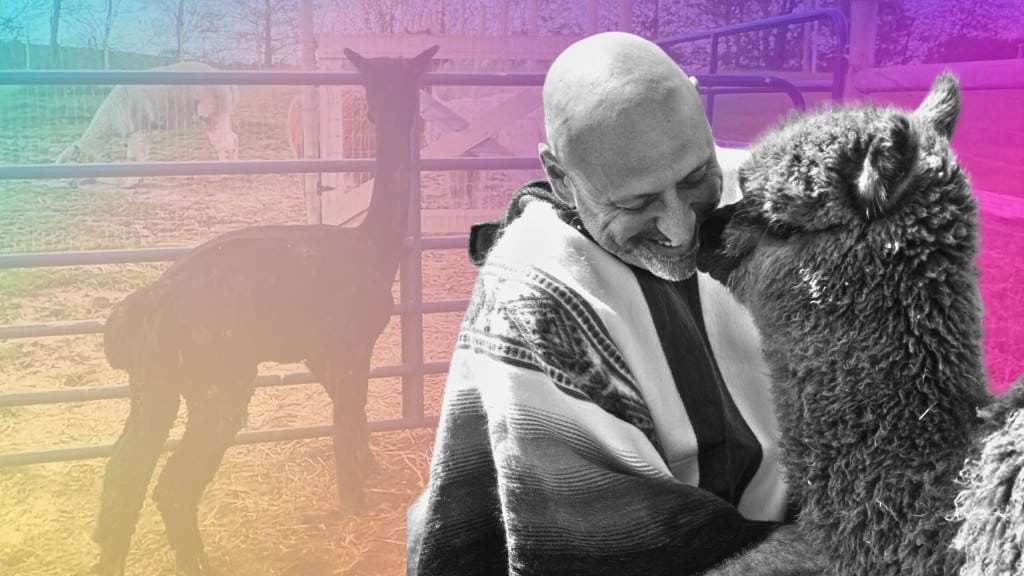
What do alpaca farming, therapeutic practice, Golden Girls references and LGBTQ+ pride all have in common?
You will have to go to rural Ohio to find the answer.
On their 6-acre farm nestled in Zanesville, Ohio, Daniel and Rowan Kelty find solace as a queer couple in a conservative town. Their farm’s name, Shady Pines Alpacas, is inspired by their love of The Golden Girls. (Shady Pines was the name of the retirement home from which Golden Girl Sophia fled.)
Besides Daniel and Rowan and their three children, Shady Pines is home to rabbits, foxes, chickens, goats, turtles and – most notably – six alpacas.
On their farm, they produce and sell an ever-growing list of products, including alpaca yarn, hand-dyed silk scarves and goat’s-milk skin care products.
The farm is also home to Daniel’s therapeutic practice, Wild Ohio Therapy Farm. Having earned a professional certification in ecotherapy, Daniel opted for a non-traditional approach to therapy, leaning into the healing power of immersing yourself in nature.
“When I started to open up my own practice, I wanted it to be something in a natural setting that provided the same kind of healing that I received when I was a kid,” Daniel said.
“I grew up in a very abusive home, and so I would go out in the woods behind my house and play in the creek in the forest and stuff … I felt very connected and I felt very peaceful.”
According to Daniel, a typical therapy session on the farm may involve brushing the alpacas, helping milk goats, or taking walks through flowers.
“I use the animals as a direct parallel to mental health,” Daniel said. “Nature provides a wonderful backdrop for all these kinds of conversations.”
He explained that the animals provide a helpful point of reference for how to express one’s needs and emotions, as well as how the environment influences and responds. By observing how the animals express when they are hungry, wanting to be pet, and how they interact with each other, Daniel’s clients can reflect on how they express their own needs. Daniel extended this connection to the queer experience.
“As queer people, we are painfully aware of what it means to be transplanted—seen as ‘other,’” he said. “I think animals are also misunderstood … We have animals that come into our farm for a variety of reasons; they’re also transplanted, and they’re also adopted by other species they weren’t raised by. It’s a wonderful parallel celebrating our place in the natural world.”
Challenges in rural Ohio
Before moving to Zanesville with his family in 2013 to return to rural life, Daniel spent a large portion of his life outside of Ohio traveling around South America, Arizona and California. Legalization of gay marriage in 2015 provided him a sense of hope and possibility, suggesting that he could live authentically as a queer individual and fulfill a lifelong dream of becoming a parent.
Daniel and Rowan faced distinct challenges as a queer couple, navigating both personal and professional hurdles. Daniel noted the struggles they encountered during their journey into parenthood through adoption. Though the adoption of their first two children went smoothly, adopting their third child was particularly strenuous due to opposition from the birth family.
The opposition necessitated court involvement, where the couple had to address concerns about their sexuality.
“We had to cross our fingers and hope that the magistrate was a liberal one or wasn’t biased, but within a small town that was kind of a crapshoot,” Daniel said.
Despite the additional challenge, the couple successfully adopted their third child.
Daniel highlighted how in smaller towns like Zanesville, “little bubbles” can form. “Within that bubble, there’s this sociological environment that reinforces all their beliefs,” he said. “I have found that in conservative pockets of this country—Ohio in particular—folks that are from here don’t travel, they don’t see other cultures, sometimes they don’t go to other states in their whole lifetime.”
He has encountered this himself saying that people in Zanesville, while not outwardly homophobic, tend to stay away.
Here, Daniel feels he can make an important contribution as a queer business owner.
“I think it’s important, now more than ever, to be a functional presence that’s very visible in our community,” he said.
Alpaca Days
According to Daniel, alpaca farms traditionally host events called “Alpaca Days” that include opportunities for visitors to interact with and learn about alpacas. The Keltys decided to put their own spin on such an event.
Having experienced challenges as a queer couple and as queer business owners, they wanted to call attention to these experiences and celebrate queer identity.
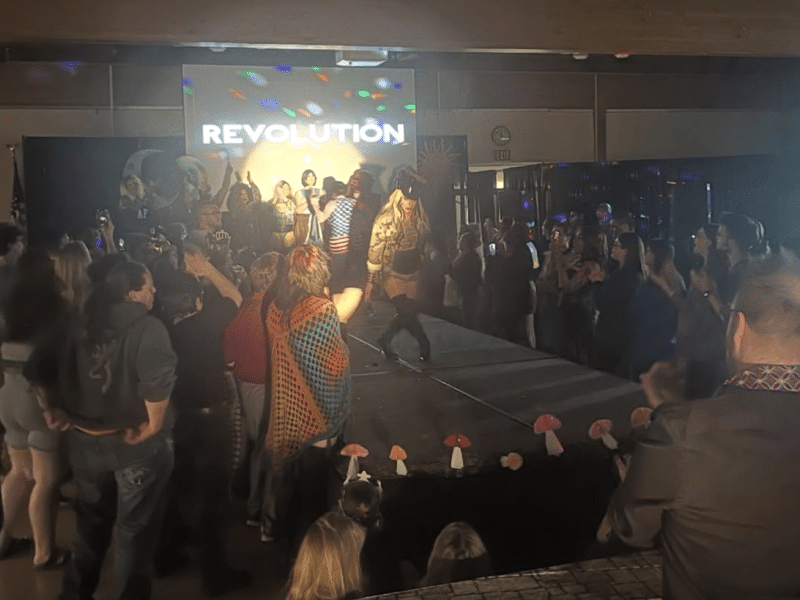
Hosted at Shady Pines from noon to 5pm on Saturday, September 28, Alpaca Days will feature queer-owned businesses and artisans, as well as live performances, including a drag show.
By hosting the event, Daniel said he hopes to serve as a positive example for younger generations of queer people – to show that they, too, can find happiness and be successful.
“I hope that attendees will get a sense of belonging, a sense of purpose and really understand the importance of not only acknowledging our LGBTQ+ businesses in our community, but celebrating them and supporting them,” he said. 🔥
IGNITE ACTION
- Alpaca Days at Shady Pines will be held from noon to 5pm on Saturday, September 28. Go here for more info.
There are still over two dozen(!) Pride events left in 2024. Check out our 2024 Ohio LGBTQ+ Pride Guide for what is still to come!
Know an LGBTQ+ Ohio story we should cover? TELL US!
Submit a story!