In an Ohio state legislature that can sometimes look like a Dungeons & Dragons party – Clerics! Warriors! Rogues! – there is a small cadre of Healers: actual health care professionals who bring their medical expertise to the halls of the Columbus Statehouse.
Chief among them is Rep. Beth Liston, currently serving in her third term as a member of the Ohio House, representing Worthington and parts of Northern Columbus.
Dr. Liston began her career in medicine, earning her M.D. and Ph.D. at the Ohio State University and has worked clinically as a hospitalist at OSU’s Wexner Medical Center and at Nationwide Children’s Hospital, caring for adults and children in the inpatient setting.
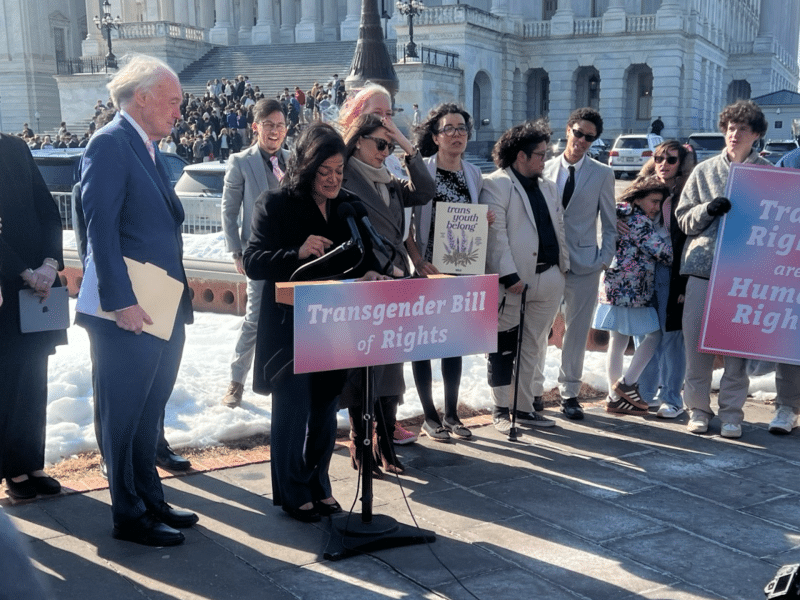
This medical background has often led to her being the leading voice decrying bills that are rooted in medical disinformation, like HB 68, the now-enacted ban on trans female athletes and gender-affirming care for minors. Her background has also repeatedly led to instances of Liston going viral for her comments on Ohio Republicans’ seeming obsession with children’s genitals.
As she has reached the limit on terms she can serve in the Ohio House, she is now running for the Ohio Senate to continue to be a voice for her community.
The Buckeye Flame spoke with Liston about her time in her dual roles as representative and doctor, why she decided to continue with a life of public service and which game we all should be playing. To listen, click play directly below or read our (edited) conversation beneath the audio link.
I want to start out with a line in your official bio: “Dr. Liston first ran for office in 2018, in order to bring a better understanding of impact of policy on health and wellness to the Ohio General Assembly.” How is that going?
I wanted to do what I said, which is to bring that voice and perspective because I think it’s been lacking. Obviously things like access to health care and affordable prescription drugs are on that list, but so too are public education, affordable housing, making sure people have enough food, get paid fair wages, are not unfairly discriminated against and are not blocked from accessing care that is appropriate and evidence-based.
So how is it going? Well, I do think I bring that voice and I try to stay consistent with it. It’s not a voice that’s always heard. There are other voices that are louder and there are many that don’t want to listen to [my voice].
But as far as being the voice on [health and wellness], I think I’ve done that. I just have to make sure that it’s received by others.
Tell us about one of those days – and I hope, by the way, there are tons of days that I’m about to describe – but tell us about just one of those days when you went home from the Statehouse and said, “This was a great day.”
There are good things that occur in the Statehouse. They’re just often a little bit more in the background.
On the Health and Human Services Committee, we got to hear stories from individuals and identify needs from individuals related to health and human services. And there were things within the budget that I felt like I had a strong voice in, like making sure that Medicaid pays home health aides better than they were paid.
And then also within the budget, there were small bills that I had been working on in a bipartisan way that got incorporated into the bill. We had a nursing home discharge bill and we had a stroke registry put in there. When those sort of things get into bills, it really feels great. You know that that work matters to people, even if it’s not the thing that’s making headlines.

I have two true-or-false questions for you. Question one, you went to medical school?
[laughs] True.
Question two, you have said the word genitals more on the floor of the Ohio Statehouse than you did in medical school?
How about with more frequency? I don’t know the actual numbers of times, but the last couple years I’ve definitely said the word genitals on the floor of the Statehouse and in interviews and statements because it comes up way, way more than you’d expect or than it should. When you look at what Ohio should be focusing on, it’s not kids’ genitals.
In his recent decision deeming the ban on trans female athletes and gender-affirming care for minors to be legal, Franklin County Court Judge Michael Holbrook wrote this in his verdict: “The General Assembly has determined the care regulated is experimental and its risks far outweigh any benefit at this stage of clinical study.” He did not write “doctors, researchers, scientists or parents who have had consultations.” He said the General Assembly. He was not speaking for the entire General Assembly, was he?
No, absolutely not. He certainly was not speaking for me or the Democratic caucus. I think that is an incredibly dangerous stance to take, not only for transgender individuals and those who are going to be impacted in such negative ways by this bill, but also dangerous to imply that the General Assembly is the body that should be evaluating scientific evidence for efficacy and treatments and doing that risk-benefit analysis independent of all experts and make conclusions that are the opposite of all of the experts that we have.
I think that’s really scary. I think that’s scary for gender-affirming care and I think it’s honestly scary in all of medicine. It’s part of this theme that we’ve seen that unfortunately ignores the realities of how medicine is practiced and works in each person’s life by creating these one-size-fits-all ideologic stances that really harm people. I think people die because of these types of decisions and we’ll see that in Ohio.
Do you have a coping mechanism when you hear medically inaccurate information? How do you navigate that in a respectful way? I have to imagine that’s a difficult position to be in.
It is. I’m always thinking about how I can be most effective for the people that I represent and for the people of Ohio. Sometimes that means confronting it directly. Sometimes it’s speaking with people behind the scenes. Sometimes it’s getting other voices involved to try to help speak to the legislator or the person who’s providing the inaccurate information, to speak their language in a way that they hear.
I believe that what I do is center myself on the voice that I want to bring and be consistent. I think that helps others hear me better. I think that when I stand up and speak, people realize where I’m coming from, why I’m doing it and don’t feel like, “Hey, this is just Beth trying to get attention” or “Beth trying to make a splashy headline” or “Beth trying to run for a different political office because she’s ambitious.”
I’m trying to bring a voice and information from a health perspective. And that’s how I frame my thinking.
You had the option as your third term was coming to an end to say, “Okay, I’m going to take a break from this.” But instead you said, “No, I’m going to keep going and I’m going to run for the Senate.” Walk us through that decision-making process.
As you mentioned, it’s not the easiest place to be in the General Assembly, but I do have those days and those moments where I feel like I get to be that voice for people and for what health care really looks like. And it changes bills for the better and changes how we invest in the budget.
But looking at all those things, it’s hard to believe I’ve done enough. There’s a lot of work to do in Ohio. Our health outcomes have certainly not been improving. In fact, they’re generally all worsening.
The House has a lot of people. It’s a little chaotic, but I do think I’ve had some impact.
Democrats have even fewer seats and fewer voices in the Senate. Right now there are seven members. We’re hoping to pick up a few more. The seat that I’m running for would be a pickup seat to add some people to our caucus speaking for the things that we value.
I also really like committees, as strange as that sounds. I like asking questions. I like trying to poke at bills to make sure that any holes are identified. And sometimes that actually makes a difference again and the people involved in the bills are like, “Huh. Maybe we really need to think about that.”
Because there are so few of us in the Senate, you’re on a lot of committees. So that also feels like value I could bring to that body, which hopefully brings value to people in the state.

Speaking of those people in the state, what advice do you have for LGBTQ+ Ohioans who maybe are feeling a little bit disheartened by decisions coming out of the Statehouse?
First of all, I would say I’m sorry, because I think that the Ohio General Assembly has not stood up for the rights of LGBTQ+ individuals. I believe my caucus does, but we’re a superminority. We should have protections for LGBTQ+ individuals against discrimination. We shouldn’t be stripping health care from young people that need gender care clinics. We shouldn’t be gagging physicians from speaking about the best evidence in terms of treatment.
However, I really believe the people in Ohio are behind you and also believe that LGBTQ+ individuals should have rights, that the government shouldn’t be involved in the decisions made for kids, and shouldn’t interfere with the best evidence.
I think the energy we’ve seen in the last few weeks nationally is really heartening. On the state stage, I’m struggling to get to all the events that people are launching to go talk about candidates because so many people are volunteering to get involved in a way that I think is relatively new, at least in all the time that I’ve been involved in the General Assembly.
We will have the opportunity to elect new leaders after we address the gerrymandered districts with the Citizens Not Politicians initiative that will be on the ballot. And in doing that, we’ll have the chance to have a more representative General Assembly.
But I do think people are on the side of fairness and freedom and health care and science and Democracy, all the things that we stand for that have been a little squished lately in Ohio.
Finally, I cannot have the opportunity to speak with you without getting some gaming advice. First, tell everyone the relationship between your family and the gaming world.
[laughs] Yeah, so my husband and I own a board game store in Columbus. We love board games. We’ve always played them. That’s actually kind of what my husband and I did when we were first dating: we’d go around and play in board game tournaments across the country.
After COVID, I think we were looking for something that brought some joy. Medicine wasn’t a joyful time during COVID and the Statehouse was not so joyful. But the thing we did a ton as a family was play games.
And so when everything settled about a few years ago, my husband and I said, “Hey, let’s make sure we share this [joy] with other people and spend more of our time doing that fun thing.” So we now have a board games store, with collectible card games and all that stuff.
And thus, my final question for you: tell us one game we might not know about, in a very unofficial endorsement of a game that we should check out for a bit of escapism, which we all could use.
Most people don’t really know what I’m talking about when I say board games, because it’s a genre that is only growing now, right? The two crossover games that people are most likely to have heard of are Catan and Ticket to Ride.
My favorite at the moment is called Concordia. It’s similarly termed a “resource management” game. So you’re building and traveling with pieces to get resources to build more, travel more and balance the resources that you have. It’s a lot of fun, but it’s not just about winning. I like playing games with friends and I like having to think about things that maybe aren’t life and death, that just allow you to enjoy that process.
I think we are all good with you having that escapism.
Thank you. 🔥
IGNITE ACTION
- To learn more about Rep. Beth Liston’s campaign for Ohio Senate, click here.
- To register to vote or to check your voter eligibility status in the state of Ohio, click here.
- To find contact information for your Ohio state representative, click here.
- To find contact information for your Ohio senator, click here.
Know an LGBTQ+ Ohio story we should cover? TELL US!
Submit a story!