Life on the margin brings stress. And, with that stress comes a toll on a person’s health.
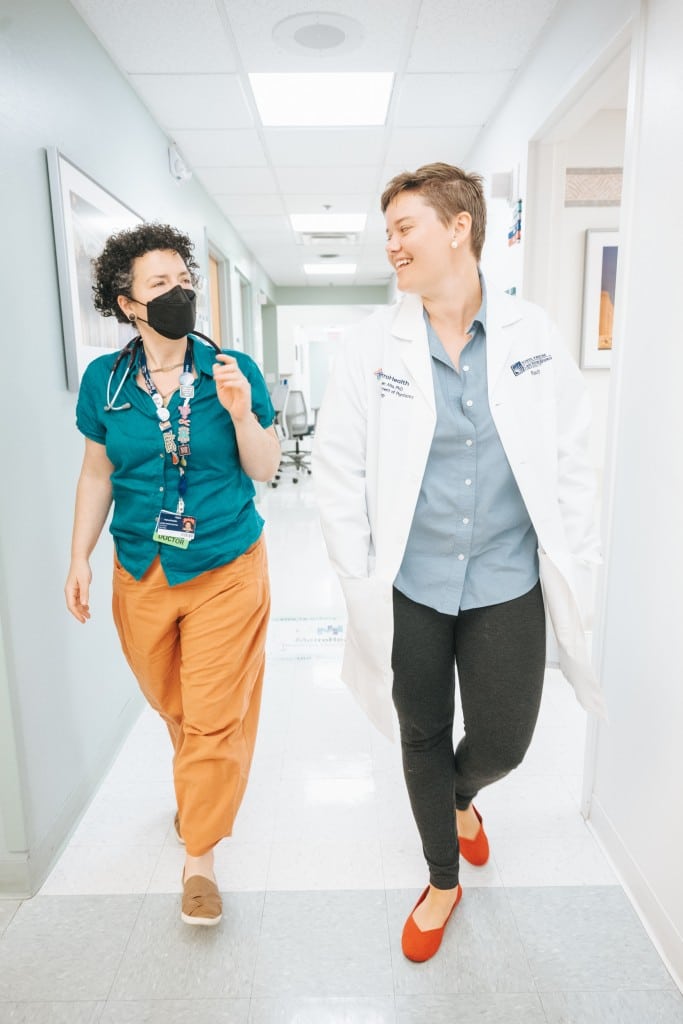
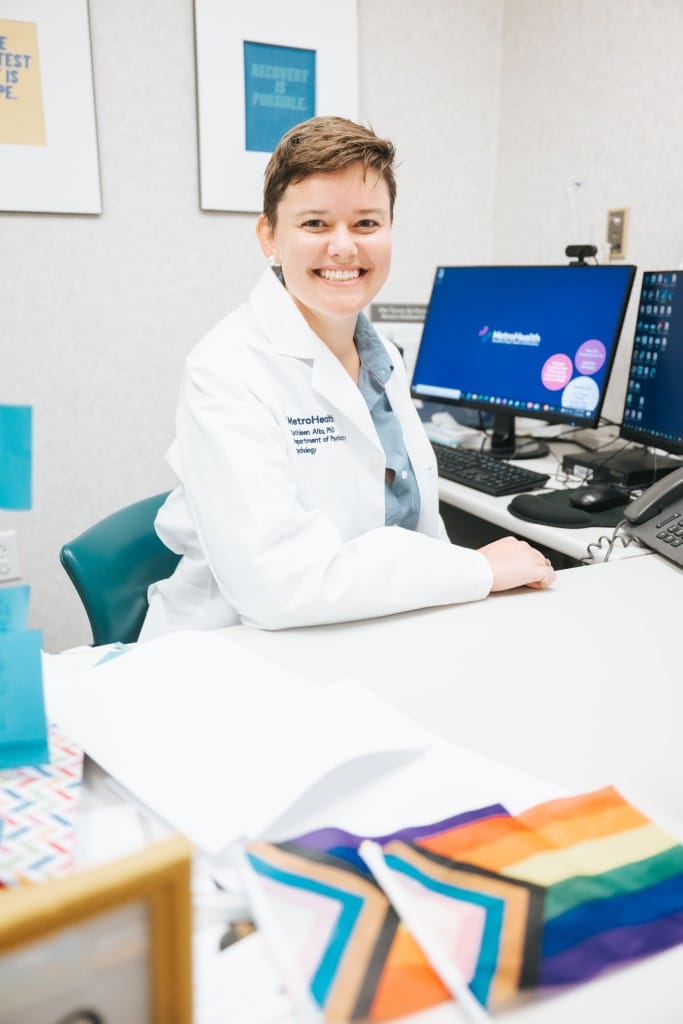
According to the American Psychiatric Association, bisexual people are at increased risk for mental health concerns when compared with monosexual people. And, according to MetroHealth Pride Network providers Kathleen Alto, PhD and Laura Mintz, MD, PhD, those mental health issues are in large part to the marginalization that bisexual people experience.
“The stigma of bisexuality is driven by binaries,” says Mintz. “There is something particular about being the other in a society that is obsessed with a binary that creates a tax, a minority stress, a weathering.”
“That marginalization creates an internal toll that people put on themselves, and stress is correlated with health outcomes.”
In part, the marginalization that comes with existing outside a binary—gay or straight—is a product of suspicion, both inside and outside of the queer community, that bisexuality isn’t real. In 2005, the New York Times published a controversial article “Straight, Gay or Lying? Bisexuality Revisited,” that promoted a study from a researcher with a history of ethics controversies that suggested that true bisexuality does not exist.
“One of the things that protects people from minority stress is community,” says Alto. “Unique experiences of stigma towards bisexual individuals can be a barrier in finding and building community.”
Alto goes on to explain that the experiences of bisexual people in a long-term relationship that is either heterosexual or same-sex can contribute to a feeling of invisibility.
“The gender difference for bisexual people is particularly potent and complex,” says Alto. “The unique experience can contribute to a feeling of invisibility and a lack of community.”
People who are bisexual also deal with stereotypes that can negatively impact relationships. Often, people mistakenly believe that bisexual people are more promiscuous. In addition, male partners sometimes fetishize bisexual women, and sometimes society perceives bisexual men as being dishonest about their sexuality.
Language can be another barrier to community. People may feel the term “bisexual” can be non-affirming for those who themselves do not exist on the gender binary, or are attracted to people not on the gender binary.
One solution, Alto says, is to do the work of inclusivity every day.
“We have to be inclusive in the way we describe ourselves, and the way we want to create spaces for others. And, we have to recognize the labels we give ourselves might be upsetting for others—and give space for that.”
What to look out for
Alto suggests that bisexual people should regularly check in with themselves about feelings of depression or anxiety.
“If you’re not feeling like yourself, you should seek help from a trusted network of health professionals,” says Alto. “But first, you have to ask yourself if you have a place where you can be yourself.”
That includes your own relationships and the community you build around you.
“If you feel like you have to keep a damper on who you are, you’re at risk for mental health issues,” says Alto.
That includes relationships, which can be challenging for bisexual people. Partners of bisexual people aren’t immune to bisexual stigma, which is one reason why bisexual people experience higher rates of intimate partner violence.
“Sometimes in relationships, partners can have the undertone of ‘I can’t trust you because of your bisexuality,’” says Alto. “It is important to know, that is not fair to you. If you’re in a lot of places where you aren’t able to be yourself, you need to seek a more affirming community.
And, Alto suggests, if you’re feeling down, hopeless, or anxious—and can’t get out of those feelings, seeking healthcare is important.
Finding culturally-responsive care
Establishing care—both mental and physical healthcare—is critical, as well as being a choosy consumer of healthcare services.
“Trust your gut about your healthcare experiences,” suggests Mintz. “When you say who you are, look at your healthcare provider’s face. Are they responding positively to you?”
“When you’re looking for help, you’re the boss of that—you’re looking to go to someone to get your needs met.”
At the MetroHealth Pride Clinic, Mintz and Alto work to make the healthcare experience a comfortable one.
“I try to create the environment where if people ask me something, I’m not going to freak out,” says Mintz. “People have a right to get care that responds to them and helps with their problem.”
“You have a full right to interview your provider about how they work and their practice. You’re buying it—you might as well buy the thing you want.” 🔥
About The MetroHealth Pride Network
The MetroHealth Pride Network offers primary care for adults and children and gender-affirming care for adults. While people in the LGBTQ+ community have similar routine healthcare needs as cisgender or heterosexual people, providers in the MetroHealth Pride Network have specialized training and experience related to sexuality and gender.
Pride Network providers can be found in four MetroHealth locations—Brecksville, Brooklyn, Cleveland Heights, and Rocky River as well as a clinic in the LGBT Community Center of Greater Cleveland. Learn more at www.metrohealth.org/pride.
Know an LGBTQ+ Ohio story we should cover? TELL US!
Submit a story!