
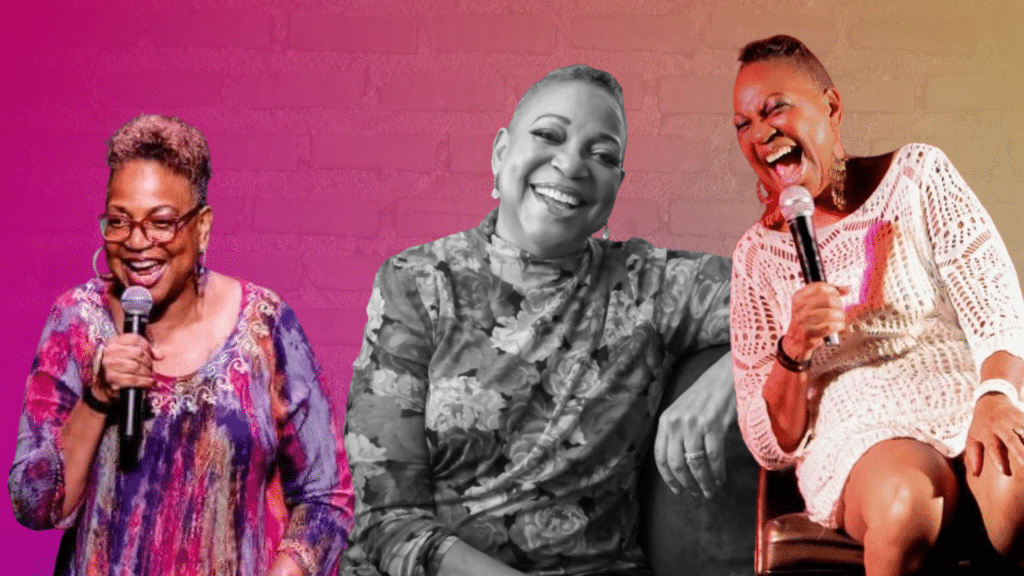
In Netflix’s Outstanding: A Comedy Revolution, a documentary charting the past century of queer stand-up comedy through some of the scene’s best-known voices, comic Wanda Sykes pointed to the first Black woman she ever saw on stage, who “just happened to be gay”: Ohio’s own Karen Williams.
A free-range child who spent her youth romping through New York City and “was all up in the whole ’60s experience” as a teenager, Karen Williams — now proudly in her 70s — has a lifelong history of doing things her own way. She graduated from Cleveland State University in 1998 with a self-designed major in “Humor and Healing,” and two years later, with a Master’s of Education from CSU’s Adult Learning and Development program. She is also the founder and CEO of the International Institute of Humor and Healing Arts (the HaHA Institute), through which she leads workshops and seminars to promote the healing power of humor.
Life “can be a bit of a joyless adventure at times,” Williams said. “And people need to know that humor relieves stress. Humor elevates your endorphins. Humor gives you that little dopamine rush you want, you know?”
Williams has been performing openly as a lesbian comic since 1983 — 14 years before Ellen’s explosive coming-out episode aired. But that’s not the main metric Williams would use to measure her own accomplishment.
“My son, who’s a sketch comic, said, ‘Mom, Wanda gave you the highest compliment because she said, ‘She was just funny,’” Williams retold. “I mean, as a comic, that’s what you wanna hear. Just funny, you know what I’m saying? He said, ‘Mom, that’s gold.’”
“I do comedy too!”
A “painfully shy child,” Williams was drawn to acting and dance early in life, and modeled from the age of 15 into her forties. In any role where she put on a costume, she could embody a character and “come out,” in a sense. Comedy emerged as the perfect medium.
“Comedy is just the best use of all the skills that I have,” Williams said. “I like to talk. I get to move. I’m making eye contact, I’m feeling the energy from the people, I’m giving them energy. It’s just a really wonderful kind of artistic expression for me.”
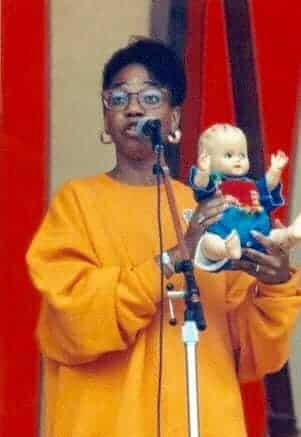
As a 23-year-old single mother in 1970s Santa Monica, California, Williams got a close-up look at the life of an artist through members of her Buddhist community, including genre-defining performers like Herbie Hancock and Tina Turner.
Then, as a ghostwriter for Columbia Pictures, Williams grew intimately familiar with the balancing act of writing a comedy script, which meant adhering to certain patterns while maintaining a feel of spontaneity.
“What I really like about comedy is that, especially doing improv-style comedy, it appears as though there’s no form,” Williams said. “But there is a form. There’s a definite structure, and you get to play inside of there, but you are bumping up against the edges.”
When in 1983, a friend mentioned that he was doing a comedy show in Oakland, Williams was confident enough to declare, “I do comedy too” — despite never having performed a set.
Her friend offered her five minutes of his own act, which would be the first of Williams’ countless comedy performances.
Working the LG circuit
Williams started doing stand-up in small Black clubs in the Bay Area, but grew sick of hearing homophobic and misogynistic jokes from fellow performers while waiting for her turn to take the stage. She turned to the “lesbian and gay circuit,” joining the groundswell of queer comics making a name for themselves at gay and lesbian clubs in the San Francisco of the ’80s.
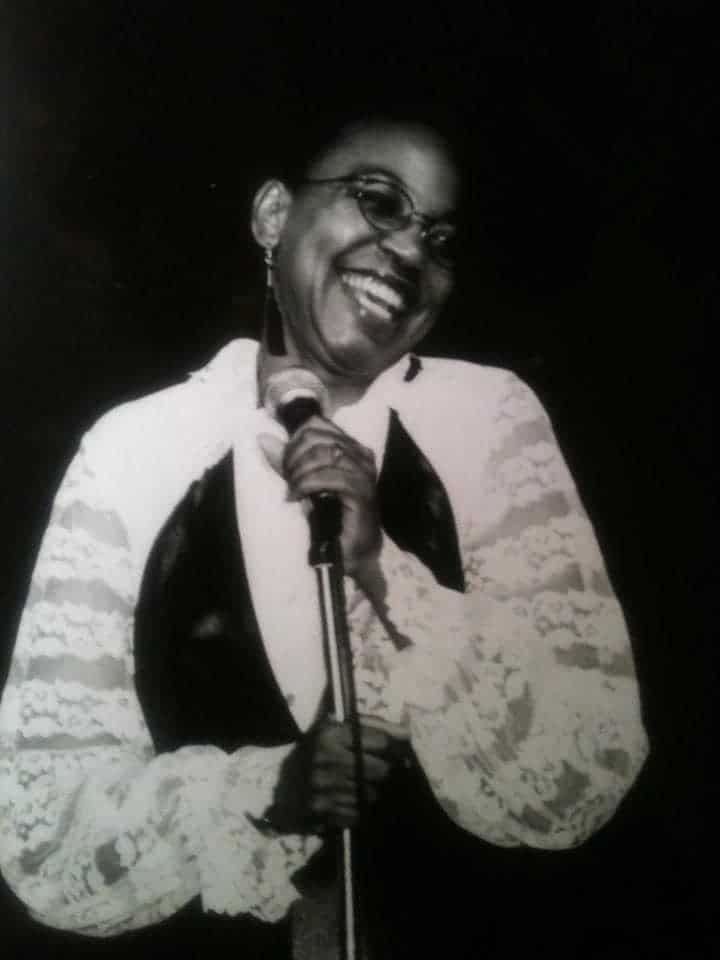
“Valencia Rose and Josie’s Cabaret and Juice Joint featured all of the gay and lesbian comics,” Williams said. “And I was the first act to perform at Josie’s. The club wasn’t even open yet, so hardly any people came to my show. So [the owner] gave me carte blanche to come to the club anytime I wanted to. And I did, over the run of the club. I certainly did.”
Williams credits drag queens not just with providing her a segue into local comedy scenes, but with acting as the front line of defense against unwelcome incursions into spaces that hosted gay and lesbian performers. She argues they deserve recognition in a big way.
“To me, it should be DQLG, because the drag queens were there before anybody,” Williams said. “I would be at shows in Oakland and people would come in to harass us, and the seven-foot drag queen would lift her dress up and go over there to kick his ass. You know what I’m saying? So, I have tremendous respect for drag queens.”
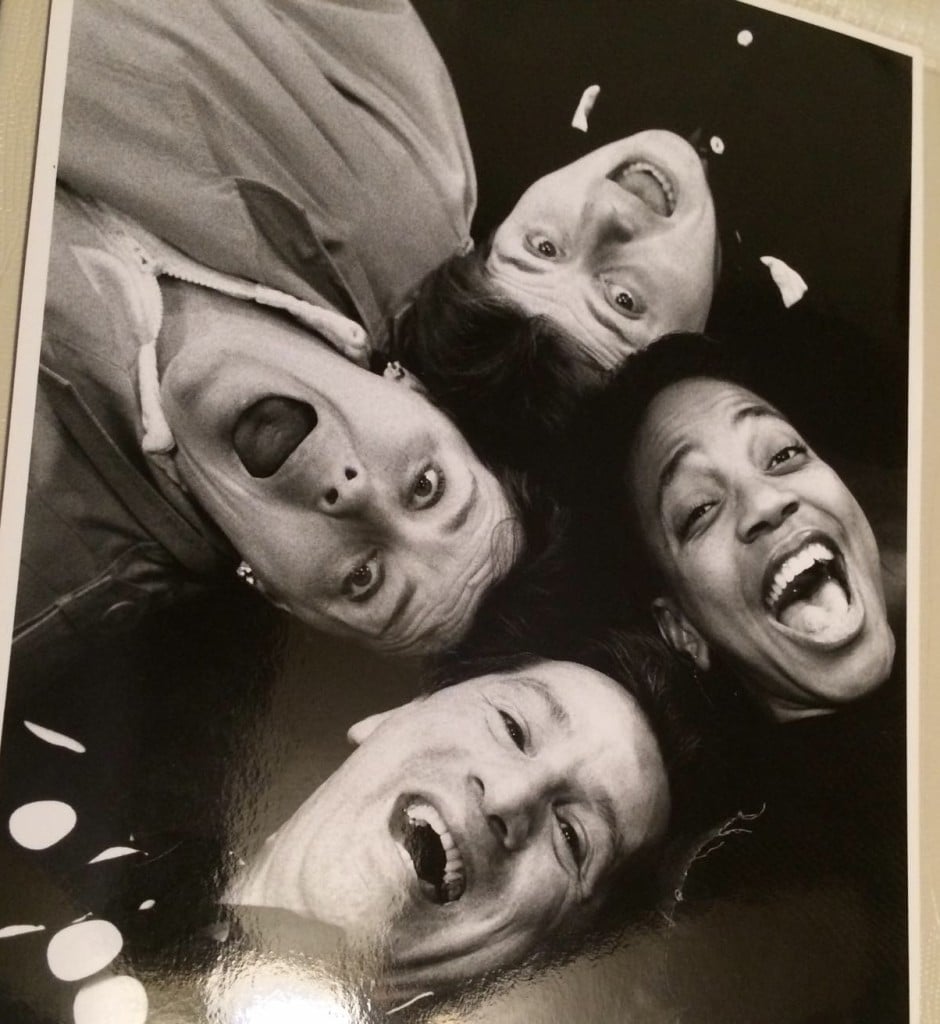
Drag queens also forced Williams to push herself to her creative limits — and for that, they merit her highest compliment.
“They’re just funny,” she said. “Like, if I had to go after the drag queen, I had to be super funny cause they were hilarious, you know?”
Mom of three, never closeted
Williams speaks unequivocally about never feeling the need to hide her sexuality or experiencing the “internal strife” many of her queer contemporaries grappled with. But as her audiences grew, Williams wasn’t exempt from the official coming-out rite of passage.
“It was Marga Gomez who saw me at the club — Ollie’s, it was a women’s club at that time in Oakland — and asked me if I wanted to perform at San Francisco Pride,” Williams recalled. Gomez is a renowned fellow lesbian comic who worked the LG circuit alongside Williams. “And I said, ‘Yeah.’ And she said, ‘Well, you know, it’s gonna be in the newspaper.’ And I said, ‘Yeah.’ And she said, ‘You know, you good?’ Basically, she was trying to warn me that it would out me.”
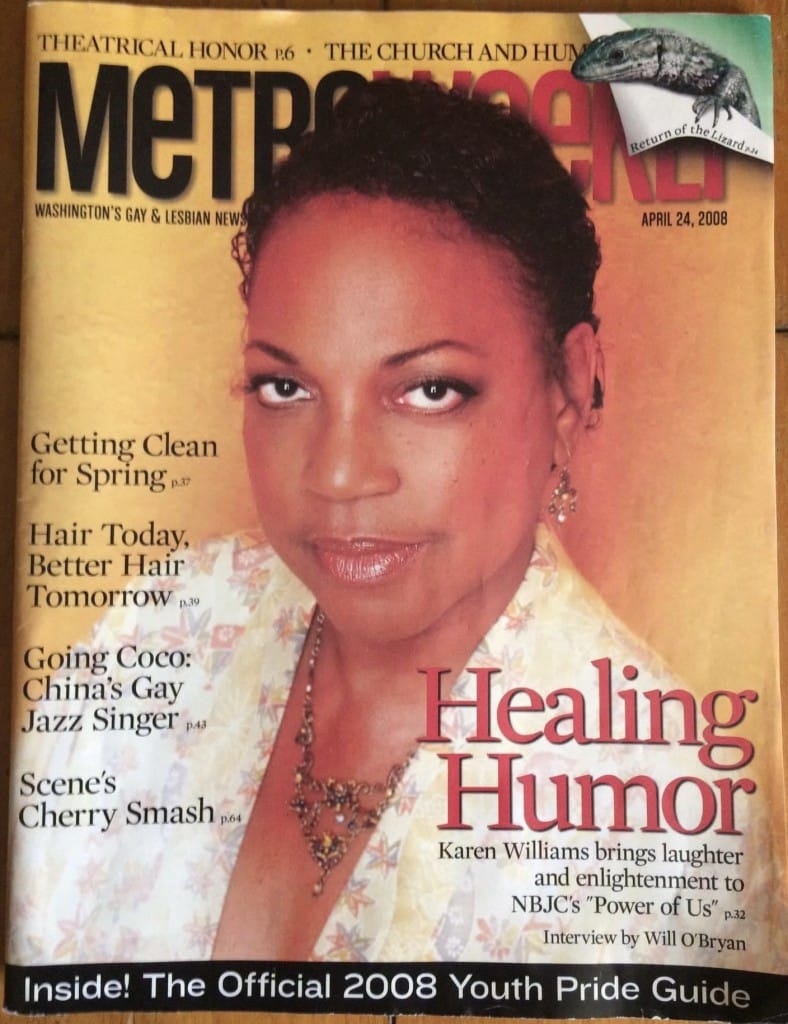
Williams performed at San Francisco Pride. And just as she never felt ashamed of her sexuality, she knew she didn’t have to place a buffer between her life as an openly lesbian artist and activist, and the lives of her three sons.
“I was [22], my son was 3,” Williams said. “So he grew up with me. When he was about 8 or 9, I was marching in Hollywood in like, some see-through top in high heels at LA pride. And he ran up to me, ‘Mommy, Mommy, I’m so proud of you.’ He was my ally right from the beginning.”
For Williams’ sons growing up in a “gay mecca,” having a lesbian mom was the least of their concerns.
“In Berkeley, I had the feeling that I was okay there when my son was little,” Williams said. “But as he was growing into being a Black man, he felt radiant hostility sometimes towards him.”
But Williams’ experience bore out her optimism about the LGBT community’s willingness to reflect and self-correct.
“This community has not been racism-free or sexism-free or gender bias-free — we know that,” Williams said. “But the reason I love the community is because we’ll talk about it. We’ll have a meeting. We’ll have a conference. We’ll have a show. We’ll do something to at least address it, rather than acting as though it doesn’t exist. And I enjoy that, I prefer that.”
Aging joyfully
These days, Williams isn’t out to prove herself to anyone.
“At this point in my life in general, I feel more contributive than anything,” Williams reflects. “By the time I’m at the stage where I am, I have my friends, I know who I am, I’m secure in that, I know what my skill sets are, and I mostly want to give back.”
Her comedy tour was derailed by the pandemic, but rather than take up breadmaking or puzzling, Williams decided to use her quarantine time to earn a PhD. She is in her final year of writing her dissertation in social gerontology at Miami University in Oxford, Ohio, a journey that she describes as “so not about the PhD.”
“It was really about me falling in love with myself,” Williams said. “It was the first apartment I had with no children that had inhabited it. It was so liberating and so eye-opening for me to get in touch with what it is that I like, and who I am. And I started having this profound appreciation for myself. It’s been life-changing for me.”
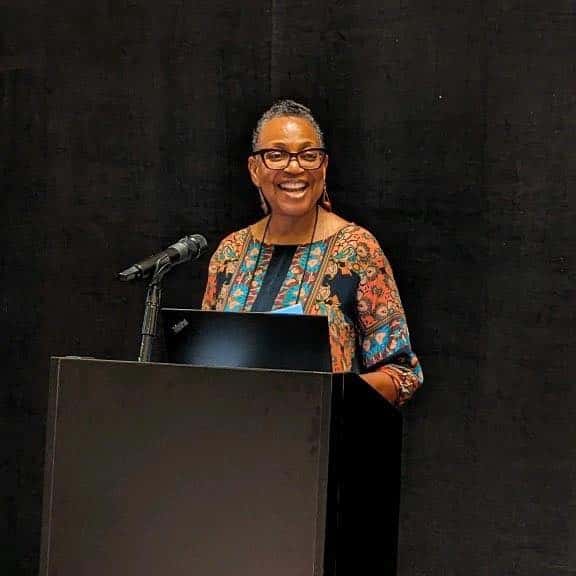
As a comic, Williams hasn’t slowed her roll either. She continues to perform comedy aboard lesbian cruises with Olivia Travel, a company she’s worked with since 1990, as well as conducting online seminars on joyful aging through the HaHA institute and even writing a new book on humor and healing. But it’s undeniable that the comedy scene around her has changed drastically since the start of her career — in part due to her influence.
“I always felt like the mainstream would come to us,” Williams said. “I felt like eventually they would get tired of the ‘Take my wife, please take her,’ and all of the bad wife jokes, and the guys constantly talking about their penises.”
“What makes stuff funny”
That’s essentially what’s happening. Not only is bald-faced misogyny generally frowned upon, but it’s a lot easier for queer comics to use their personal lives as comedy material. Some of Wanda Sykes’ Outstanding co-stars emphasize that identity is central in comedy today — listeners want to hear the gritty details of your story, and the fastest way to connect with an audience is to get deeply personal.
The mainstream has come to Karen Williams in more ways than one. Performing sets for queer audiences, where she openly discussed her identity as a Black lesbian, was instrumental for gaining a foothold in the comedy scene. Now, up-and-coming queer comics who don’t want to tiptoe around their sexuality face fewer obstacles — they don’t have to worry as much that coming out might cost them a network contract, for example.
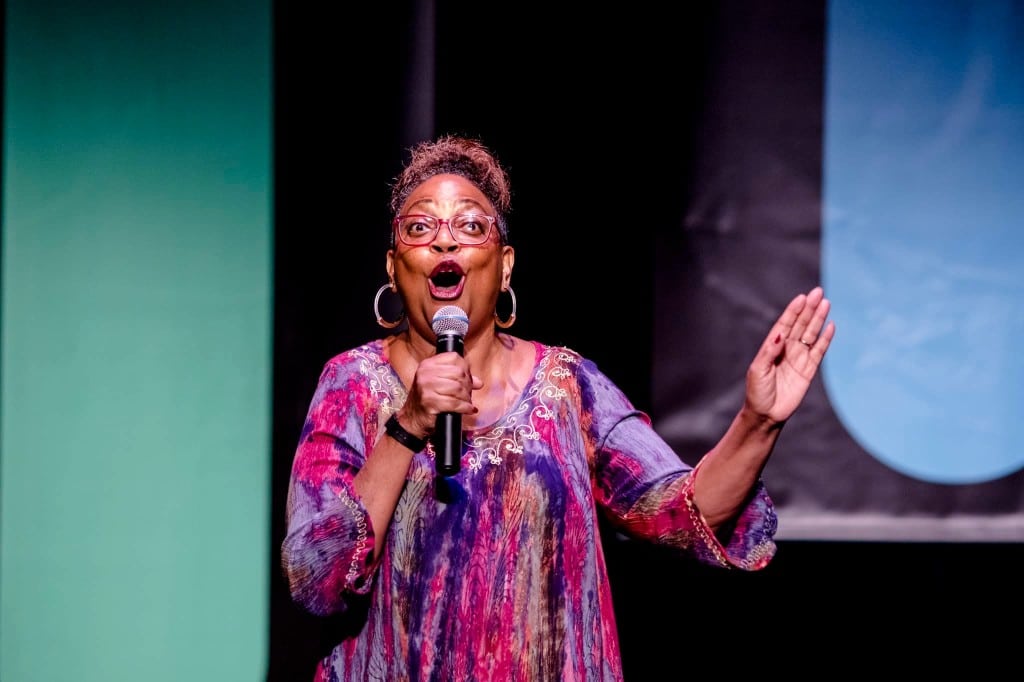
However, Williams hopes young, aspiring comics take their craft further than solely speaking about their identities. She cites Sebastian Maniscalco as a relatively new comic reaching audiences through personal anecdotes only a guy with an Italian grandma could tell.
“He talks about his grandmother being in the basement, making lasagnas,” Williams said. “This guy is so Italian. I mean, I want to eat spaghetti after I watch him.”
Williams predicted that new comics who’ve grown their reach by presenting themselves as members of an identity group will likely move towards a more universal brand of comedy.
“There’s a growth and development of you as a performing artist, that begins to have acceptance about that part of yourself, and then goes on. And I think where you’re going on to, is towards your shared humanity. Ultimately, what makes stuff funny is that we all think it’s funny.”
That’s not to say that Williams is trying to put distance between herself and her identity. She’s no stranger to facing pushback for billing herself as a “lesbian comic,” and in response to those who would rather entertainers keep their personhood out of their performances, Williams reaches to her philosophy of humor as healing.
“We are invisible. No one really cares about us, especially Black lesbians,” Williams said. “Who needs a laugh more than those people?” 🔥
IGNITE ACTION
- To learn more about Karen Williams, visit her website here.
Know an LGBTQ+ Ohio story we should cover? TELL US!
Submit a story!

Pingback: Iconic Ohio lesbian comic Karen Williams gets her flowers – Gravitater
Pingback: August 29 update 2024 – Dykes and Lesbians