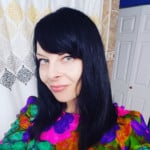
Danielle A. Berger, LPN, didn’t expect a routine visit at a drug and alcohol recovery center in rural Ohio to spark a LGBTQ+ healthcare initiative. But when a patient confided in Berger that his primary care physician ignored him when he asked about getting a prescription for PrEP, she was shocked.
“It just makes me sad that not only did that doctor not hear this gentleman’s concerns out, but he didn’t even offer him a referral to somewhere else,” said Berger. “I guess that’s what got me was,so, maybe in your narrow mind you want to keep your head in the sand and pretend it’s not around here, or you just don’t want to go to the extent of dealing with it, but at least offer this human being somewhere that he can go to get what he needs.”
Berger set out to fulfill that need, adding PrEP to the roster of sexual healthcare services provided at the Kno-Ho-Co-Ashland Community Action Commission’s four clinics located in Knox, Holmes, Coshocton and Ashland counties, where she serves as assistant administrator for the Family Planning division.
In operation for more than 50 years, the grant-funded Title X family-planning facilities already served low-income patients coming in for birth control, general exams, pregnancy testing, STI testing, mammograms and gynecological services. But prior to her encounter with the man denied PrEP, Berger just didn’t realize there was demand for services targeting LGBTQ+ community members. It’s a common oversight in rural areas.
Fighting barriers to healthcare for the rural LGBTQ+ population is an uphill battle
According to a study shared by the Rural Health Information Hub, rural LGBTQ+ people have some of the worst health outcomes and face some of the greatest barriers to healthcare access. The most common challenges are a lack of resources and a lack of understanding from healthcare staff. Stigma and discrimination are also among the concerns.

Some rural healthcare professionals mistakenly assume that LGBTQ+ people don’t live in rural areas, so there’s no need to have services for them. LGBTQ+ people do live there, of course. According to a policy brief from the National Rural Health Association, approximately 2.9 to 3.8 million LGBTQIA+ individuals live in rural communities across the United States.
Many of those individuals remain—understandably—unwilling to discuss their LGBTQ+ status with their neighbors or doctors for fear of judgment, perpetuating the myth.
“I’ve talked to a couple of gentlemen, ‘Would you be willing to do an interview and speak to what we’re doing?’ And there’s just a total fear,” Berger said. “The worst part is in these small communities that judgment is so hard.” In fact, the man who was denied PrEP declined to be interviewed for this article.
Berger explained that everyone knows everyone’s business in small communities, so many LGBTQ+ community members either defer healthcare or feel like they have to drive into the closest big cities to get services.
“You get in bigger cities, it’s not so stigmatized and you’ve got your places you can go,” said Berger. “These rural communities, that’s not the way it is. That’s what we’re trying to promote is, look, what happens here stays here. We’re adamant on confidentiality, and most of our clinics are set in rural areas. You’re not gonna be walking down Main Street coming into our clinics.”

Making Kno-Ho-Co-Ashland clinics a comfortable space for LGBTQ+ folks
After adding PrEP prescriptions to clinic services, Berger set out to make the clinics a rare safe haven for rural members of the LGBTQ community seeking sexual healthcare. She had each nurse (two per clinic, plus Family Nurse Practitioner Lindsey Bryan, who travels between them) undergo training to administer rapid HIV tests and learn LGBTQ+ related terminology and topics..
The clinics are designed to remove barriers to access and be as private as possible. Appointments are easy to schedule, walk-ins are welcome and private waiting rooms are sometimes available. Birth control can be obtained the same day, and bowls of free condoms sit out in each location for anyone to grab. Those 13 and up do not need parental consent for services (except for HIV testing, which is 16 and up). Patients can choose to have prescriptions mailed directly to their door instead of picking them up at a pharmacy.
“That’s a nice service as well, that people don’t have to run all over the place,” said Lindsey Bryan. “I feel like we’re kind of a one-stop-shop, like we can pretty much get everything done. If somebody wants to come in and get birth control, but they’re due for an annual exam, we just do it all in one day and get it done.”
The hope is to build out a more formal roster of LGBTQ+ services in the future.
Private insurance, CareSource (Medicare) and Medicaid are accepted at the clinic, but there’s a sliding scale fee for anyone paying out of pocket. Bryan insists that no one is turned away regardless of ability to pay: “If people can’t pay, we can always find a way.” The hard part has been getting the word out to an understandably cautious LGBTQ+ community.
“I think it’s just something that’s maybe not talked about, but I think we’re getting there,” said Bryan. “Feeling comfortable coming into a place is part of the battle to get them in here. Once they come in here, they find out ‘Oh, this is okay, I’m gonna be okay with this,’ and it’s very private and confidential.”
Meanwhile, Berger has been getting the word out about the clinics in a variety of ways, from hosting tables at Coshocton and Ashland Pride events (complete with free, on-site HIV testing) to building a rapport with area LGBTQ+ coalitions and organizations. It’s working, albeit slowly. There are a few out (and grateful) LGBTQ+ patients, but Berger fully expects to see more in the future.
“We’re trying to give them every opportunity to take care of themselves to where they don’t have to discuss or publicize their sexual orientation or anything just to get the care that they need,” she said. “I want to see this take off. That’s my perfect world, because I know the individuals are there.” 🔥
IGNITE ACTION
- Drop in or call for an appointment at one of the Kno-Ho-Co-Ashland family planning offices in Coshocton, Ashland, Mt. Vernon or Millersburg. Visit the website for phone numbers and addresses for each location.
- Contact Assistant Administrator Danielle Berger at 740-397-0145 or dberger@knohoco.org for more information about family planning services.
Know an LGBTQ+ Ohio story we should cover? TELL US!
Submit a story!