
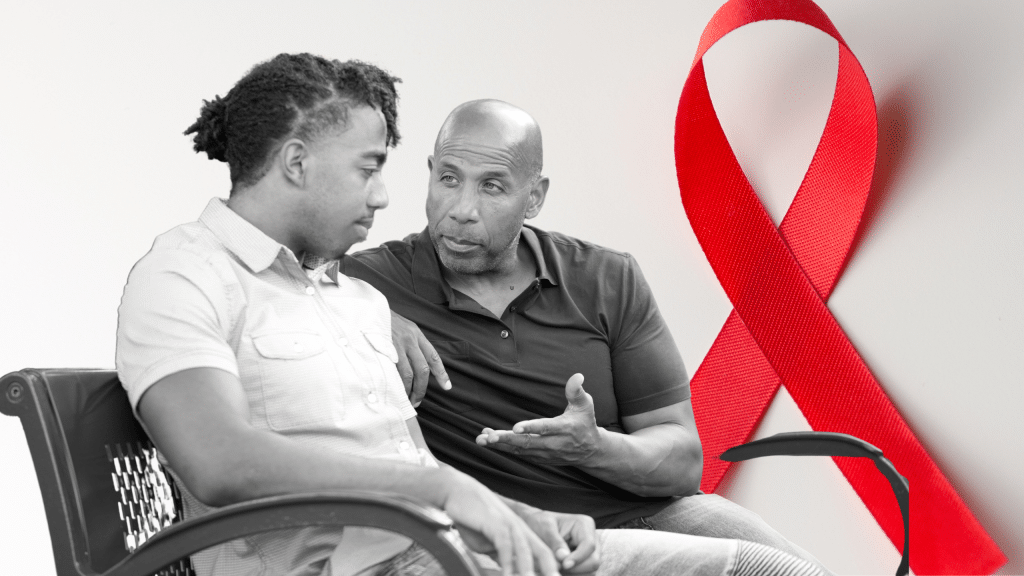
Although advances in medicine over the past four decades have dramatically changed the face of living with HIV, the experience of being diagnosed is still extraordinarily fraught.
“I’ve worked with individuals who were newly diagnosed and the first thing that comes out of their mouth is, ‘I’m going to die,'” said Bryan Richmond, who has been living with HIV for more than a decade.
In an effort to address the many challenges of being diagnosed with HIV, Equitas Health has introduced a Peer Navigation program: individuals who are diagnosed with HIV are paired with those who have been living with HIV for years. Together, they can connect to share resources, exchange information or just interact on a human level with someone who intimately knows what they are experiencing.
To learn more about Peer Navigation, we spoke to Richmond and Chris Cooper (Coop), two Peer Navigators.
To listen, click play directly below or read our (edited) conversation beneath the audio link.
Could you both introduce yourselves?
Chris Cooper: My name is Coop. I’ve got 30 years in with HIV, so I like to say I’m a legend now. I work for Equitas Health and I am one of the new Peer Navigators in the Equitas program that has launched.
Bryan Richmond: My name is Bryan. I am the Peer Navigator covering the Toledo/Lima area. I was diagnosed [with HIV] in February of 2014. So I’m 10 years in and just helping others learn how to cope.
Coop, for those who don’t know what peer navigation is, how do you explain it?
Cooper: The best way I explain Peer Navigators to folks is that we’re life coaches. We take our lived experience regarding living with HIV and help those who may be struggling — be it short-term, long term, newly diagnosed — and provide that light they may need in navigating either the system, building support networks or just providing information on our personal lives.
For example, I’ve been married about 20 years now and my husband is still [HIV] negative to this day. I’m able to provide that positive story about living with HIV.
Bryan, why is the Peer Navigation approach so much more effective than some other approaches out there?
Richmond: When I was diagnosed, there wasn’t anything like this out there. I found that I really needed that support and that understanding. Although I was diagnosed later on in life, I was still going through the denial, still going through, “How did this happen to me?” Having this program in place can help a lot of other individuals who probably have the same feelings and thoughts.

Coop, in that experience of being diagnosed, did you have access to a peer with whom you were able to talk?
Cooper: [laughs] So things were a lot different 30 years ago. Back then we were basically wondering if we were going to make it to 40 or even just make it to the next year. At the time, there was a grassroots movement that was a buddy system where people who had a little bit more time in with HIV would check on us younger ones. There was a community of individuals looking out for each other, helping us navigate to find resources and information.
As time has changed as to the thought of what HIV is and how it affects someone’s life, the narrative has changed. But the story is the exact same. I hate when people say, “It’s a chronic condition that you can live with.” Do you call cancer a chronic condition? If you don’t get treatment, you will die from cancer. Same thing with HIV. If we don’t get our meds, we will die from it.
So this narrative that you can take a pill and live a normal life is great, but there’s so much more underneath the water that needs to be talked about. Just having a Peer Navigator is beneficial for anybody who is HIV positive because [living with HIV] is isolating. It is lonely. My own husband doesn’t understand certain things that I go through on a daily basis. He’s not positive, so he would never understand as opposed to me and Bryan. We’re able to kiki it up and talk about what hurts today. It’s just that comfortability and friendship and knowledge that you have with somebody there who totally understands what exactly you’re going through.
Bryan, in addition to the individuals with whom you’re working, I would imagine that this experience also is really beneficial for the peer navigators as well.
Richmond: It is. I’ve worked with individuals who were newly diagnosed and the first thing that comes out of their mouth is, “I’m going to die.” And it’s like, “Oh, no, baby, times have changed. You’re not going to die.” And you go through and you explain it to them and you let them know that as long as you’re adherent with your medication and you’re staying up on your doctor’s appointments and you’re taking care of your physical and mental health, you’ll be fine.
Seeing that positive effect on them is also a positive effect on us. I’m helping them. I’m letting them know that they have this support system. So yeah, it affects us as well.
What kind of outreach do the peer navigators do?
Richmond: Well, we do a lot of tabling. Just recently Toledo had their Pride and I was able to talk to a few different people there who had friends who needed support. Basically we go out into the community and we talk to folks and share what we do. We let them know we’re here. And by doing that, you have individuals out here feeling not so alone. They know they can come in, they can talk to one of our medical health advocates or one of our non-medicals, and then they can get referred to the Peer Navigators. Then that’s where we step in and we’re like, “Hey, let’s go, let’s sit down. Let’s talk about this.”
Coop, what more can folks do to support the Peer Navigators?
Great question. There’s so much we can do. So, because we are a grant-funded program, the grant is written in a way that our hands are kind of tied with regards to referrals. You can help us by reaching out to the Ohio Department of Health, to say that they need to expand the services.
Right now you have to be in medical case management to get referred to a Peer Navigator. So if you’re with one of our health advocates or benefits navigators, they cannot refer clients to Peer Navigators. We should be able to take on clients. As long as they’re positive, they should be able to come to a Peer Navigator and ask for help.
This is our way of giving back and our way of fighting. 🔥
IGNITE ACTION
- Visiting the Equitas Health website where you can make an appointment or find a location near you.
Know an LGBTQ+ Ohio story we should cover? TELL US!
Submit a story!



Pingback: Peer Navigators offer a helping hand, listening ear and open heart to Ohioans living with HIV [LISTEN] | Dailywise