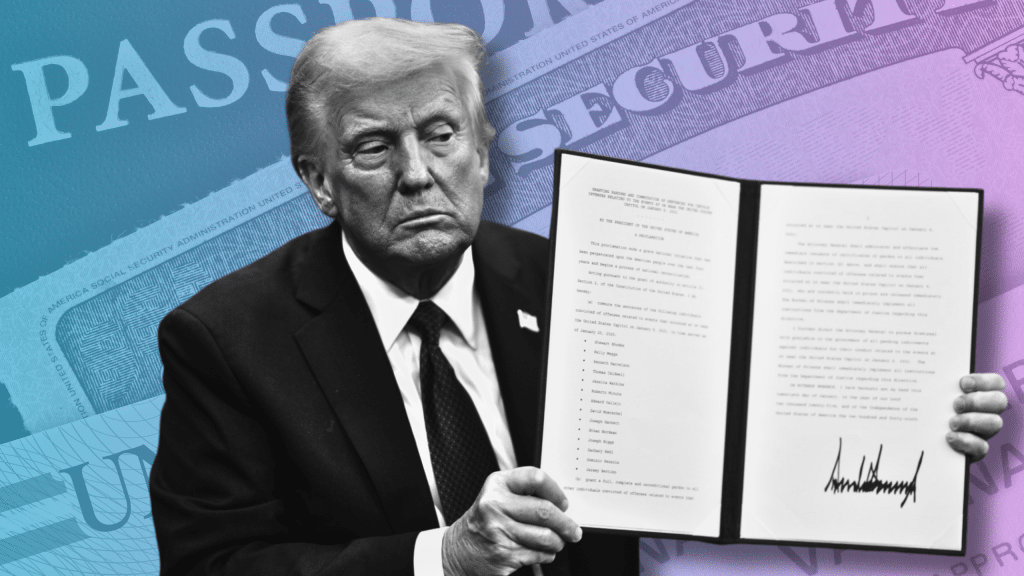
In the hours following his Jan. 20 inauguration, President Donald Trump signed two executive orders that could decimate transgender Americans’ access to health care, basic legal protections, federal identification documents and more.
Trump’s executive orders also include instructions to house transgender women in men’s prisons and eliminate federal Diversity, Equity and Inclusion (DEI) programs.
While the orders do not take effect immediately – and will likely experience massive legal challenges – experts warn the long-term consequences could be catastrophic for trans Americans, limiting their ability to support themselves and participate in public life.
In Ohio, transgender people have already faced more than a dozen anti-LGBTQ+ bills at the Ohio Statehouse – part of an unprecedented jump in anti-trans bills across the country.
Now, civil rights organizations say there’s little to do but wait.
Declaring two legal genders
Trump’s most sweeping executive order would “roll back transgender protections,” according to the Associated Press, altering the federal definition of gender to include just two options: “male and female.”
The order would allow Americans to select only one of two genders on federal identity documents like passports, social security cards and government-issued identification cards like driver’s licenses and visas.
At least 21 states previously allowed trans and non-binary people to select a separate gender option on birth certificates and sometimes driver’s licenses. Trump’s orders would disallow that option and require states to alter forms and paperwork to exclude it.
Additionally the federal government has issued passports with the gender marker “X” since 2022. That option would also be discontinued under Trump’s order, and people with existing passports that include “X” may need to reapply using new forms.
According to reports by Newsweek, the State Department – which issues and regulates U.S. passports – has removed information about the gender marker “X” from their website.
Redefining gender
The order redefines gender as “not changeable” and “grounded in fundamental and incontrovertible reality,” which researchers and geneticists say oversimplifies the complex way humans develop and display primary and secondary sex characteristics throughout their lives.
The order defines gender based on “reproductive function” rather than chromosomal makeup, further complicating the process of identifying an individual’s “accurate” gender marker.

Intersex people – who might possess multiple sex chromosome combinations and may display any number of identifiable sex characteristics across their lifetimes – are not acknowledged in the order, despite accounting for nearly 2% of the general population.
Breaking from global health care standards
Trump also signed an executive order withdrawing the U.S. from the World Health Organization (WHO), which includes 193 member states.
In a Jan. 21 statement, the WHO expressed concern around the United States’ intent to withdraw its membership, urging the Trump administration to reconsider its decision “for the benefit of the health and well-being of millions of people around the globe.”
Globally, the WHO’s policies have helped establish a general medical consensus regarding gender-affirming health care, along with consensus from medical organizations like the American Medical Association and the American Psychiatric Association.
Withdrawing membering from the WHO could signal a potential break in standards of care for transgender Americans.
With no obligation to adhere to the WHO’s established health care standards, the Trump administration would face fewer barriers to a federal gender-affirming health care ban for all transgender Americans.
Eliminating anti-discrimination laws
Under the order, Trump also instructed the U.S. attorney general to “immediately issue guidance to agencies” regarding the U.S. Supreme Court’s 2020 landmark decision in Bostock v. Clayton County – which protects transgender Americans from discrimination on the basis of sexual orientation and gender identity.
If the Bostock decision were reversed, transgender Americans would have no federal legal protections against anti-transgender discrimination in housing, education, health care or workplace settings.
In its public response to Trump’s second presidential term, the American Civil Liberties Union (ACLU) warned the reversal of Bostock “would strip LGBTQ people of nondiscrimination guarantees across a vast swath of federal government programs, including Social Security, Medicare and housing programs, as well as federal government employment.”
What happens next?
In a public statement Tuesday, transgender rights organization TransOhio reminded Ohioans that policy changes will not occur quickly – and will likely face significant legal challenges.
“We don’t know what the real effects of the executive orders will be,” TransOhio’s statement read. “There have not been any concrete changes to legal policies yet.”
The organization also noted that the new administration signed orders, in part, to sow fear among transgender Americans – who were a consistent topic during Trump and Vice President JD Vance’s campaign.
“Not everything proposed is something that can be executed,” TransOhio added. “Not everything will happen in the same way/timeline everywhere.” 🔥
Ignite Action
- If you are a young LGBTQ+ person in crisis, please contact the Trevor Project: 866-4-U-Trevor.
- If you are an transgender adult in need of immediate help, contact the National Trans Lifeline: 877-565-8860
- To register to vote or to check your voter eligibility status in the state of Ohio, click here.
- To find contact information for your Ohio state representative, click here.
- To find contact information for your Ohio state senator, click here.
Know an LGBTQ+ Ohio story we should cover? TELL US!
Submit a story!