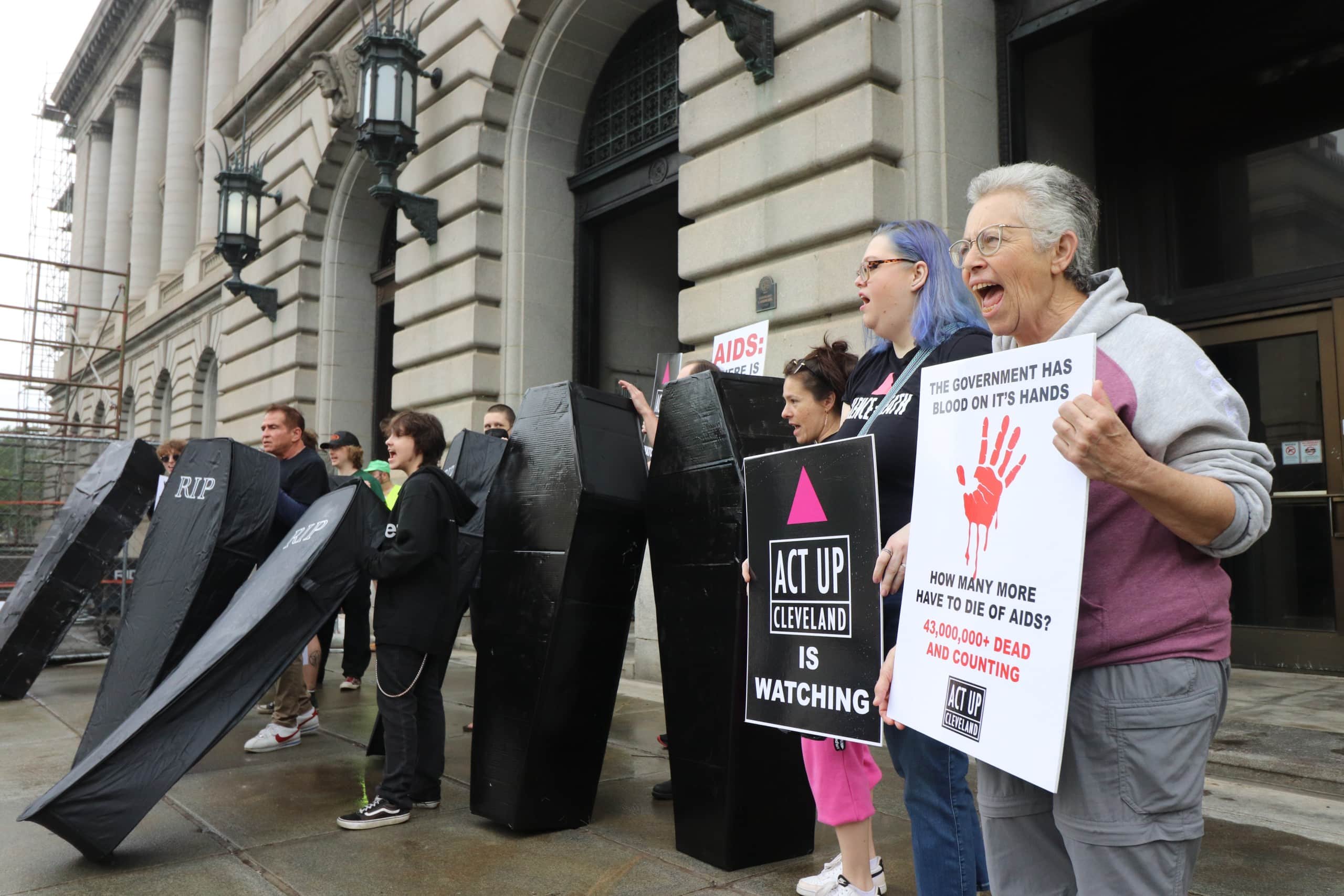
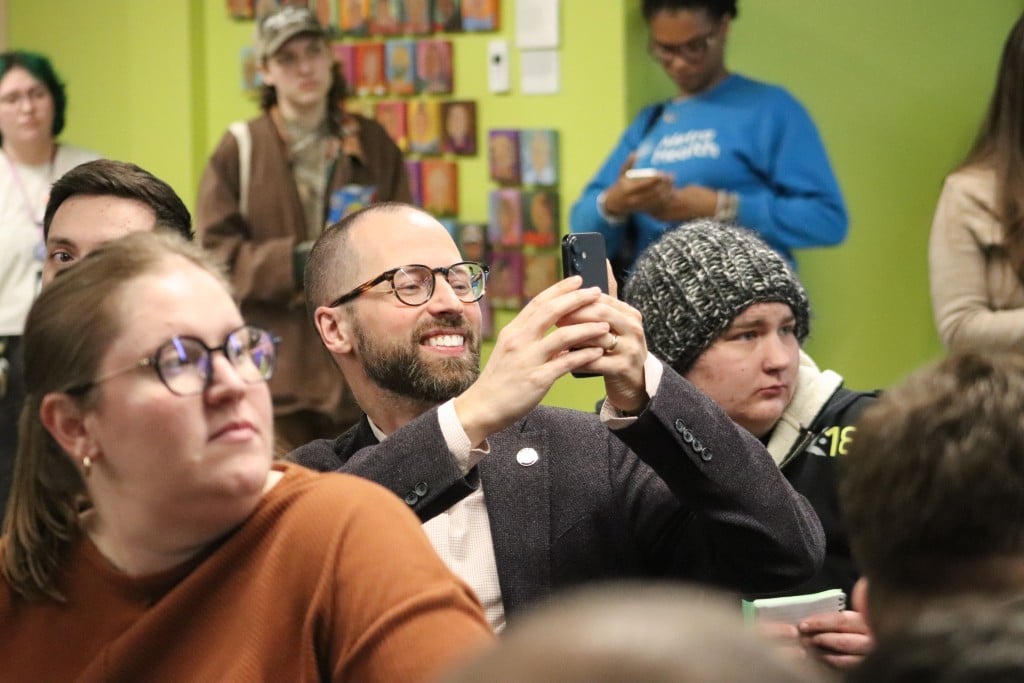
The Cleveland chapter of the AIDS Coalition to Unleash Power (ACT UP) drew nearly 100 people to its first public meeting in more than two decades.
With massive cuts to federal AIDS programs looming, longtime activists and organizers joined dozens of young people interested in reviving the group, widely known for acts of civil disobedience and direct political action around AIDS in the late 1980s and 1990s.
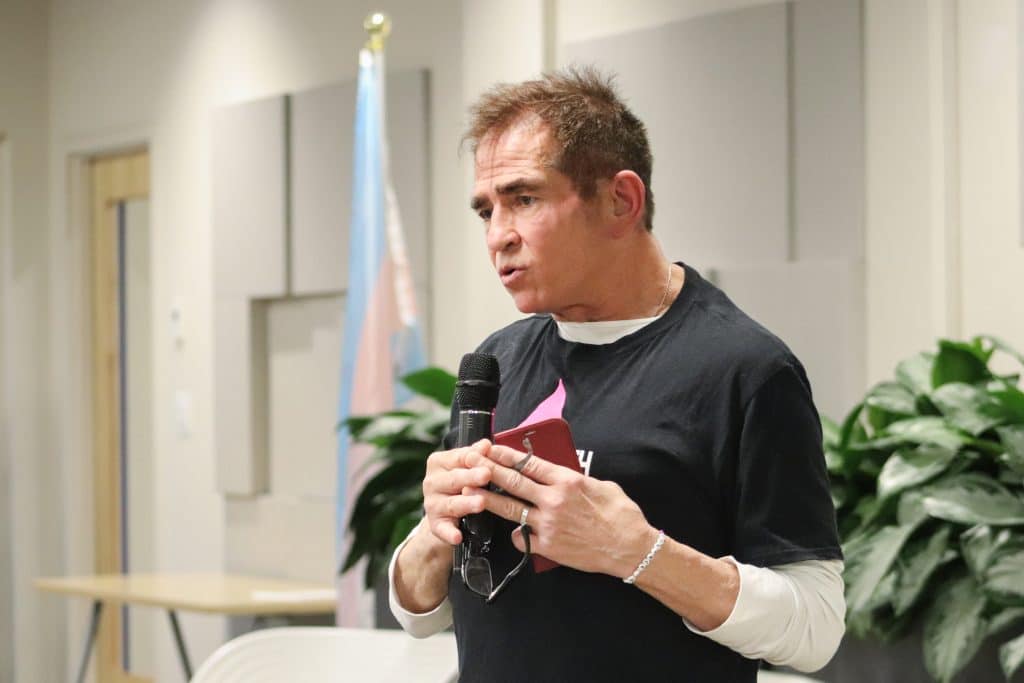
On the second floor of the LGBT Community Center of Greater Cleveland, in the city’s Gordon Square Neighborhood, ACT UP veteran and long term HIV survivor Gil Kudrin addressed the crowd.
“This is a deciding factor in our lives,” Kudin said. “This is who you would be during the Holocaust. This is who you would be during the civil rights marches. This is it. This is our moment as gay people – as people who care about gay people. They’re coming for us and they want us dead.”

Kudrin – who worked with iconic writer, HIV/AIDS activist and ACT UP co-founder Larry Kramer – called on public health officials to create a strategic plan and tap into philanthropic funds to build a stockpile of antiviral medications in the event that the Trump administration eliminates federal HIV/AIDS programing entirely.
“We have lived this nightmare before,” Kudrin said. “And right now, from an ACT UP standpoint, getting meds into bodies is the most important thing.”
Public health officials pledge support
The Ryan White Comprehensive AIDS Resources Emergency (CARE) Act was passed by Congress in 1990, named after the Indiana high-schooler who contracted HIV during a blood transfusion while undergoing treatment for hemophilia.
Today, more than 500,000 people – over half of all Americans living with HIV – depend on the Ryan White HIV/AIDS Program for access to life-saving antiviral medications, which can cost more than $4,000 out-of-pocket for a month’s supply.

In Ohio, roughly 25,000 people are currently living with the virus, with disproportionately high rates in Cuyahoga, Hamilton and Franklin counties.
“Help is not coming from the state,” Kudrin told attendees. “This is a local issue. All politics is local. If you think they are not coming for our HIV meds, you are delusional. No one will stop them – only the people in this room.”
Matt Carroll, representing the Cuyahoga County Department of Health and Human Services, agreed with Kudrin’s concerns about potential interruptions in HIV care across the state.
“I don’t question Gil’s predictions,” Carroll said, telling attendees the city and county are ready to meet with Kudrin and other AIDS organizers to create a strategic plan.
Cleveland Public Health Director Dr. David Margolius was also in attendance, and told the crowd that Cleveland Mayor Justin Bibb specifically requested he attend the meeting in person.
Margolius answered a series of direct questions from Kudrin and others regarding the availability of city and county funding for HIV/AIDS programs.
“You’re right, we need to call philanthropy. We need to fill those gaps,” he said. “But all the money that philanthropy has is not enough compared to what the federal government is trying to take away right now.”
Since February, several federal judges have blocked the Trump administration’s attempts to freeze billions of dollars in federal funding. Most recently, U.S. District Judge Mary McElroy blocked the administration from freezing billions in grant money already authorized for environmental projects by the Biden administration.
“We are ready to join every single lawsuit,” Margolius added. “And what we’ve been seeing across the country is the same day, judges have put stays into keeping, preserving that money.”
Stockpiling HIV medications
The Ryan White CARE Act is divided into five parts, all of which play a separate role in providing medications, medical care and wraparound HIV support services.
Part B helps provide antiviral medications, via the AIDS Drug Assistance Program (ADAP), to low-income Americans living with HIV. Kudrin has suggested using medication rebates accrued through the program to help buy back and stockpile medications.
“I’ve been an HIV provider in a global setting for many years and then now here at Neighborhood Family Practice,” said Dr. Prakash Ganesh, medical director for the Cuyahoga County Board of Health. “I know how important Ryan White is to me and my patients. I know when I’m getting to know a new patient, how nervous they are to get to know their provider and to know a new system. It’s just so scary. I’m so proud to be helping in some way or another. I’d like to do more, and that’s partly why I’m here.”
Kudren asked Ganesh directly to advocate for people living with HIV and AIDs:
“We need you to put pressure on the Ryan White CARE Part B group to start working with us to give us some idea of a number, of how much money they spend on meds and how we get those rebates back,” Kudrin said.
“This is a strategic plan to get meds into bodies, short-term,” Kudrin added. “Either they win or they don’t. The only way they win is if you don’t show up. I’ll be here every Thursday.”
The next ACT UP meeting is scheduled to take place at the LGBT Community Center of Greater Cleveland from 6 to 7:30pm on Thursday, April 24. 🔥
Ignite Action
- To learn more about the Cleveland chapter of ACT UP, visit their Facebook page here.
- To learn more about the history of ACT UP, click here.
- To find a Ryan White HIV/AIDS Program medical provider in your area, click here.
- To register to vote or to check your voter eligibility status in the state of Ohio, click here.
- To find contact information for your Ohio state representative, click here.
- To find contact information for your Ohio senator, click here.
- If you are a young LGBTQ+ person in crisis, please contact the Trevor Project: 866-4-U-Trevor.
- If you are an transgender adult in need of immediate help, contact the National Trans Lifeline: 877-565-8860
Know an LGBTQ+ Ohio story we should cover? TELL US!
Submit a story!