

Editor’s Note: This piece was updated to reflect new developments surrounding President Trump’s tariffs.
When Jordan McLaughlin founded Rookie Mage Games in 2018, he said, the tabletop gaming industry was still growing in acceptance. Finding success by fundraising with Kickstarter, he and other LGBTQ+ game designers were able to get their ideas off the ground. He was hoping 2025 would be a big year for his company.
Now, McLaughlin is fighting to keep his small, queer-owned business afloat by joining a national lawsuit against President Donald Trump’s executive order raising tariffs with China, which in turn could disproportionately affect small businesses.
Rookie Mage Games is represented by the nonprofit Pacific Legal Foundation, after owner Jordan McLaughlin received a tariff bill for a new run of his tabletop game. The amount was over $3,000, due to the Trump administration’s 20% tariff on Chinese imports at the time.
According to the filing, Trump’s executive order imposing the tariffs relied on the International Emergency Economic Powers Act, which grants the president the ability “to deal with an unusual and extraordinary threat” to a declared national emergency.
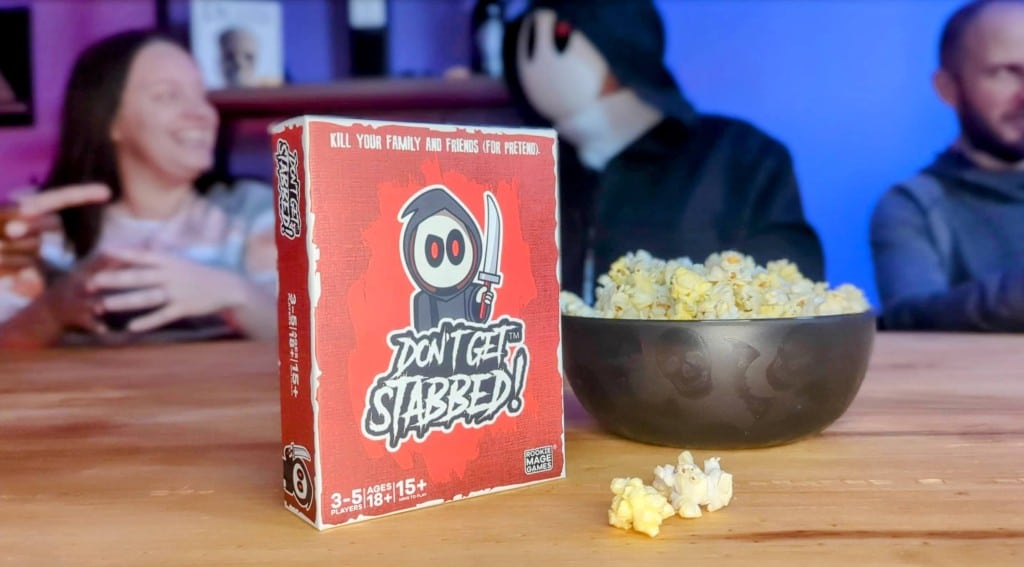
The lawsuit claims that the order is “unconstitutional and unlawful” because “the imposition of tariffs is not among” the expanded powers a president is granted under the act, nor does the state of U.S. trade before April 2 constitute an “unusual and extraordinary threat” to the nation.
The executive order, however, has threatened McLaughlin’s business, he said. If the order had come in a few weeks later with the 120% tariff rate, it would have cost McLaughlin $21,000. The tariffs on China for imports are currently reduced to 30% for 90 days, but such rapid policy changes caused long-term damage, according to Council on Foreign Relations, a global nonpartisan think tank.
The 120% rate could have been “a death blow” to small businesses, McLaughlin said, including his own. Navigating a 30% tariff rate will still “be really hard for a lot of small businesses.”
“Most will probably try to pass the cost on to customers, but that will probably lead to less sales since customers will be already paying more for day to day essentials,” he said. “My currently strategy is to minimize my costs as much as possible and hope the courts take our side and remove the tariffs.”
“If they don’t, I’m not sure what I’ll do.”
An evolving industry
Thanks to crowdfunding platforms like Kickstarter, McLaughlin said a larger variety of voices were able to break into the competitive industry, creating a “melting pot” of designers from every walk of life.
Although the nonprofit trade organization Game Manufacturers Association does not collect data on LGBTQ+ member companies, McLaughlin is familiar with multiple businesses and designers he personally knows are part of the queer community. GAMA recently reaffirmed its commitment to diversity, equity and inclusion.

LGBTQ+ businesses still have tariffs “impacting their bottom line,” said Amanda Cole, executive director of Plexus, a Cleveland-based LGBTQ+ Chamber of Commerce.
“Many have had to raise prices or absorb costs, which is tough for small LGBTQ+ owned businesses already operating on thin margins,” she said. “Even with some tariff reductions, the uncertainty in the economic outlook makes planning difficult, and access to capital remains a concern.”
Manufacturers see ‘more strain than benefit’
The purported goal of the Trump administration’s tariff plan was to bring manufacturing back to the U.S. Queer manufacturers and service-based industries in the Plexus network have seen increased demand, Cole said. But the result is “more strain than benefit.”
Even if tabletop gaming companies want to manufacture in the U.S., McLaughlin said they face steep obstacles.
Queer gaming companies order smaller runs of their inventory compared to gaming giants like Mattel and Hasbro, and they can have niche audiences. Such aspects make U.S. manufacturers cost too much or shy away from printing runs of their games.
It also takes time for orders to be fulfilled and shipped. McLaughlin ordered his tariff-affected run in December, before Trump was in office.
Now, companies aren’t able to afford shipping the games, so most of the new inventory is housed in storage overseas, he said.

Uncertain future for LGBTQ+ gaming companies
The vibe is “panic,” McLaughlin said.
“[People] don’t want to talk about it anymore,” he said. “They get very emotional because it just feels very hopeless for them.”
With the reduced tariffs, he said large corporations will fight over cargo space to get their inventory back to the U.S. Small businesses could see their freight rates “skyrocket” while they’re still paying the tariff bill.
Even if they can afford the rates and tariffs, the current slashing of tariffs is just for 90 days – and McLaughlin isn’t sure companies can get their stuff on boats before the deadline.
“Who knows what will happen then,” he said. “ These are small businesses with margins — three to four months with no inventory to sell is very hard for a lot of people to overcome.”
A hearing for the lawsuit has not yet been scheduled.
“ I am supportive if we want to build our manufacturing back up here,” McLaughlin continued. “There’s ways to do that, but taxing small businesses into oblivion is not a way that’s gonna do it, you know?”
Trump’s tariffs partly blocked
On May 28, a federal panel of judges blocked some of Trump’s steepest tariffs, including the reciprocal tariffs on China.
According to The New York Times, the U.S. Court of International Trade ruled that the president’s tariffs “exceeded any authority granted” by the International Emergency Economic Powers Act of 1977, which Trump used as justification for his executive orders.
The ruling is a “major step forward” for the lawsuit and protecting small businesses, McLaughlin said.
“While we fully expect Donald Trump’s crusade against small businesses to continue, we’re encouraged that the judicial branch is stepping in to do what Congress has been too weak to do: uphold the Constitution,” McLaughlin wrote in a statement. “I built this company from the ground up to make people laugh and help them create memories.”
“I’ll continue to stand up and fight for my business and others like mine.” 🔥
IGNITE ACTION
- Rookie Mage Games’ website can be found here.
- To find contact information for your Ohio state representative, click here.
- To find contact information for your Ohio senator, click here.
Know an LGBTQ+ Ohio story we should cover? TELL US!
Submit a story!




Pingback: Queer-owned game business joins lawsuit to stop Trump’s tariffs: They’re “really catastrophic” - Celebrity Zones