Ohio’s proposed ban on public drag and gender performance received its first legislative hearing Wednesday, when lawmakers sparred over the larger implications of banning drag and gender performance in public spaces.
HB 249 would ban “adult cabaret performances” in “any location other than an adult cabaret where minors may be present, that is harmful to juveniles or obscene.”
It is the second attempt by conservative, Christian Reps. Angie King (R-Celina) and Josh Williams (R-Sylvania Township) to regulate and restrict drag performances across the state.
Now, civil rights groups and Democratic lawmakers are raising the alarm – worried the bill could be used to target transgender Ohioans in nearly every area of public life.
What is the drag ban?
HB 249, “The Indecent Exposure Modernization Act,” lists five specific types of performers that would be banned from performing in public places under the law:
- “Topless dancers”
- “Go-go dancers”
- “Exotic dancers”
- “Strippers”
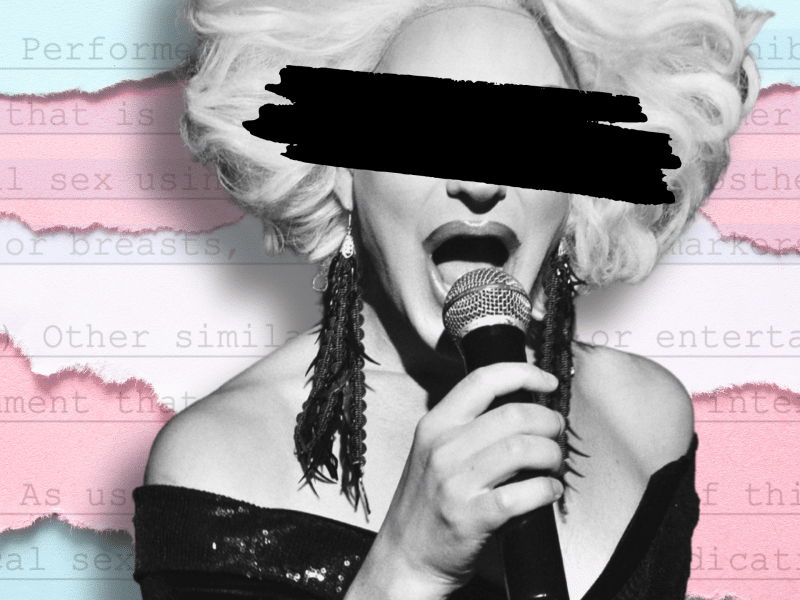
- “Performers or entertainers who exhibit a gender identity that is different from the performer’s or entertainer’s biological sex using clothing, makeup, prosthetic or imitation genitals or breasts, or other physical markers.”
Civil rights groups and Democratic elected officials both expressed concern regarding the presence of drag and gender performance on the list.
“This bill broadly targets anyone who performs exhibiting a gender identity different than the entertainer’s biological sex at birth,” the American Civil Liberties Union (ACLU) of Ohio said in a written statement. “HB 249 also relies on notoriously vague legal standards used to determine whether content is considered obscene and/or ‘harmful to juveniles.’”
Under Ohio Revised Code, performances that are “harmful to juveniles” or “obscene” include “any performance that is patently offensive to prevailing standards in the adult community as a whole with respect to what is suitable for juveniles” and performances that “[lack] serious literary, artistic, political, and scientific value for juveniles.”
While King and Williams both noted the bill only applies to drag and gender performances that are considered obscene or harmful to juveniles, it is unclear whether drag itself will be found obscene or harmful under the law.
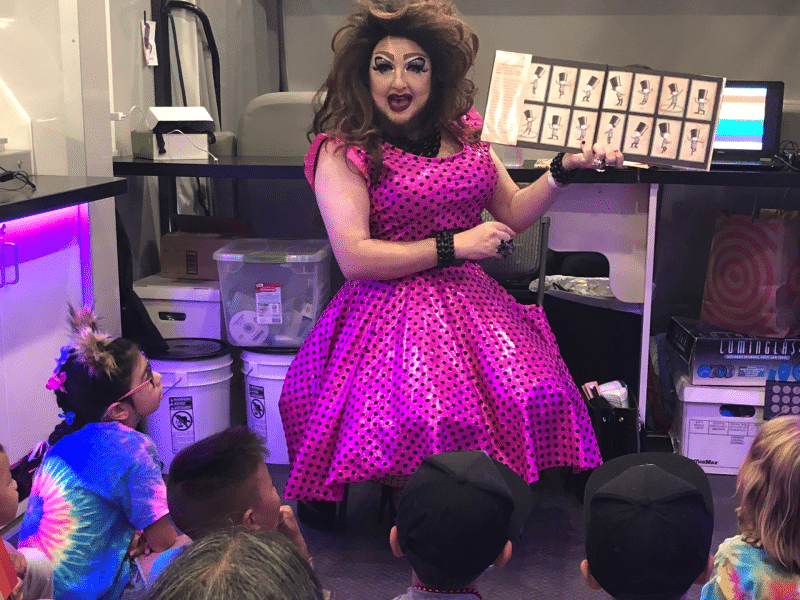
It is also unclear how drag and gender performances designed for children and families would be affected by the bill, including drag storytime events held in public spaces like public parks or libraries.

Blurring the lines
Williams also spoke extensively about an incident at a YMCA in the rural community of Xenia, Ohio, blurring the lines between drag performance and transgender identity.
In 2023, transgender woman Rachel Glines was charged with indecent exposure after changing her clothing in the women’s locker room.
Glines was found not guilty by a Xenia Municipal Court judge, in part because her genitals were not directly visible to other people while she changed. However, Williams said he believes Glines should have been prosecuted – and that HB 249 would have allowed that.

“Individuals were found to be not guilty because they exposed their private area, but they didn’t actually expose their ‘private part’,’” Williams added, directly referencing Glines’ case. “That’s a nuance in the law that we’re trying to fix.”
Under Ohio Revised Code, Glines’ behavior did not meet the legal definition of a “performance” – which is defined as “any motion picture, preview, trailer, play, show, skit, dance, or other exhibition performed before an audience.”
Glines is not a drag performer and was not engaging in drag or gender performance.
Judiciary Committee member Rep. Dani Isaacsohn (D-Cincinnati) openly challenged Williams regarding the incident.
“That case is being used as a red herring for something that is way broader,” Isaacsohn said, referring to Glines.
Last year, TransOhio executive director Dara Adkison expressed a similar sentiment, noting that blurring the legal lines between transgender identity and public drag and gender performance could increase transgender Ohioans’ risk of experiencing violence, harassment and discrimination in their day-to-day lives.
“By equating performing in drag or simply existing in public as a trans person with obscenity, [the bill] perpetuates hateful stereotypes, endangers the safety and well-being of our community and many others across Ohio,” Adkison said.
Targeting transgender Ohioans
In light of President Donald Trump’s executive order declaring that all Americans are “male and female,” civil rights advocates have expressed ongoing concern that transgender Ohioans could be criminalized for “performing” their own gender identities in public spaces by wearing clothing, makeup or accessories not typically worn by the gender assigned to them at birth.
Isaacsohn also addressed that concern directly.
“There are five categories listed [in the bill]. They discuss what [performers] are doing. But there’s one of the categories that discusses who they are,” he said. “That is a distinction I think needs to be explained as it relates to whether you can treat people differently based on that distinction.”
“My concern here is that this bill is not only redundant, but it’s redundant in a way that is actively targeting a group of people that don’t need any more things targeted at them,” Isaacsohn added.
“We have a group of people who champion the idea that they want our society to be inclusive of them,” Williams said, describing LGBTQ+ Ohioans. “That means they get the rights and privileges of every other citizen, but the bad part is that being included also means you’re included in our criminal statutes.”
“They don’t care about the constitutionality of things,” he claimed. “They want to be able to engage in their conduct because they understand that when you engage in obscene performances in front of children, it can shape the minds of children. They want to perform in the presence of children because then it makes children more accepting of the lifestyle they chose.”
Williams – who has used medically and scientifically inaccurate language to describe both transgender people and certain types of gender-affirming health care – has also previously denied the existence of transgender people. 🔥
IGNITE ACTION
- The Buckeye Flame’s Ohio LGBTQ+ legislation guide for 2025 can be found here.
- If you are a young LGBTQ+ person in crisis, please contact the Trevor Project: 866-4-U-Trevor.
- If you are an transgender adult in need of immediate help, contact the National Trans Lifeline: 877-565-8860
- To register to vote or to check your voter eligibility status in the state of Ohio, click here.
- To find contact information for your Ohio state representative, click here.
- To find contact information for your Ohio state senator, click here.
Know an LGBTQ+ Ohio story we should cover? TELL US!
Submit a story!