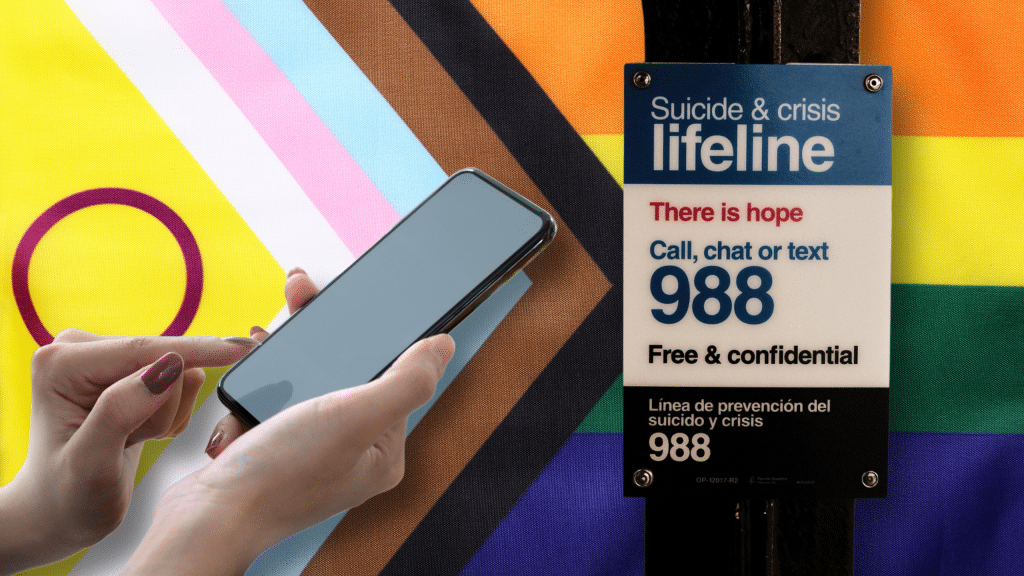
Ohioans who work with LGBTQ+ youth in rural areas say the Trump administration’s decision to eliminate LGBTQ+ youth services for the 988 National Suicide & Crisis Lifeline will disproportionately affect young people in their communities.
Funding for the LGBTQ+ youth hotline will end July 17.
“ People are going to lose an incredibly valuable resource,” said Ryan Acker, board president of the LGBTQ+ Community Center of Darke County.
A new report by youth mental-health advocacy organizations Hopelab and the Born This Way Foundation found that LGBTQ+ youth in rural areas rely in higher numbers on online support compared to their urban peers, who tend to receive more support from their families, schools and neighbors.
Defunding 988 is “cruel and targeted,” said Erin Upchurch, executive director of Kaleidoscope Youth Center in Columbus. KYC still provides resources like their drop-in center and therapy services at no cost.
“This defunding is saying that it doesn’t matter whether queer and trans youth live or die,” Upchurch said.
More training and increased call volume at crisis centers
When 988 came online in 2020, Acker said, two marginalized groups were identified as needing special care: veterans and the queer community. Those hotlines address those populations in ways that work best for them, he said.
The LGBTQ+ hotline used call centers at The Trevor Project. With the funding cut, now those 988 calls will go to other centers, causing an increase in callers, said Colleen Oaks, director of communication and strategy initiatives at Montgomery County ADAMHS.
Those call centers will need additional training on working with the LGBTQ+ population and how to handle increased call volume, she said. The centers have “stepped up” whenever they are needed most.

“ They recognize the importance of their work,” Oaks said. “We’re very creative in the way that we figure out how to make sure that these resources are there, but it definitely makes it harder on them.”
While the hotline will still be a good general resource, Acker said, his organization will focus on making the atmosphere in Darke County more positive for LGBTQ+ youth so they feel welcomed and accepted. The center is conducting safe space training for members of the public and mental health agencies.
“Another way that people can address a resource going away is to actually help people in the community be more supportive and caring and kind,” he said.
Finding resources becomes more difficult
The harsh atmosphere in some rural areas can make LGBTQ+ youth perceive adults as a threat until proven otherwise, said Minna Zelch, board vice president of Geauga SOGI (sexual orientation and gender identity) Support Network.
“ We’ve even had families who refuse to acknowledge that their LGBTQ+ child committed suicide because they were LGBTQ+ and were not accepted,” Zelch said. With services cut, “what we’re gonna see is more deaths and more people suffering in silence.”
Other resources are still available. The Trevor Project maintains a 24/7 suicide hotline for LGBTQ+ youth via text, online chat and phone.

Getting information out about that hotline is a priority for Zelch. 988 is promoted everywhere, but promoting Trevor Project’s hotline could get censored because of bills like SB 1, which prohibits universities from endorsing or opposing “any controversial belief of policy.” The bill HB 155, which prohibits diversity, equity and inclusion programs in public schools, would require boards of education to investigate “alleged violations” of policies reversing DEI.
“ It’s become even harder for us [to fill the gap],” Zelch said. “When we first started, several school counselors were seeking us out for resources and help, and then in the last few years we were actually told, ‘Yeah, we can’t really be talking to you.’”
Both Zelch and Acker have seen growing interest in their organizations. Geauga SOGI’s Pride sponsorships increased this year, and attendance rose at events at the LGBTQ+ Community Center of Darke County.
Those who show up, however, are the lucky ones, Zelch said. Youth who attend Geauga SOGI events typically have at least one affirming adult in their life who is able to drive them. Those who don’t attend might not be in a safe enough environment to come.
“Our hearts are breaking for them,” said Zelch, because they often don’t get the help they need.

Filling the gap
Montgomery County has “always been highly inclusive of LGBTQ+ folks,” said Richelle Frabotta, project manager for LGBTQ+ health initiatives with Public Health – Dayton and Montgomery County (PHDMC).
Youth weren’t always in the picture, but Frabotta recently helped launch the Q+ Youth Center, which provides mentorship, support, and events for LGBTQ+ youth. Since the beginning of the year, the center has offered suicide prevention education every month.
“I think the adults, the organizations [and] the funders in town are focused on creating opportunities for thriving to happen, not just resilience,” she said.
Acker’s organization has people on the ground in Darke County conducting peer-to-peer events and organizing health and wellness programs such as sound healing.
“ Our community has been and continues to be resilient,” he said. “ Our partners and allies have continued, especially in areas like Darke County, to rise to the moment.” 🔥
IGNITE ACTION
- More information about the LGBTQ+ Community Center of Darke County can be found here.
- More information about the Q+ Youth Center can be found here.
- More information about Geauga SOGI can be found here.
- If you are a young LGBTQ+ person in crisis, please contact the Trevor Project: 866-4-U-Trevor.
- If you are an transgender adult in need of immediate help, contact the National Trans Lifeline: 877-565-8860
Know an LGBTQ+ Ohio story we should cover? TELL US!
Submit a story!