If it feels like the pace of the world is picking up, you’re not alone.
At work, the World Economic Forum predicts that personal evolution—learning new skills and finding new roles—will cause us to reinvent ourselves once per decade. In our hands, we often hold devices that allow for up-to-the-second updates on news that impacts our real lives, and it’s usually up to us to decipher whether that news is from an accurate source. At home, the LGBTQ+ community faces real dangers to the way we can express our gender identity and sexual orientation, while living a healthy life.
It’s all led to a mental health crisis, with nearly a billion people living with a mental health condition worldwide. If you have anxiety, depression, PTSD or another common mental health concern, the confusion in our world can be like adding gasoline to a fire. And, even if you don’t struggle, sometimes past trauma and external triggers can seem like they’re waiting in the wings to spark a mental health issue.
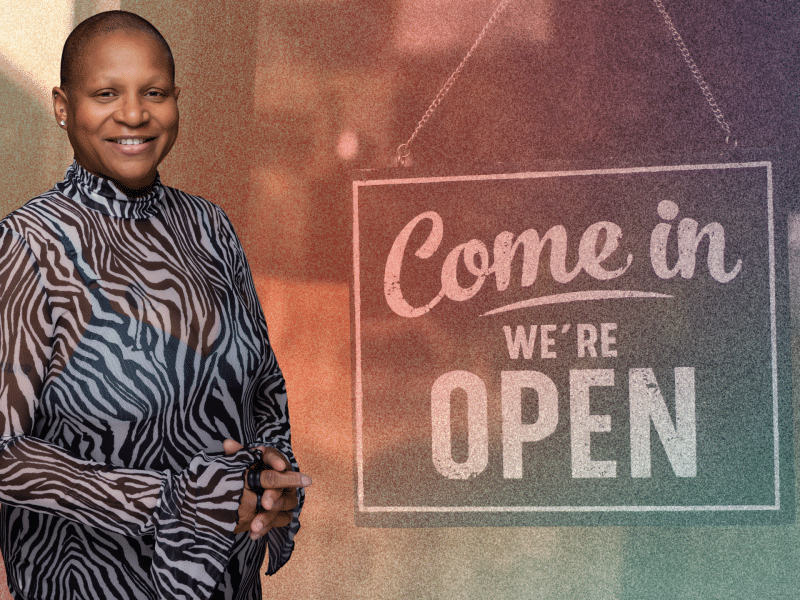
To help find clarity, we talked to Amy Heutmaker, MS, MBA, LPC, a mental health counselor at MetroHealth. As a counselor affiliated with the MetroHealth Pride Network, she provides mental health care for people in the LGBTQ+ community in Northeast Ohio.
The Lay of the ‘Land’
Heutmaker began working for MetroHealth in April 2025 following a stint at a New York health system. She was drawn to MetroHealth because of the reputation of the MetroHealth Pride Network.
“My wife lives and works here, and I have friends who receive care at the MetroHealth Pride Network,” says Heutmaker. “MetroHealth has an incredible reputation for providing services for the community as a whole.”
What she’s seen is a group of healthcare workers who understand what the LGBTQ+ community is experiencing.
“As providers, we’re cognizant of the social stressors that evolve every day and impact people’s well-being,” says Heutmaker. “Our job is to help people walk day to day through the world.”
Prioritizing Mental Health
Taking care of your mental health is a journey, not a one-time destination. Heutmaker offers five tips to take care of your mind in a confusing world.
1. Keep Social Media Social
While social media can be a great way to stay in touch with friends, Heutmaker warns that there is no way to keep up with the flood of information that impacts the lives of LGBTQ+ people—or anyone for that matter.
“Closely monitor how you’re feeling in your body and mind when you use social media,” Heutmaker suggests. “If it turns your stomach or if you have other physical reactions, it’s time to cut social media use short.”
Heutmaker recognizes that each person may have their limits—your mileage may vary. Still, “doomscrolling” can take a toll.
“Ask yourself: is what I’m doing right now helping or harming me?” says Heutmaker. “If it helps you to get news and information, then take that time with a trusted source.”
2. Control What You Can Control: Your Home
With the winds of change blowing all around us, your home must be a refuge.
“My wife and I decided long ago that we need to make our home a place of love and support for no matter who comes in,” says Heutmaker. “Our home has to radiate love, especially for ourselves.”
Instead of spending time alone processing bad news, spend time in your home with those you love engaging in activities that bring you joy. If the outside world feels out of your control, it probably is. Focusing on the things that make you strong enough to advocate outside of your home’s walls is a good investment of time and energy.
3. Seek Community
For some, home is not a safe place. As humans, we’re wired—and refreshed by—connection.
“The pandemic showed us what can happen to mental health when we’re shut up with people who are not supportive of our identity or sexuality,” says Heutmaker.
If you’re comfortable, consider seeking community at LGBTQ+ Community Centers, which host activities and small groups. If you’re religious, find an affirming congregation. For those who don’t feel safe finding an in-person community, Heutmaker says some online communities can be helpful.
“Earlier in my life, I found community on Discord and Reddit—which can be good sites for information and connection,” says Heutmaker. “But you need to ask yourself often: how much of this can I take daily?”

4. Find Care
“Every person in the LGBTQ+ community today should seek care,” says Heutmaker.
Signs you should see a mental health provider include:
- Excessive, uncontrollable worry
- Frequent outbursts of anger or sadness
- Unexpected new behaviors, even if mild
- Panic/anxiety attacks, which can feel like a heart attack
“If you can feel your anger or sadness in your body, we want to see you,” says Heutmaker.
When you visit a mental health counselor within the MetroHealth Pride Network, the first few visits are focused on building a relationship. It starts with a one-hour mental health assessment, a conversation focused on what you’ve been dealing with recently and understanding your medical and personal history. Visits will continue at a pace that is right for your mental health—monthly at a minimum, more frequent if needed.
“I ask a lot of questions because I believe in person-centered care,” says Heutmaker. “The patient is in the driver’s seat for their care—I’m just here to help navigate.”
5. Identify Providers Who See and Hear You
No matter where you decide to seek mental—or medical—healthcare, finding a provider who will truly see you and hear what you need is important. However, it can be challenging to determine which providers will be affirming.
Heutmaker suggests looking for inclusive language on the Psychology Today profile of any mental health provider you’re considering. Then, establish contact with the provider and pay close attention to the intake forms and communication.
“If the intake forms are inclusive—asking you your chosen name, your pronouns—it’s a good indication that a provider is at least inclusive enough to ask,” says Heutmaker.
As you visit a provider, if there’s anything that makes you feel uncomfortable, remember it’s your health. It’s your healthcare journey. You can choose another provider at any time.
Find Balance
“In such a quickly changing world, we have to find balance as members of the LGBTQ+ community,” says Heutmaker. “That starts within.”
Heutmaker suggests staying in touch with your body so that you can identify warning signs of mental health conditions. Yoga, meditation, working out, breathing exercises and stretching are good physical outlets that help your mind and body stay in contact.
And, once you’re strong, you can find more strength in community.
“I think we’re seeing now in these moments that our community has taken a lot of things for granted in the progress we’ve made,” says Heutmaker. “I was pleased to see last month’s Pride in the CLE showed that communities and groups are coming back together.”
About The MetroHealth Pride Network
The MetroHealth Pride Network offers primary and mental healthcare for adults and children and gender-affirming care for adults. While people in the LGBTQ+ community have similar routine healthcare needs as cisgender or heterosexual people, providers in the MetroHealth Pride Network have specialized training and experience related to sexuality and gender.
Pride Network providers can be found in five MetroHealth locations—Brecksville, Brooklyn, Cleveland Heights, Parma and Rocky River as well as a clinic in the LGBT Community Center of Greater Cleveland. Learn more at www.metrohealth.org/pride.
Know an LGBTQ+ Ohio story we should cover? TELL US!
Submit a story!