LGBTQ+ people have historically challenged relationship structures, whether through lavender marriages – wherein gay men and women marry each other to appeal to heteronormative standards but otherwise date separately – or polyamory.
There’s another often stigmatized relationship structure that was famously featured in the 2005 film Brokeback Mountain: gay men married to straight wives.
Relationships where those involved do not have the same sexual orientation are called mixed-orientation relationships, said Allen Mallory, assistant professor of human development at The Ohio State University. Lavender marriages fall under that category, but most often they take the form of a bisexual cisgender woman marrying a straight cis man. Most people who recognize the term refer to when a man comes out as gay to his wife while they are in a heterosexual relationship.
For some, the story ends in divorce and bitter feelings. For Dale and Shelly Lykins, it was the beginning of a journey of self-reflection and strength aided by counseling and therapy.
Coming out
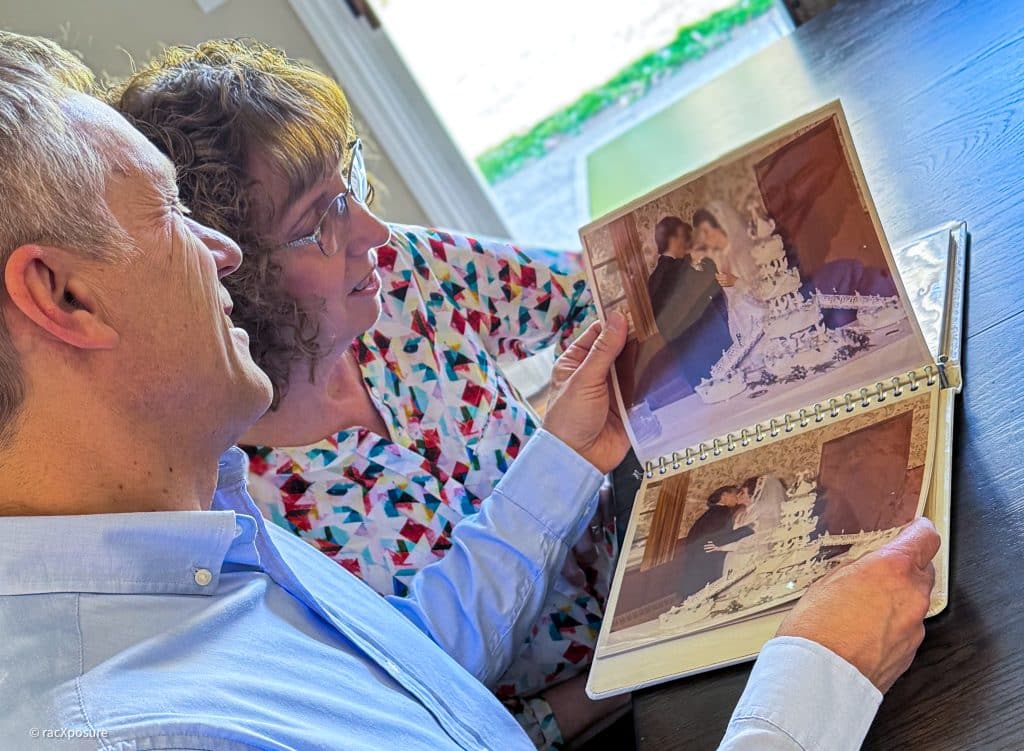
Dale and Shelly live outside Cincinnati in a home decorated with affirmations and gay Pride. Behind the two of them was a wall decoration with the words, “Better Together” – a gift from Dale’s boyfriend.
But ever since Dale was a child, he recalled feeling like something was different about him. When he would watch TV, he would be “drawn to the guys.” As he grew up in an evangelical religious environment, his intrigue grew into attraction that “intensified and became more frequent.”
“I didn’t even think about it as like I was gay,” Dale said. “My religion didn’t tell me that was a possibility.”
Even if he could put words to his feelings, his family at the time was not accepting of LGBTQ+ people. If he filled himself up with “more positive things, it would go away.” At the time, he believed he was in a “righteous struggle” that he would overcome if he prayed hard enough and sought counseling.
He became a Methodist pastor, and he recalled feeling like he was on the outside looking in on “the male club.” He did not see it as sexual attraction as much as it was a desire for “bonding and friendship.”
Dale wasn’t quiet about his feelings to Shelly. She knew that he was struggling with those feelings, she said. Dale would talk about being “intrigued by the male body.”
But Dale’s world was flipped upside down the night he sat down to watch the movie, “Love, Simon.” By the end of the movie, he was in tears.

“This is not a struggle I’ve been trying to overcome for 55 years,” Dale said. “This is just who I am.”
Later that night, Dale came out to Shelly.
The first thought Shelly had was whether he wanted a divorce. Dale assured Shelly that’s not what he wanted.
“I’m not going anywhere,” Shelly recalled Dale saying.
But Shelly was afraid of the future.
“I literally Googled, ‘My husband is gay. What now?’”
Not alone
The first thing Shelly found were statistics showing how her marriage wasn’t going to last.
“I couldn’t fathom how a gay man would want to stay with a straight woman, and then when I started looking at things online, my fears were compounded,” she said.
Shelly joined an online support group comprised of straight women whose husbands came out as gay. The experience was “extremely negative,” she said. Many of the women were already divorced but were “vent[ing] their anger.”
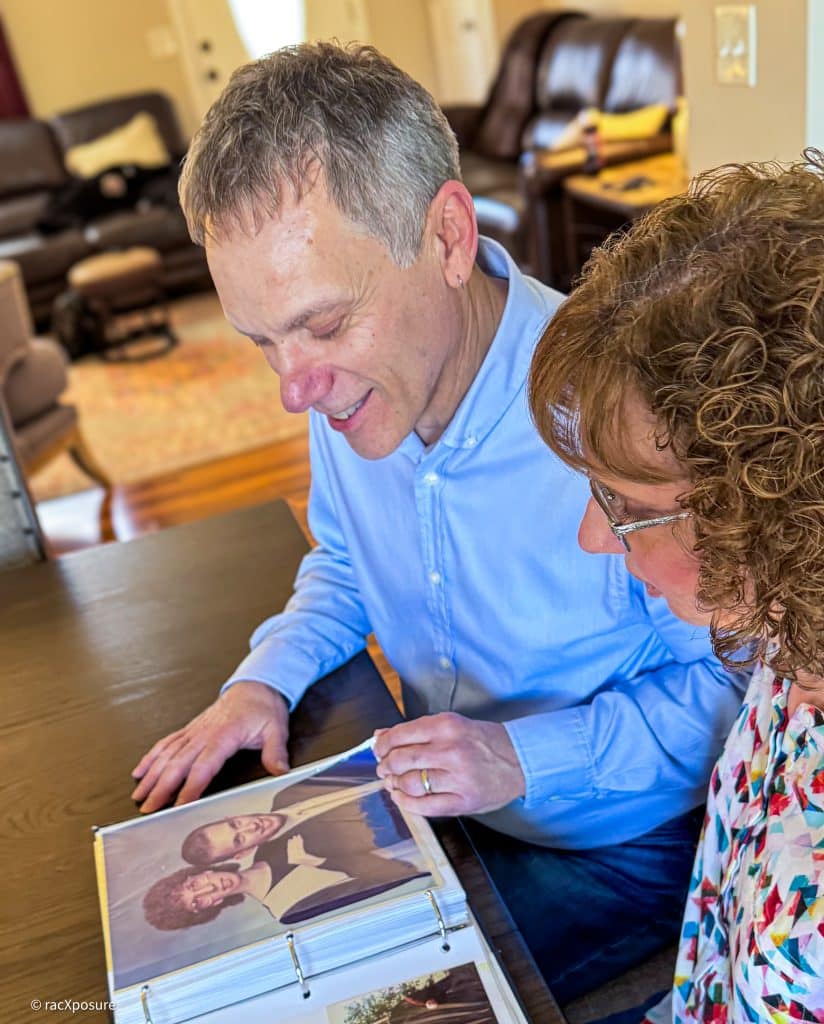
Throughout both of their journeys, Dale and Shelly both agreed that they were not going to uproot their family in any way. They didn’t want to affect their relationship with their adult children and grandchildren. They decided to enter marriage counseling, where both of them shared how their past insecurities and trauma were impacting this new phase of their relationship.
Shelly was able to find support through an online group called Alternate Paths. Unlike the last group, she found it to be “very positive” and “encouraging.”
“Someone posted something about how their husband had come out maybe 12 years before, and they were doing fantastic,” Shelly said. “It helped me to see that, ‘Okay, this could work.’”
When Dale came out, it was freeing, but he still had questions. He finally could be who he was, but he needed to figure out what that meant.
“Those early days were just allowing myself to think, ‘Okay, I’m gay,” he said. “How can I express that? What is that going to mean for me?”
Dale dove into queer media to help with not just answers, but general exposure to the greater LGBTQ+ community.
A year into their journeys, Shelly asked Dale to read a story from someone online about a mixed-orientation marriage where the wife gave the man permission to seek a boyfriend.
“She said, ‘I want that for us and you,’” Dale recalled.
Five years later, their home is decorated with gifts from a new addition to their family: Dale’s boyfriend.
A new addition
When Shelly first heard from Dale that he was ready to see someone a year after he came out, Shelly said she was happy, but she took it harder than she expected. She had a lot of “baggage” to unpack from her childhood, like feeling she was never good enough. Her insecurity compounded more and more.
“Naively, I thought that it would be difficult the first couple of times, then it will be okay,” Shelly said. “Not until years of therapy did it really become okay.”
She was “so fearful” that Dale would decide that he wanted a divorce, but the passage of time has proven that Dale has kept his promise to not go anywhere. And their therapist would help them set relationship goals and work towards them – something both Dale and Shelly were grateful for.
The new challenge in the relationship helped Shelly grow as a person. She became more independent and less reliant on Dale, though she said she is not interested in seeking another relationship.
“I used to depend on Dale for every bit of my happiness,” she said. “I have learned how not to do that – I’m responsible for myself.”
Dale found that therapy realized how many blindspots he also had. He felt responsible for everyone else’s feelings, and ignored his own needs in doing so. He doesn’t think people realize how many challenges and struggles they go through until a professional points them out, or until a huge life event happens.
“My coming out really realized how much we needed to do that together,” he said.
Faith journeys
Beyond what was happening at home and hearth was a religious struggle that Shelly and Dale both experienced.
They were both Methodists, and their journey followed the same path. Dale was a pastor for a Methodist congregation, but in 2019, the United Methodist Church called a general conference about whether to allow LGBTQ+ clergy and same-sex marriages. When they decided against the idea, Dale and Shelly both left the denomination. Dale resigned and started his own affirming and inclusive church, the Open Table.
”People started talking to me about how they were leaving the United Methodist Church because they were tired of the same things I was,” he said. “They’re like, ‘I thought we were this kind of people, but now we’re apparently not.’”
Placing into community
Though mixed-orientation relationships are a fixture in queer history, misinformation and confusion have muddied discussions.
As Dale and Shelly have discovered themselves, mixed-orientation relationships can have a happy ending, said Kim Fuller, a practicing sex therapist and owner of Cleveland Sex & Intimacy Counseling.
LGBTQ+ people are pressured to enter heteronormative relationships, Fuller said. They can enter these relationships because they might feel like that’s expected of them. They can also lack exposure to a queer community and not realize that there are other options, or they can feel like a gay relationship is too stigmatized.
“They ultimately choose to be in these other relationships that are heteronormative in appearance,” Fuller said. “[They can] find themselves later on in the relationship realizing that’s perhaps not necessarily the relationship that would feel best for them and has maybe come to a place of affirmation and acceptance.”
Despite that realization, the LGBTQ+ individual in the relationship can still feel this emotional relationship to their straight spouse that they don’t want to let go to waste, Fuller said. There’s often a “period of discovery” where the couple figures out what their relationship dynamic is, and how that might change going forward. A couple might decide to change towards a non-monogamous relationship, but otherwise stay together.
The LGBTQ+ community is no stranger to other relationship configurations, Fuller said.
“One of the best things that exists in the LGBTQ+ community is the openness for a multitude of relationship dynamics that can evolve,” she said. “I think this is an exact way of queering a relationship or thinking about the differences between romantic and sexual attractions.”
A mixed-orientation marriage like the Lykins’ can be stigmatized by both straight people and the LGBTQ+ community, Fuller said.
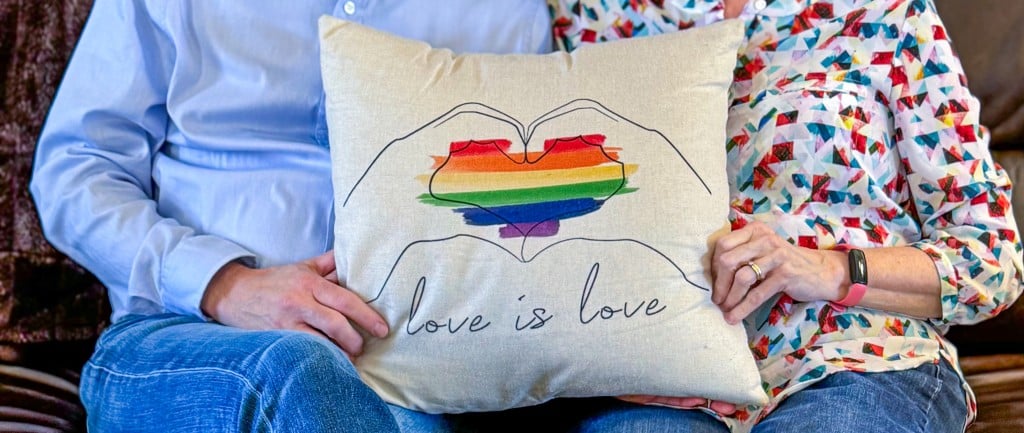
Dale and Shelly, however, have felt that people are open to their unique relationship, they said. The journey was tough, but so far it has brought “an amazing gift,” Dale said. Dale’s boyfriend is part of the family, Shelly said. He has spent holidays with the two of them, gone to concerts, and even their son’s wedding.
“Over the past six years, our relationship has grown so much and is so much stronger,” she said. “Instead of thinking, ‘Oh gosh, he’s gay, what’s gonna happen?” [I started to] think ‘Wow, he’s gay, but he loves me enough that he wants to be with me.’”
When Dale and Shelly’s daughter married his husband, Dale gave a toast.
“Welcome to our very rainbow family,” he said.
IGNITE ACTION
- Dale Lykins wrote a memoir titled “Hush, Child: Finding My Voice & Breaking the Silence.” More information is available here.
- To find more information about The Open Table, click here.
Know an LGBTQ+ Ohio story we should cover? TELL US!
Submit a story!