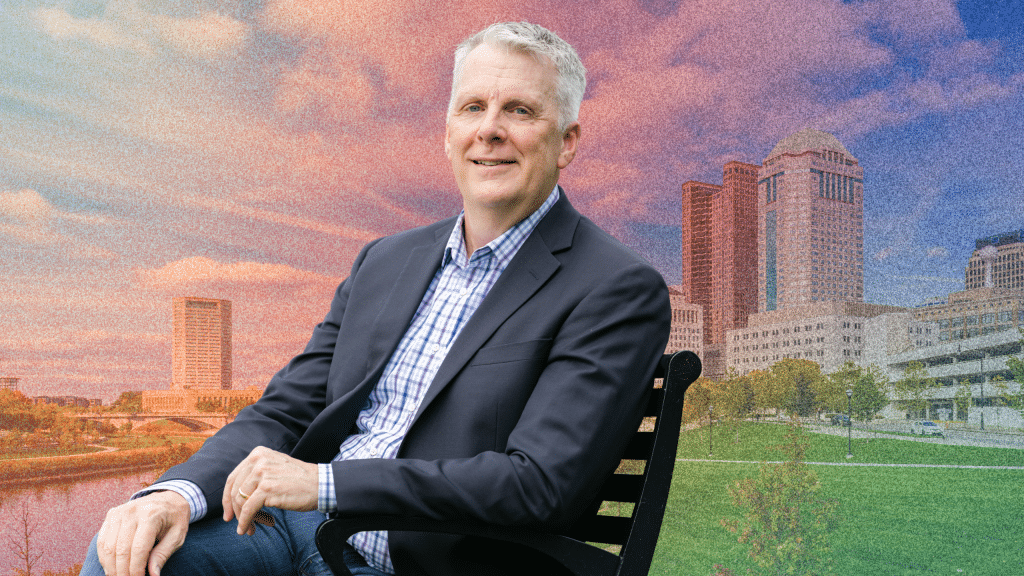
Out Columbus-area activist Rick Neal is no stranger to running for office. In 2018, he mounted a solid (though unsuccessful) Statehouse bid against Steve Stivers, chair of the National Republican Congressional Committee. Now he’s running again, this time for the Democratic nomination to represent District 15 in the state Senate.
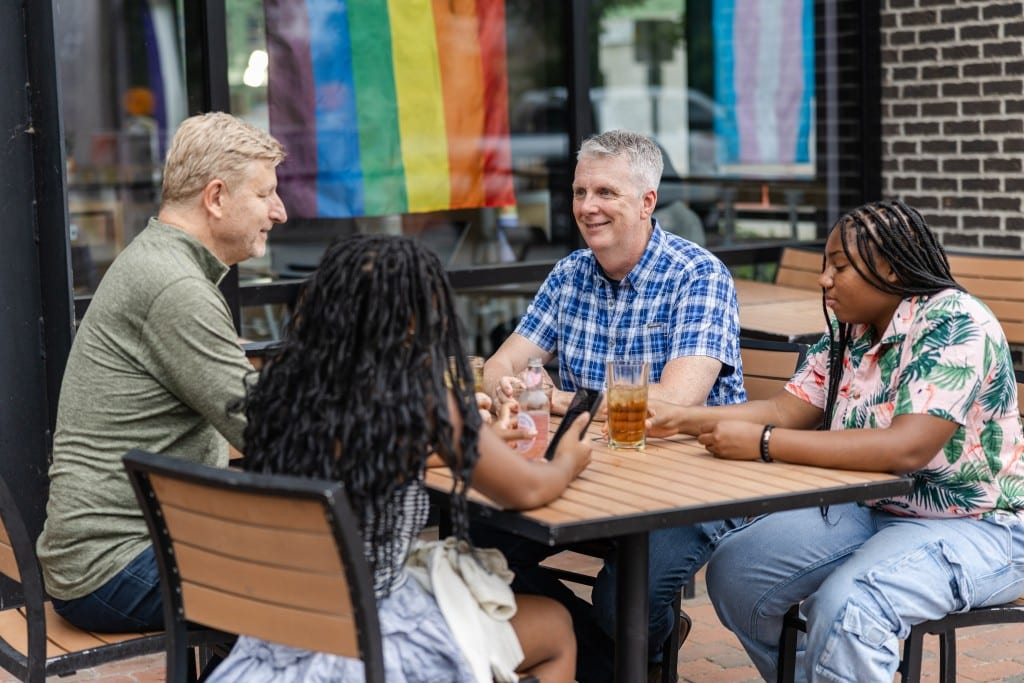
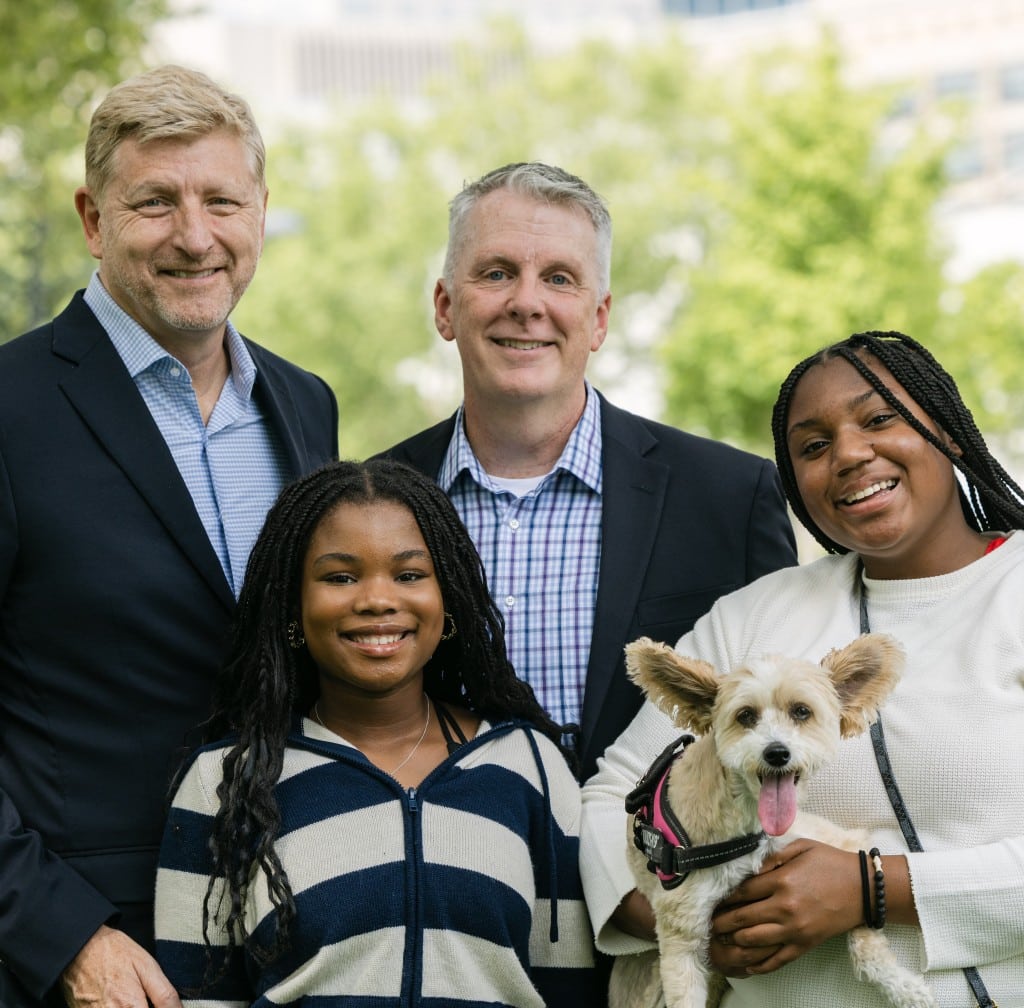
“Our family has deep roots in this district,” Neal said of District 15, which covers the heart of downtown Columbus and the surrounding suburbs, Neal lives in the district with his husband, Equality Ohio cofounder Tom Grote, and their two daughters. It’s also home to the South Side neighborhood where Grote’s father started Donatos Pizza back in 1963.
“It’s an amazing community, a rich, diverse set of neighborhoods with a lot of needs but also a lot of resources,” Neal said.
Then as now, Neal’s campaign is fueled by frustration with the Trump administration. But while Democrats had a clear path to resist Trump in 2017 – take back the U.S. House, which they did successfully –this time Neal sees things differently:
“The house is on fire. There is no clear path. I’m out at protests, talking to activists, reconnecting with people from the 2017–2018 movement, and everyone’s saying: ‘What are the Democrats doing to fight back?’”
Neal faces House Rep. Latyna Humphrey (D-Columbus) in the Senate District 15 Democratic primary. If he wins, he is likely to also win the Democratic stronghold in the general election, which would make him the only out gay male serving in the Columbus Statehouse in either the House or the Senate.
The Buckeye Flame spoke with Neal about the stakes of this political moment, why we need more protests (not fewer) and the LGBTQ+ community’s dire need for direct representation in state government.
What motivated your return to the campaign trail in 2025?
I wasn’t thinking about running until after Trump took office again in January. What felt different this time was Elon Musk’s involvement. He poured hundreds of millions into the campaign last year, and then took over with this DOGE service, essentially taking a chainsaw to our government. It really clarified for me how dangerous Trump and Musk’s agenda is.
That’s when I started organizing weekly protests at the Tesla dealership in Easton—every Saturday at 4:30, and we’re still going. We began in February with just 10 or 12 people, and by the end of March, one week we had a crowd of hundreds. There’s real frustration and a clear need for new leadership in our Statehouse—not only to fight back against Republicans but also to fill a representation gap. … We’re looking at January 2027 with potentially zero LGBTQ+ representation in the next General Assembly. That’s just unacceptable.
I’ve been vocal for years about the lack of LGBTQ+ representation at the Statehouse. I worked hard in 2024 for out Statehouse candidate Eli Bohnert, who unfortunately didn’t make it through his primary. I looked at my state Senate district, represented by Hearcel Craig, who has a tremendous legacy in Columbus, having served on City Council, in the House, and now for eight years in the Senate. He’s term-limited and can’t run again. When I looked closer, I realized I had a real opportunity to make a difference. I couldn’t pass it up.
As you know, Rep. Latyna Humphrey is also running for this nomination. What’s your case to voters to choose you over Humphrey?
The main difference between myself and my primary opponent is that I’m bringing change. I’m taking the fight from the streets to the Statehouse, while Rep. Humphrey represents business as usual. I’m out at protests, talking to activists, reconnecting with people from the 2017–2018 movement, and everyone’s saying: What are the Democrats doing to fight back? Recently, an op-ed in The Plain Dealer said Democrats need to stop talking and start raising hell, and that’s exactly what I want to do. That’s what sets me apart in this race.
Since Trump’s election, politics in both Ohio and the country have fundamentally changed. There’s a very real chance Vivek Ramaswamy could be our next governor. If he follows Trump and Musk’s pattern—ignoring courts, bypassing the legislature and pushing an authoritarian agenda—we need people in the Statehouse who won’t just go along to get along. We need leaders who will say “Hell no,” shine a light on what’s happening and fight back.
Soon after you announced your run, Rep. Humphrey put out a list of LGBTQ+ endorsements of her Senate campaign. What’s the difference in being an out gay candidate and a straight candidate extolling her LGBTQ+ support?
The importance of having an out gay candidate is about direct representation. As Senator Antonio has said: When they vote against us, they have to look her in the eye. They have to look an out lesbian who has fought for equality and dignity in the eye as they vote to take away our rights.
I think I have a record that speaks for itself—both me and my husband—of LGBTQ+ leadership in Columbus since I moved here in 2007, especially in the fight for marriage equality. Some people claim that having allies in the chamber is enough, but I can’t think of any other group that would accept that kind of proxy representation.
Tell us about your policy objectives for office and your strategy for achieving them politically, especially given the extreme lock Republicans have on our state government?
A lot of people look at the Republican supermajority and decry, “What can we do? We can’t do anything.” But I come from a background where giving up wasn’t an option. I was a Peace Corps volunteer and studied public health, which I used to lead humanitarian programs for refugees in some of the harshest, most politically hostile environments imaginable. We operated in places where we weren’t welcome. But we used every resource at our disposal to advocate for people.
That’s what I plan to do as a state legislator. Even in a superminority, Democrats can—and must—use this platform to fight for our constituents in every way possible.
I see three key roles for legislators right now:
First, we must fight back against authoritarianism. We need to defend freedom, human rights and the Constitution. That includes obstructing abuses of power, slowing harmful policies and exposing what’s happening. If we can’t hold official hearings, we should hold public ones on the Statehouse lawn or in community spaces. Show the people we’re not sitting back.
Second, we must use our platforms to creatively advocate for our constituents. That means doing everything we can—from supporting mutual aid to helping people navigate food, housing and healthcare systems. If someone like Vivek Ramaswamy becomes governor and cuts benefits arbitrarily, what happens then? We need to be prepared to help people survive.
Third, we must look to the future. Eventually this assault on democracy will end. And when it does, we can’t just rebuild—we need to build something better. A government truly by, for and of the people.
But we’re not just facing political upheaval. We’re also entering a period of rapid technological change, with the rise of AI, which, yes, brings enormous potential but also serious risks to democratic governance, the labor economy and basic human wellbeing. And I don’t hear our leaders talking about it. They’re assuming things will settle back to “normal,” but I don’t think that’s smart. We need to start having those conversations now because change is already here, and we have to be ready.
If elected, you will become the only out male senator in the state. Representation matters more now than ever—what does it mean to you?
Columbus has a strong and growing LGBTQ+ population that remains unrepresented in the Statehouse. That’s unacceptable. In fact, data suggests that Senate District 15 has one of the largest LGBTQ+ populations in the country. And yet, gerrymandering has distorted our voice.
To be the first, or the only, of anything is—it’s emotional, isn’t it? I’m a white, older, well-off gay man—I get that. But now, with so many trans voices silenced by fear in the current climate, I’ve been asking myself: What’s our role as allies? I’ve had conversations with trans leaders and others in the LGBTQ+ community, asking—should we step in? And the answer has often been, yes: we need people to be our voices right now. That’s a sobering responsibility. It’s not where we thought we were headed, but it reflects just how bad things have gotten.
Representation isn’t just about presence—it’s about standing in the gap for those who can’t. Yes, it’s uncomfortable. Yes, you might get it wrong. And sure, it would be easier if someone else took the lead. But too bad. Go forward anyway, with the intention to do the best you can. We don’t have the luxury of waiting. 🔥
IGNITE ACTION
- Learn more about Rick Neal’s campaign for Ohio State Senate by visiting his website here.
- Check your Ohio voter registration status here.
Know an LGBTQ+ Ohio story we should cover? TELL US!
Submit a story!