One of the biggest misconceptions Erin Tomlinson, MD, hears in her family medicine practice at MetroHealth is that if you’re not planning on becoming pregnant, gynecological care can be skipped.
“I want people to feel empowered to have their gynecological care done on their own terms,” says Tomlinson, who practices within the MetroHealth Pride Network. “And a big part of having gynecological care on your own terms is finding a provider who respects you as an individual and tailors care to your needs.”
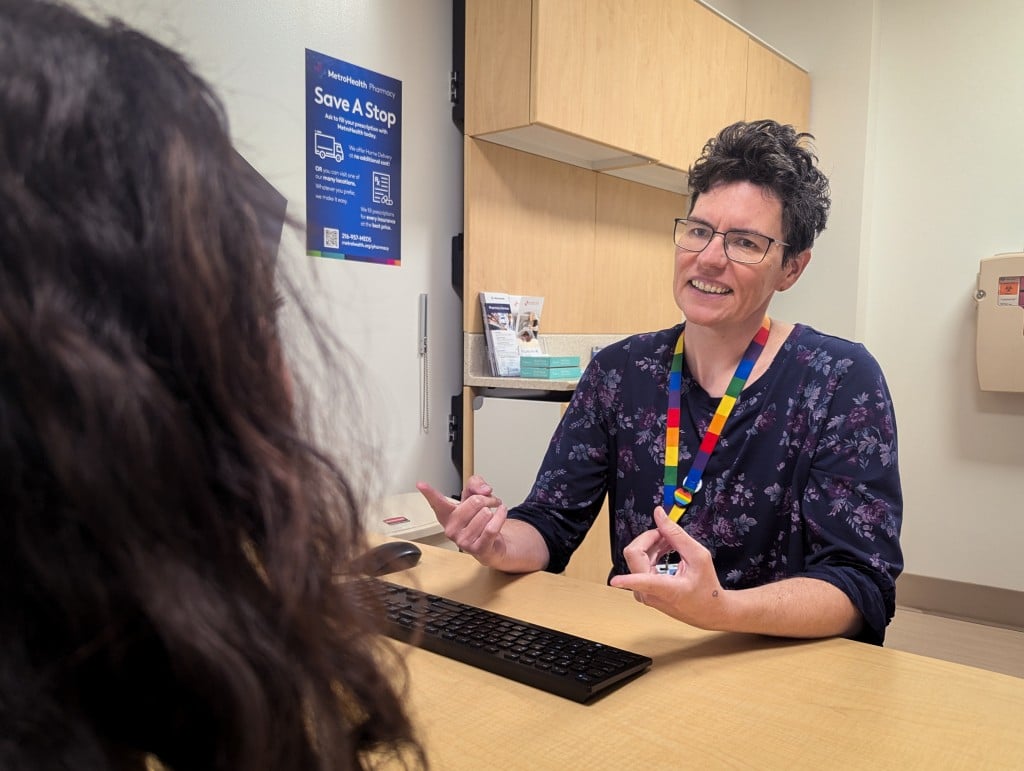
That’s why Tomlinson has enjoyed working at the MetroHealth Pride Network — a primary care and mental health provider for adults and children in the LGBTQ+ community — for the last 10 years.
“The Pride Network is a comfortable place for patients to have honest discussions with trusted providers,” Tomlinson says. “By placing an emphasis on patient autonomy, we earn your trust and meet you where you are in your health journey.”
Women Who Have Sex With Women: What To Know
Women who have sex with women are at higher risk for cervical cancer, herpes, gonorrhea, chlamydia and breast cancer, studies show.
And it all points to one thing: Women who have sex with women are less likely to seek gynecological care.
There are many reasons: Sometimes they assume if they don’t plan on becoming pregnant, they don’t need gynecological care. Many women who have sex with women have had bad experiences with gynecological care that make them less likely to go back — things like the provider assuming they have sex with men or not wanting to come out “one more time” to another provider. And, because many women who have sex with women have been victims of sexual assault, physical exams can cause a traumatic experience.
That’s why Tomlinson focuses on the whole person to encourage yearly visits.
“I offer each patient a menu of what’s recommended in terms of cancer screenings and testing,” Tomlinson says. “And then we find a way to get screenings done in a manner that feels comfortable. But, the entire time, the patient is in control.”
Building a strong connection is central to giving patients more control. For instance, Tomlinson doesn’t perform a pelvic exam the first time she meets a patient. When a pelvic exam is necessary, she always has a chaperone, uses a pediatric speculum with a lot of lubricant and tells the patient they can always say stop if they want to stop.

Important screenings and conversations that take place at yearly visits include:
- Pap tests: For many people with a cervix, pap tests occur every three years to test for HPV, which can cause cervical cancer.
- STI testing: For many women, STIs like chlamydia often have no symptoms but are easily treatable with antibiotics. Left untreated, STIs can cause other health problems, such as infertility. And the FDA recently approved self-collected HPV screenings, where patients can take a sample at home and turn it into a lab.
- Menstruation: Tomlinson says that “anyone missing school or work because of their period is missing out on life,” and visits are a good opportunity to discuss medicines and procedures to help.
- Total health: Yearly gynecological visits are another opportunity to discuss your blood pressure, diabetes risk, mental health and other non-gynecological health concerns.
- Perimenopause and menopause: As you age, you may need medical guidance to address problems with sleep, mood and energy levels.
Many Trans Men Need Gynecological Care, Too
Gynecological care is essential for any person with a cervix, vagina or uterus —including trans men. While Tomlinson is a family medicine provider, she’s also an expert in hormone therapy for adults transitioning.
“Often, I’m the first person to start the informed consent process for hormone replacement therapy in adults,” Tomlinson says.
That’s a process that includes getting to know the patient and helping them understand the benefits, risks and alternatives of hormone therapy.
“While many trans men I see say they never want to be pregnant, it’s a good opportunity to talk about future parenthood,” Tomlinson says. “We can discuss egg banking and other options for becoming a parent before starting testosterone, which can impact ovulation long-term.”
Trans men are also often interested in preventing menstruation, which Tomlinson says can be achieved through a close partnership with a gynecologist. Through adjusting hormone levels and adding birth control, patients can achieve their goals. Tomlinson also suggests forming a relationship with a provider if a hysterectomy might be in your future.
Beyond trans men-specific concerns, though, gynecological care is still critical for people with a cervix. While vaginal atrophy can cause a pelvic exam to be uncomfortable, it’s important to get regular pap tests to prevent cervical cancer. Tomlinson works with her patients to provide medicines that will make future exams more comfortable. But, for her, it’s really about the relationship and understanding each patient’s needs.
“I want each patient to feel respected as they access healthcare,” Tomlinson says. “You should never feel bothered or bad about who you are as a person.”
Breast Health For Every Body
People who have breast tissue should get a yearly mammogram starting at age 40 — and perhaps earlier if they have a significant family history of breast cancer.
Unfortunately, women who have sex with women are less likely to get regular screenings like mammograms, which means that breast cancer is often discovered in later stages.
“Women who have sex with women are less likely to see a provider, and that means they miss out on routine health maintenance and the opportunity for providers to remind them to get a yearly mammogram,” Tomlinson says.
For trans men, the guidelines hold true: if you have breast tissue, it’s important to get a yearly mammogram. While there are no established guidelines for breast cancer screening for trans men who have had top surgery, Tomlinson recommends that her patients who have the BRCA gene mutation or a personal or family history of breast cancer visit the MetroHealth Breast Health Clinic for a chest exam, which may be an ultrasound.
“My recommendations are very specific to each patient,” Tomlinson says. “And that’s why it’s so important for me to get to know you during yearly visits.” 🔥
About The MetroHealth Pride Network
The MetroHealth Pride Network offers primary and mental healthcare for adults and children, as well as gender-affirming care for adults. While people in the LGBTQ+ community have similar routine healthcare needs as cisgender or heterosexual people, providers in the MetroHealth Pride Network have specialized training and experience related to sexuality and gender.
Pride Network providers can be found in five MetroHealth locations—Brecksville, Brooklyn, Cleveland Heights, Parma, and Rocky River, as well as a clinic in the LGBT Community Center of Greater Cleveland. Learn more at www.metrohealth.org/pride.
Know an LGBTQ+ Ohio story we should cover? TELL US!
Submit a story!