2025 was a rough year for LGBTQ+ nonprofits. In Ohio, the losses included:
- Kaleidoscope Youth Center closed their housing program after the Ohio Department of Health (ODH) did not renew a $241,500 grant. The program had provided transitional housing and other services to over 50 young adults experiencing homelessness and/or housing insecurity or vulnerability since it was introduced in 2019.
- Community AIDS Network/Akron Pride Initiative (CANAPI) announced that the U.S. Department of House and Urban Development (HUD) has ended more than $330,000 in federal grants to the organization – roughly 25% of the organization’s total annual programing budget.
- LGBTQ+ Allies of Lake County shared publicly that their “accounts are getting low,” after grants and corporate sponsorship of Pride were severely cut.
- Equality Ohio laid off much of their staff in October, citing “ongoing budget constraints as a result of the current challenging landscape.”
After hearing anecdotally that other LGBTQ+ Ohio nonprofits were similarly struggling financially, we reached out to nearly 100 organizations with a survey borrowed – with permission – from the Human Service Chamber of Franklin County. Although respondents were required to list the name of their organization, we promised that the identifying information would not appear in this article.
The survey also included an open-ended question where respondents could share any thoughts not captured by the survey questions.
The purpose of the survey was to present the most accurate snapshot possible of the financial landscape of Ohio LGBTQ+ nonprofits, paired with the hope that this content inspires readers to ignite action – whether by sharing information with key stakeholders, advocating for more funding or starting their own financial contributions.
Here’s what we learned from the 38 organizations who responded.
Demand is up
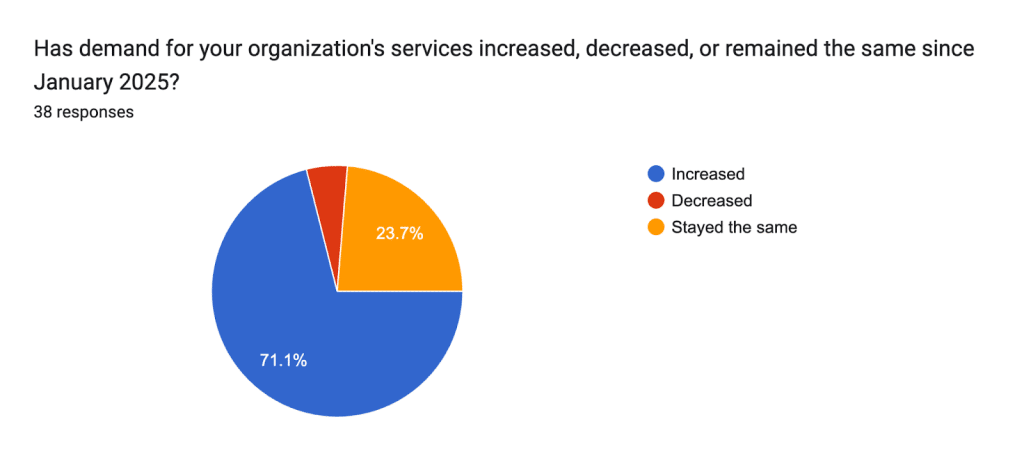
LGBTQ+ organizations overwhelmingly reported that demand for their services had increased in 2025. Just over 5% of respondents indicated that demand had decreased.
“Need and participation continues to grow exponentially, and we saw double the turn-out for [our signature program] including greater participation in our food programming and general supportive services,” one organization responded.
Despite the increase in demand, 50% of the organizations said they were able to currently meet the demand for services, while over a third said they could not meet those needs.

Deficit budgets
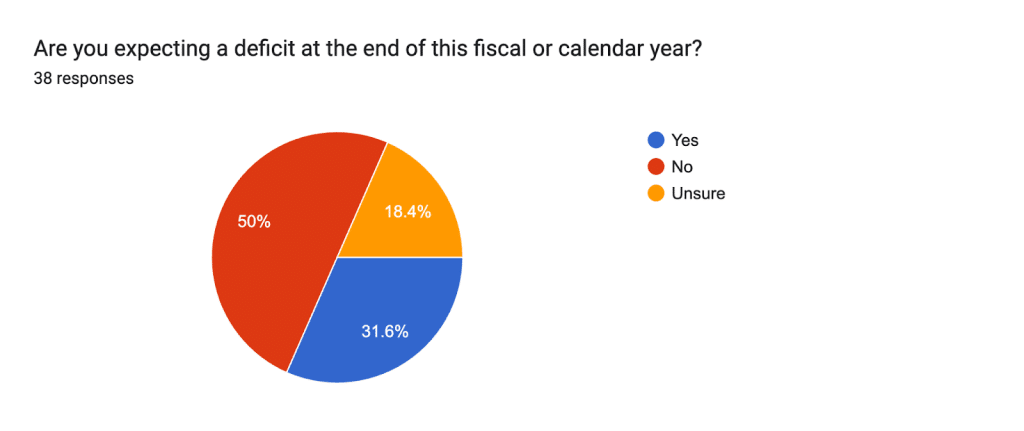
Half of the LGBTQ+ organizations said they were not expecting a deficit budget at the end of 2025, with the other half either anticipating a deficit (31.6%) or unsure (18.4%).
For those anticipating a deficit or unsure, respondents identified both decreased revenue (55%) and higher costs (50%) as the main contributing factors.
Decreased donations and grants
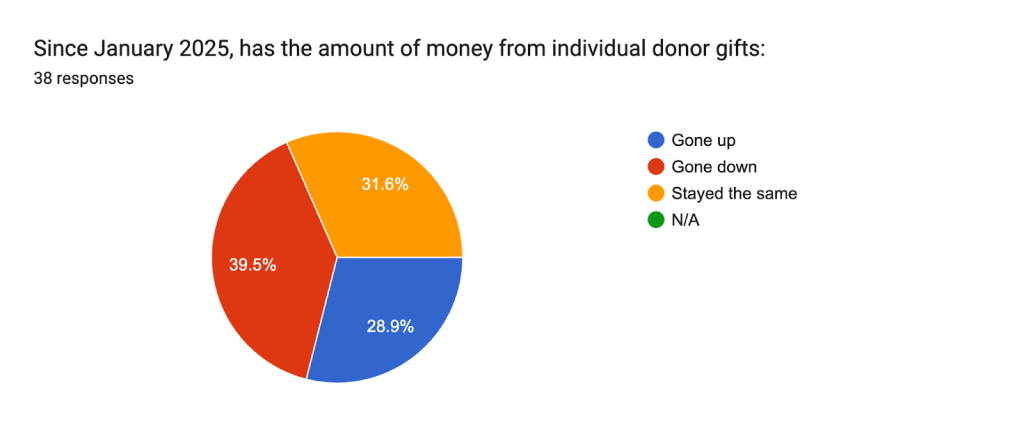
Close to 40% of LGBTQ+ organizations reported a decrease in individual donor gifts, while almost 29% reported an increase. The remaining 31% reported that individual gifts had remained the same.
“We can feel the change in the economy [and] our community feels the weight of what is in their budget to donate,” said one respondent. “Overall it will come down to how well we can budget to that adjusted donation base to know what community events we can put on and what we may need to cut back on for next year or years to come.”
A quarter of respondents said that philanthropic grants had increased in 2025, with another quarter reporting that philanthropic money had decreased.
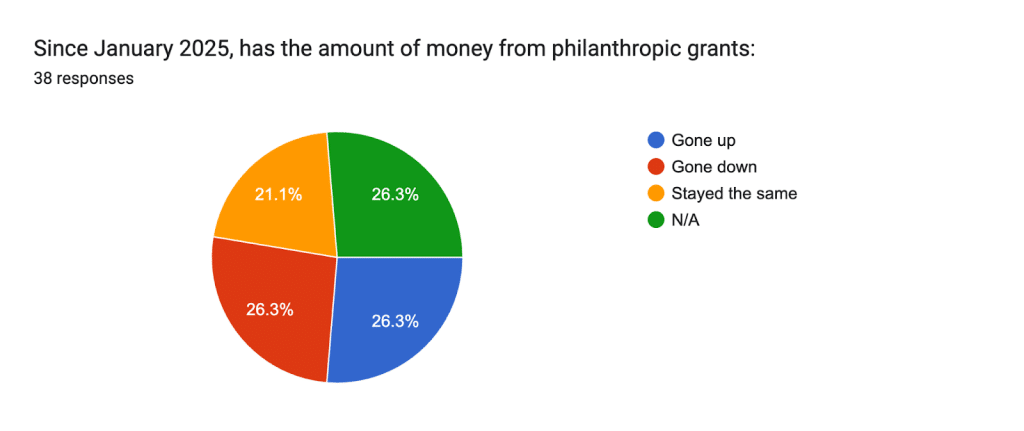
Additionally, close to 8% of respondents reported that they had a federal grant canceled in 2025.
“By the time we were ready and able to apply for federal grants, they were removed from government websites the very next day,” said one organization.

Cost and effect
The vast majority of respondents indicated that operational costs had increased since the start of 2025, and pointed to the costs of goods and materials, increased demand for services and higher overhead costs and wages as the primary reasons for the increases.
As a result, many organizations have had to reduce services, eliminate programs and even consider pausing operations to address their financial situation.
“We are doing a LOT of pivoting and regrouping,” said one respondent.
The road ahead
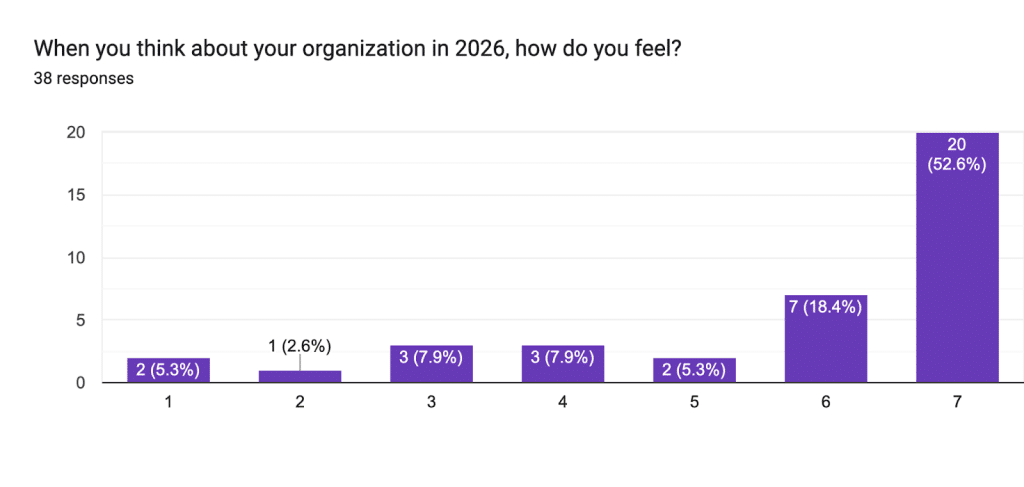
The final question on the survey asked respondents to rate where their organization would be at the end of 2026. The seven-point scale ranged from “Existential crisis (We are currently unsure if our organization will exist by the end of 2026)” to “We are confident our organization will exist by the end of 2026.”
The majority of respondents responded with confidence that they will exist at the end of 2026. Six organizations expressed doubt about their future.
“We are hoping to weather the storm, but it is looking like there will be some significant hardships, especially given that we are not even one year into the Trump administration and have three more years of major uncertainty and unpredictability,” said one organization.
In their open-ended comments, two organizations expressed concern about the possibility of their 501c3 status being revoked by the national government. As the Trump administration suspended an avalanche of DEI-related grants, Senate Democratic Leader Chuck Schumer (D-NY) warned of a looming Trump executive order that could strip the tax-exempt status of various nonprofits, including LGBTQ+ organizations.
Even under that threat, many of the organizations expressed the resolve to continue their vital work.
“We will continue to exist even if we can’t afford our staff or if the feds strip the 501c3s from [LGBTQ+] orgs,” said one organization. “We’re not going anywhere.” 🔥
IGNITE ACTION
- The Buckeye Flame maintains an Ohio LGBTQ+ Nonprofit Guide which can be found here. These organizations definitely need your support today.
Know an LGBTQ+ Ohio story we should cover? TELL US!
Submit a story!