By Amanda Cole
As the Executive Director of Plexus LGBT & Allied Chamber of Commerce, I am accountable to thousands of LGBTQ+ people, allies, employees and business owners whose safety, dignity and civic inclusion are directly affected by how public institutions frame conversations about their lives. In my role, I represent thousands of constituents across the region, and I was part of a coalition of nonprofit leaders who organized an open letter to the City Club’s board and leadership regarding its upcoming forum amplifying the Center for Christian Virtue (CCV).
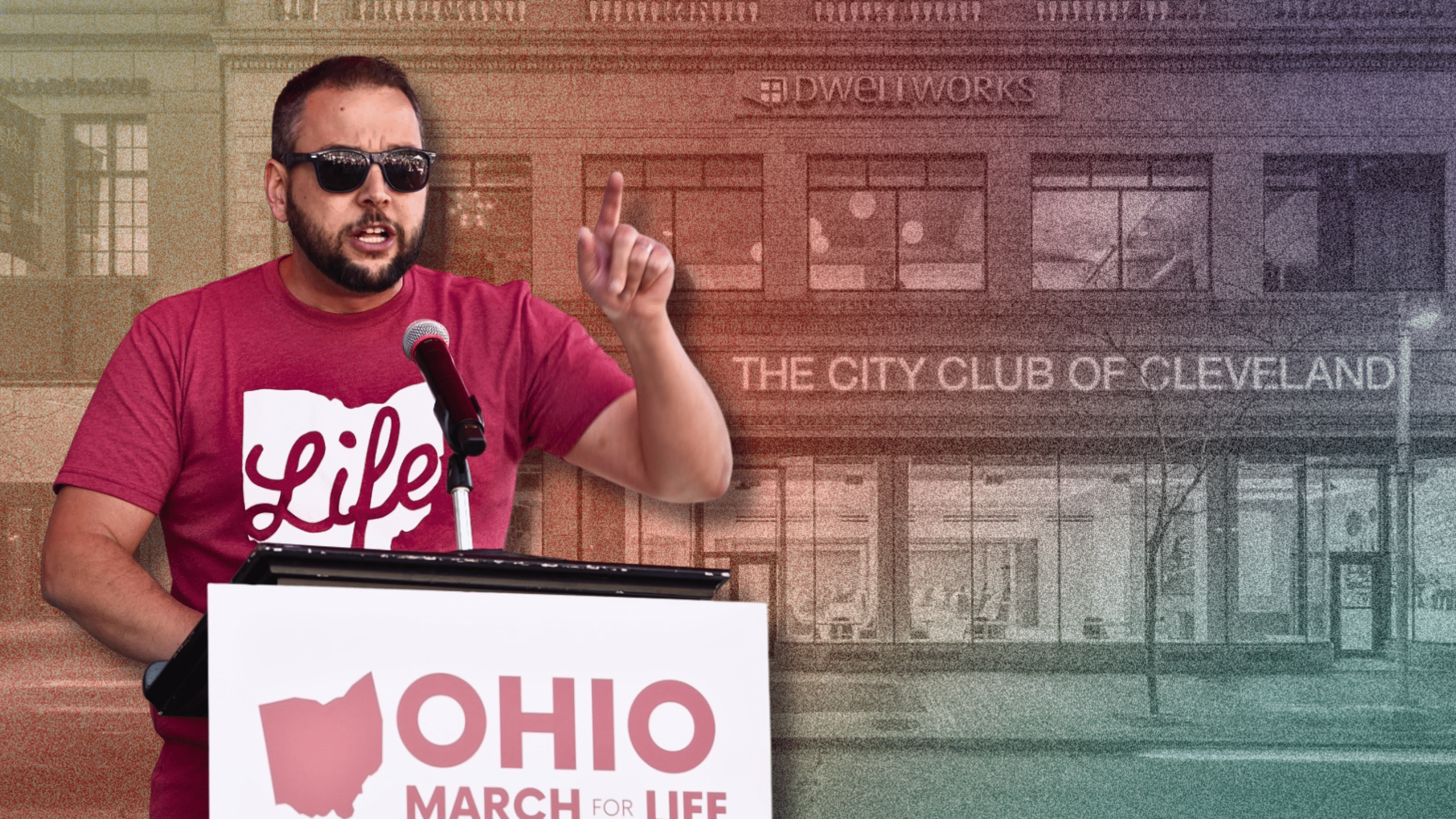
Because I participated in multiple conversations with Dan Moulthrop and members of the board about this event, I found his public comments in a recent Cleveland Jewish News interview deeply troubling. Critical facts, community concerns and essential context we discussed were omitted, leaving readers without the information necessary to fully understand the implications of this forum – not only for LGBTQ+ Ohioans, but for broader civil liberties in our state.
My goal here is to contribute to a fuller and more accurate public understanding of the issues now under discussion.
First, Dan states that he “doesn’t know” whether the CCV qualifies as a hate group or how the Southern Poverty Law Center (SPLC) defines that designation. This is an unacceptable evasion. City Club has a responsibility to understand the background, record and impact of the organizations it platforms, especially those with a documented history of targeting marginalized communities.
Basic due diligence should include reviewing CCV’s public record, consulting experts who study extremism, speaking with communities targeted by CCV’s advocacy (including LGBTQ+ Ohioans) and engaging directly with organizations like SPLC that have studied this group. This work should occur before extending an invitation. I ask directly: Has Dan contacted SPLC or reviewed its findings?
For clarity, SPLC defines a hate group as an organization whose statements, principles or activities malign or attack an entire class of people, typically based on immutable characteristics. Criminal conduct is not required for this designation.
The Center for Christian Virtue is not merely a conservative theological organization. SPLC has classified CCV as a hate group based on its longstanding pattern of deploying dehumanizing rhetoric about LGBTQ+ people to galvanize political support. This includes claims that LGBTQ identities are “unhealthy and destructive.”
Second, Dan incorrectly equates prior City Club conversations celebrating LGBTQ+ leadership with the upcoming CCV event (Moulthrop: “We’ve had 12 or 13 speakers over my tenure at The City Club, who are very clearly pro-LGBT rights. Nobody was asking for balance then.”). This framing is deeply troubling. LGBTQ+ identity and the human rights and safety of LGBTQ+ people are not a “side” in a debate. The prior event recognized the contributions of a 50-year-old organization advancing equality and safety. CCV is a political organization working to strip rights from people through legislation and public campaigns. These are not comparable conversations, and this false equivalence must be corrected.
This distinction matters. Such framing is not simply a difference of opinion; it is rhetoric that contributes to stigma, exclusion and increased risk of violence. Providing a civic platform to an organization that relies on this form of leadership warrants deeper scrutiny and contextualization than the forum provides.
Third, the interview mischaracterizes as too narrowly focused on LGBTQ+ issues the community requests to reformat the forum. This is inaccurate. The letter referenced during the interview, signed by 20 organizational leaders and nearly 100 individuals, explicitly acknowledges this broader impact.
The concerns raised reflected a broader understanding of CCV’s legislative agenda, which seeks to limit freedoms and expression across multiple communities, including educators, students, faith leaders, women, arts and culture and others. The request was not to make the forum “about LGBTQ+ people,” but to ensure a balanced and accurate examination of coordinated political efforts that restrict civil liberties. We proposed specific, reasonable alternatives aligned with The City Club’s mission, including the inclusion of counterpart organizations that engage in policy research, litigation and advocacy using similar tools as CCV.
Finally, we need clarity on how City Club and Ideastream, which broadcasts the City Club forums, will ensure impacted voices are meaningfully included in coverage of this event. There must be assurance that the moderator is prepared to challenge inaccurate and harmful claims in real time. Accuracy, accountability and harm prevention are core journalistic responsibilities, especially when broadcasting to a wide audience.
Words and actions have consequences. Ensuring accurate and inclusive conversation that prioritizes the safety, dignity and humanity of vulnerable people is not a “side.”
City Club risks its credibility as a democracy-forward institution by dismissing informed criticism from the very communities being discussed. The interview reveals concerning gaps in preparation and an unwillingness to engage with evidence or impacted voices. That should give listeners, sponsors and members pause. 🔥
Amanda Cole is the Executive Director of Plexus LGBT & Allied Chamber of Commerce.
Editor’s note: The Buckeye Flame shares office space with Plexus LGBT & Allied Chamber of Commerce.
Know an LGBTQ+ Ohio story we should cover? TELL US!
Submit a story!

![I’m a Christian faith leader and even I don’t think chaplains should be in Ohio schools [COMMENTARY]](https://d2vt6bgnqzogym.cloudfront.net/wp-content/uploads/2026/03/08080453/Custom-Cover-Graphics-29-800x600.png)
![An Ohio lawmaker claimed ‘parental alienation’ denying accusations of sexual misconduct with a minor [COMMENTARY]](https://d2vt6bgnqzogym.cloudfront.net/wp-content/uploads/2026/02/25160054/Creech-800x600.jpg)