
Oberlin became the latest Ohio municipality to ban the infliction of conversion therapy on minors last week. Fifteen cities have passed similar ordinances so far, along with Cuyahoga County.
Though the bans make headlines when they do pass – including here at The Buckeye Flame – rarely will you ever see a headline that such a ban has been enforced, despite over a quarter of all Ohioans living in areas covered by an existing conversion therapy ban.
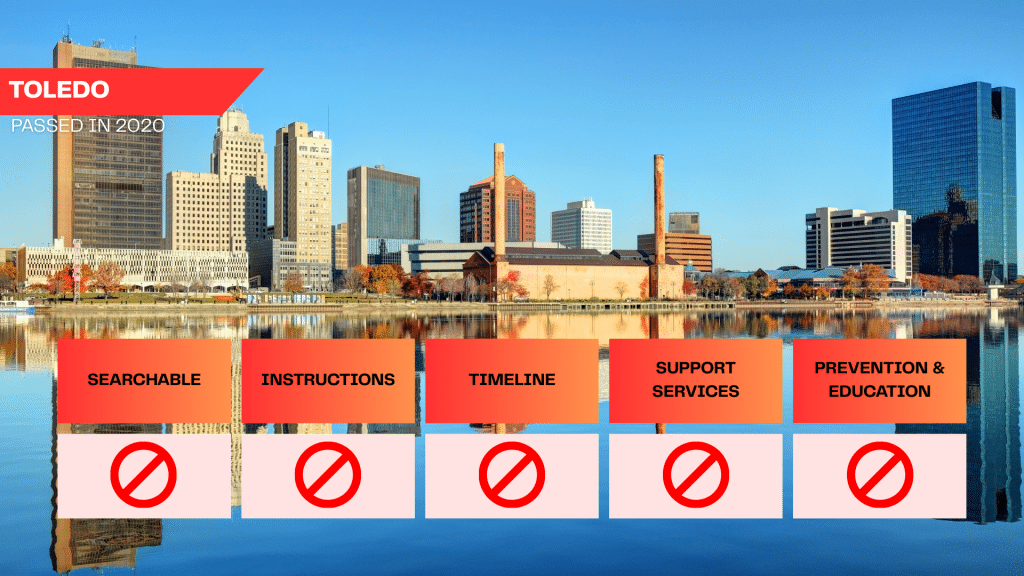
Only Cincinnati enforced their conversion therapy ban, in 2021. Even then, a city spokesperson told us that there “has not been instances in which the city has needed to move to enforce the ban.”
This systematic lack of enforcement might be because figuring out how to report a violation can be a labyrinthian process that varies from village to city to county.
We set out to discover: What hoops would someone have to jump through to report a violation in their locality?

The Buckeye Flame compiled a list of all bans passed so far in Ohio and scored localities based on whether they met certain criteria. We looked to guidelines that higher education institutions use to create campus policies that address sexual assault on their campus. We modified the guidelines to better measure how accessible these bans are to the average person.
Our criteria:
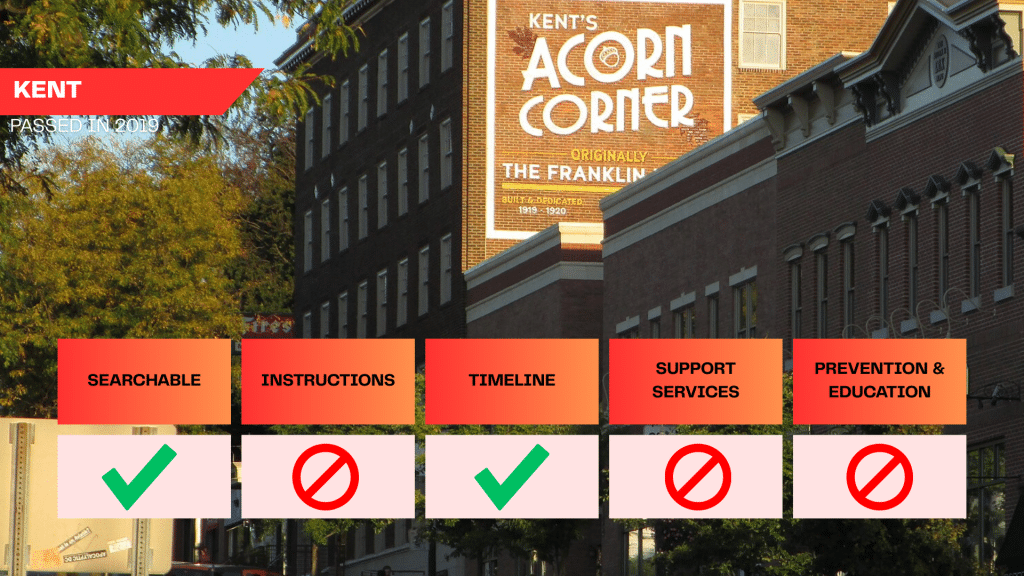
- SEARCHABLE: Is the ban searchable from the locality’s homepage? If you type in “conversion therapy,” will any results come up?
- INSTRUCTIONS: Does the city/county provide instructions on how to actually submit a complaint? Is it too vague for a user to understand?
- TIMELINE: Does the language provide an approximate timeline to how long the complaint procedure will take?
- SUPPORT SERVICES: Does the city/county direct residents to support services if they have experienced conversion therapy? If not, are they at least easily available on the locality’s website?
- PREVENTION & EDUCATION: Does the city/county’s ordinance have language including educating employees and training them in prevention?
Here’s what we found.
These score cards were created to analyze whether the current bans are user-friendly. If you believe there is an error below, or if your municipality made any changes since this article was published, contact us at editor@thebuckeyeflame.com.
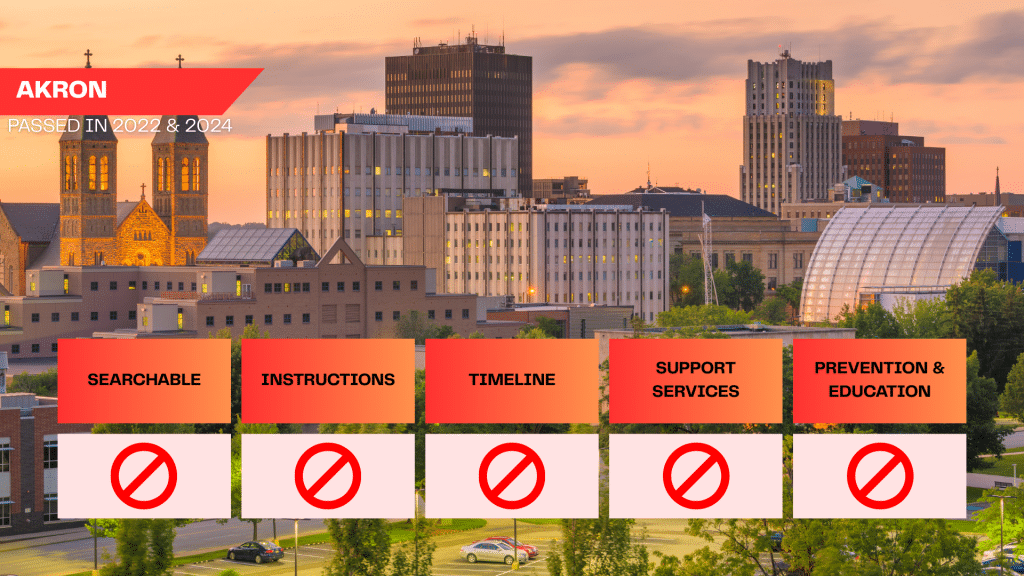
Akron passed its ban with civil penalties in 2022 and an amendment in 2024. The city has support services on its website, but they are hard to find.
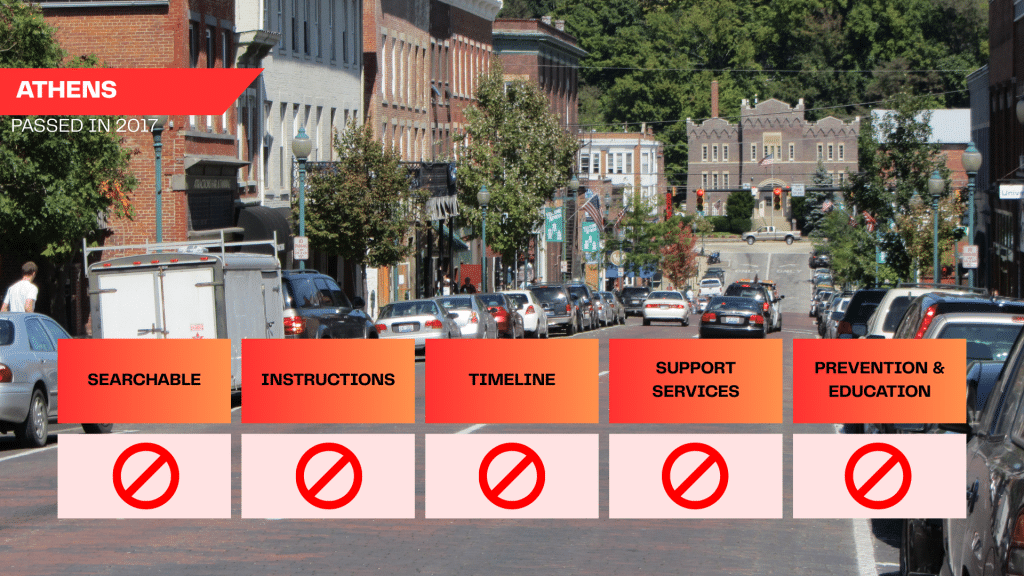
Searching “conversion therapy” on Athens’ website doesn’t return any results unless you switch to the “municipal code” tab.
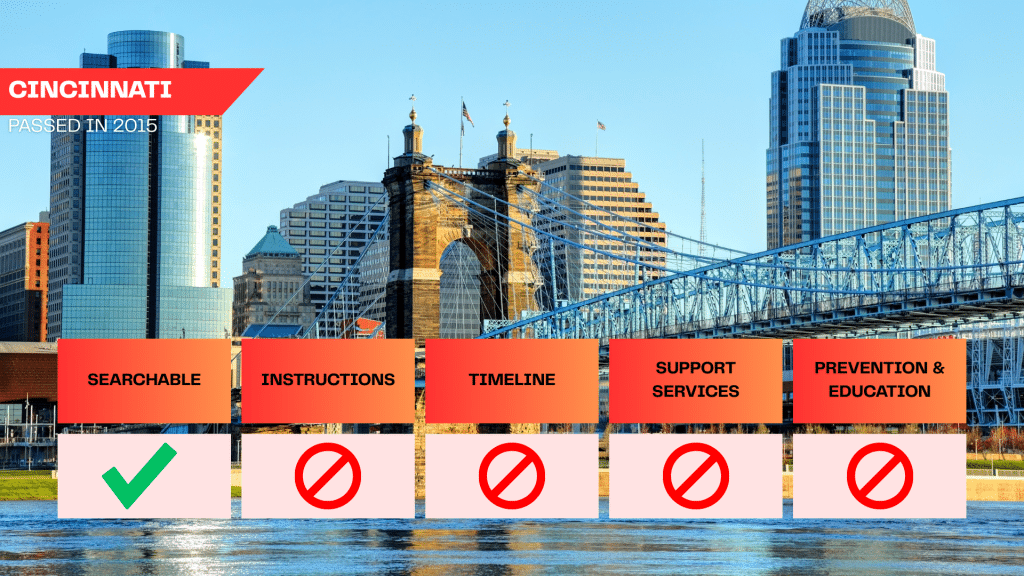
Cincinnati passed its ban with civil penalties in 2015, the first Ohio city to do so. The city code says a city manager “or designee” would receive a report and act upon it, but it does not detail what a report should look like and how it would be submitted.
Cincinnati is also the only Ohio city to have a record of any enforcement. In 2020, the city sent a cease-and-desist letter to Jerry Armelli, a licensed therapist and Northern Kentucky University professor who advertised conversion therapy for teenagers and children. According to his personal website, Armelli said he “retired his professional counseling license” in 2024. Still, he currently lists two locations for his ongoing practice, all under the umbrella of, “God’s intent for human sexuality is expressed through…exclusive and life-long heterosexual relationships.”
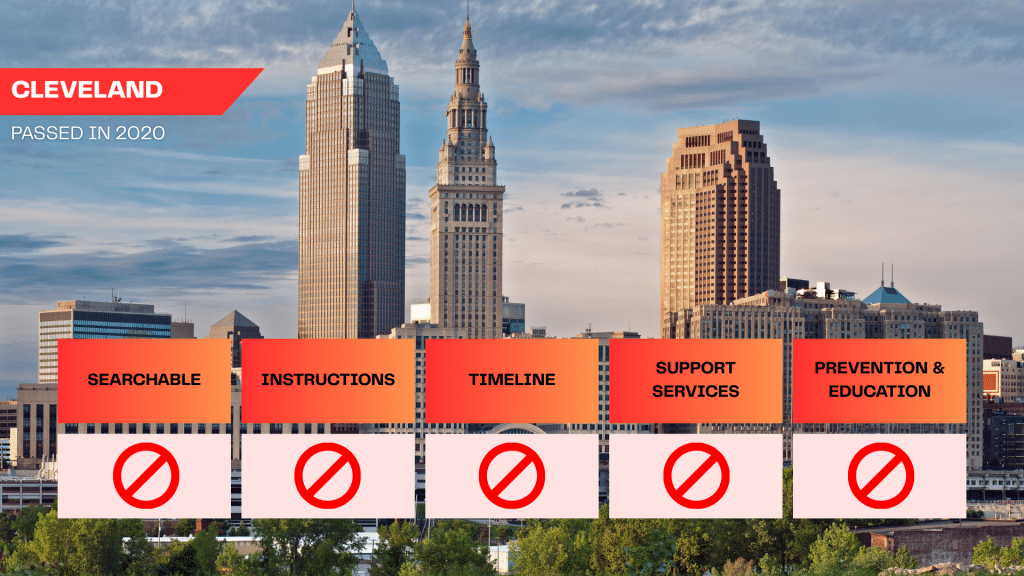
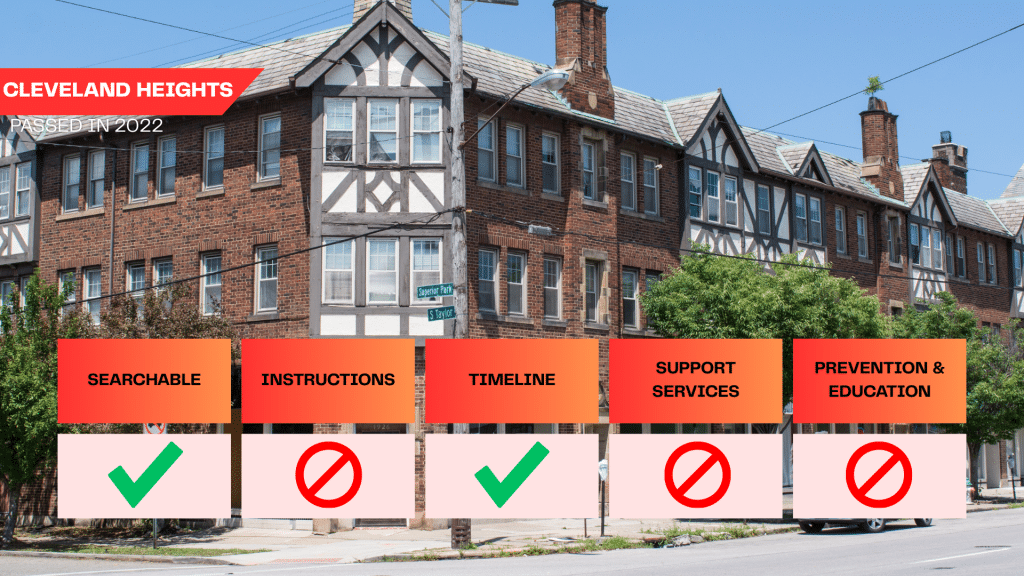
Cleveland Heights’ Fair Practices Board – which oversees complaints about conversion therapy – is searchable, along with readings of the ordinance. The website allows users to submit a complaint about an “unlawful discriminatory practice,” which is how the ban is coded, but the form does not provide any option to submit a complaint about conversion therapy.
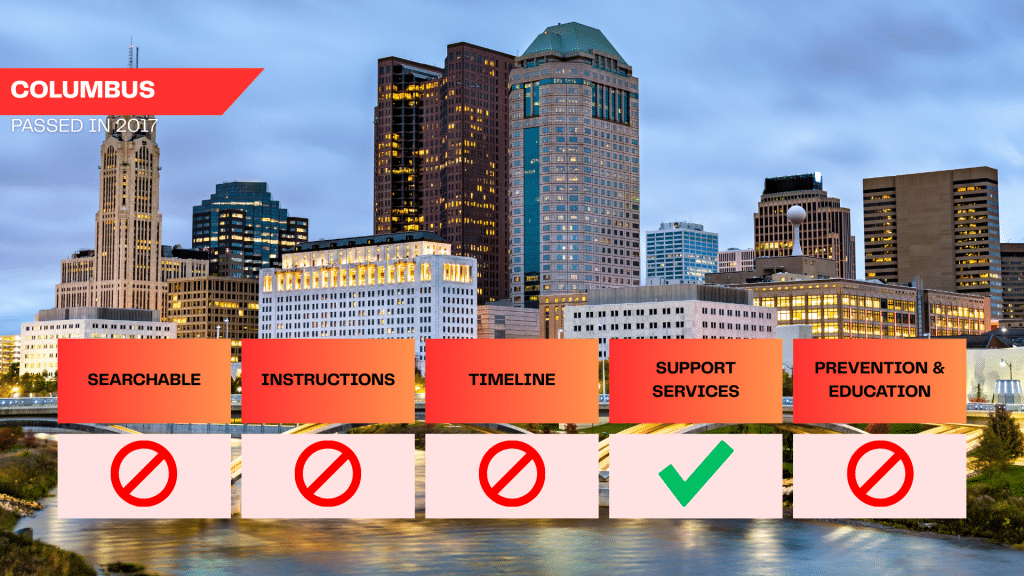
Columbus lists support services on their website, but it’s not directed towards anyone who might submit a complaint.
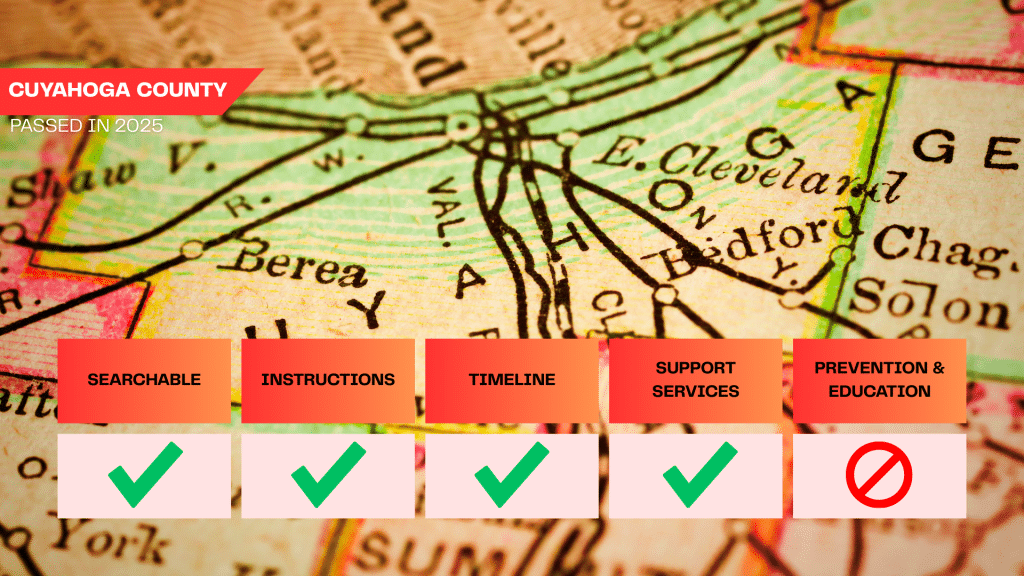
Cuyahoga County is the first county in Ohio to ban conversion therapy on minors. On its webpage, there is a link to an FAQ that includes an explanation of the complaint process. The county provides alternative legal help on the webpage, but it does not direct users to support services related to mental health. However, those resources are available elsewhere on the website.
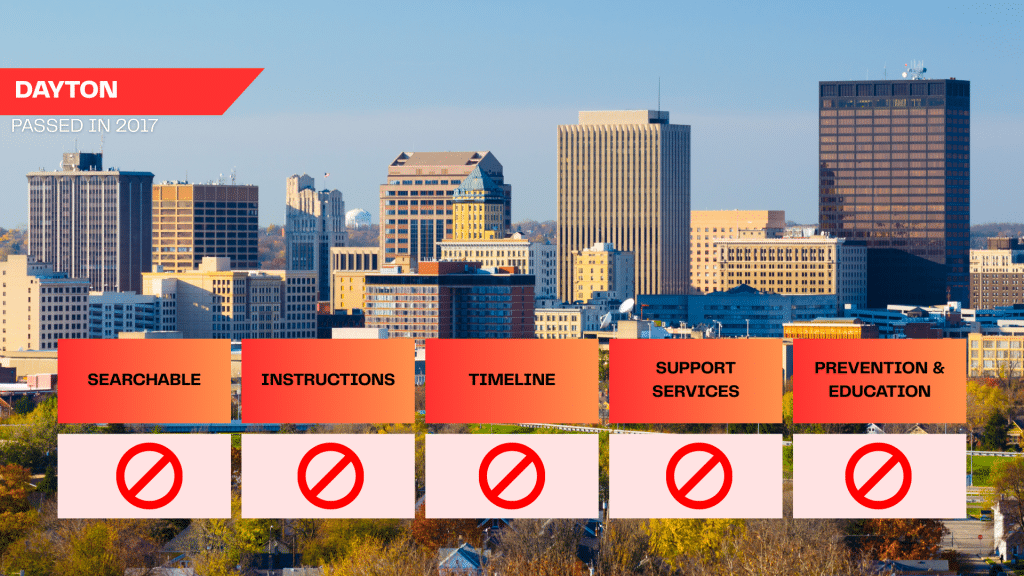
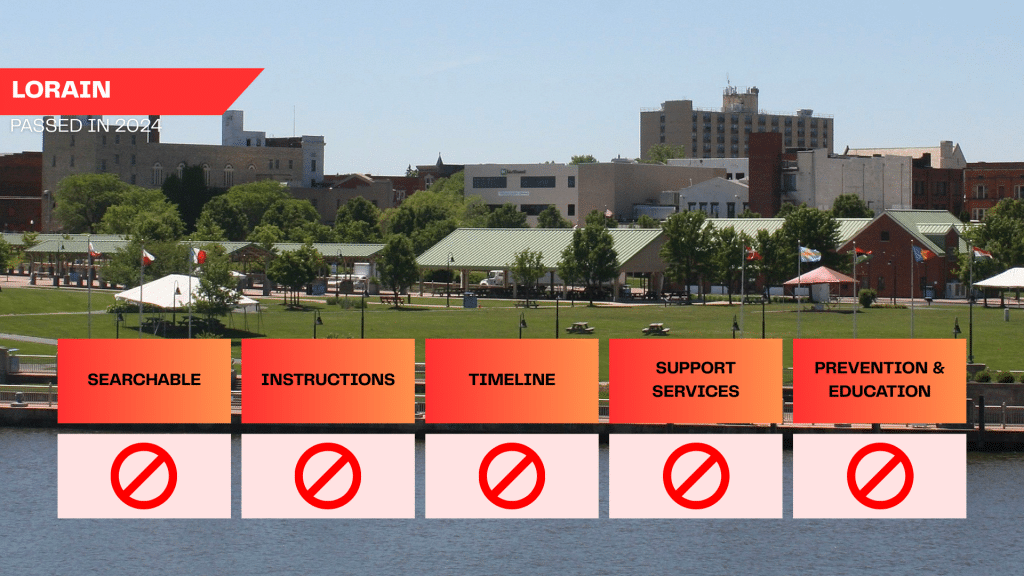
The ban is not searchable from the homepage unless you specify to look in the municipal codes.
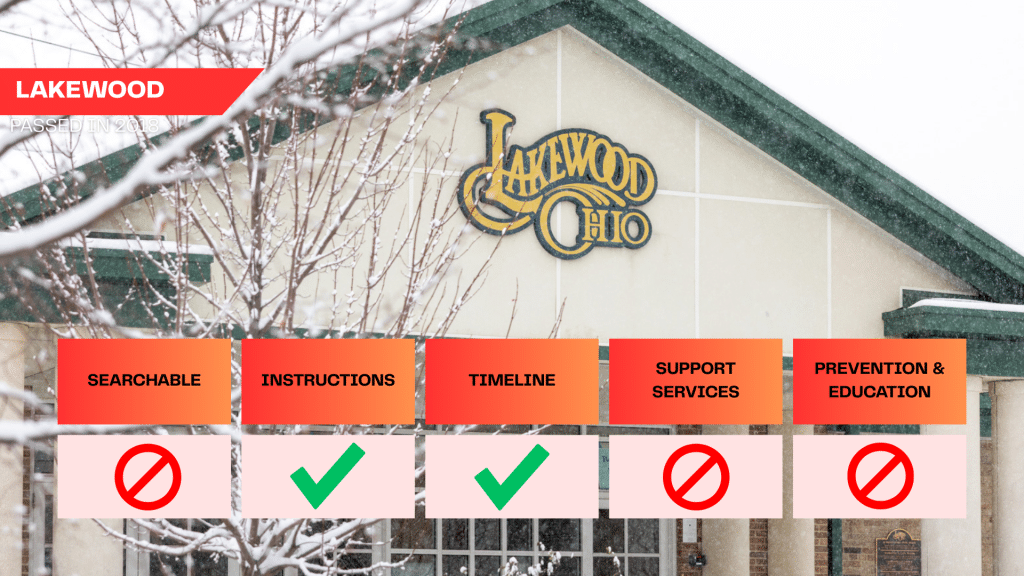
Lakewood’s city code provides instructions on how to submit a complaint.
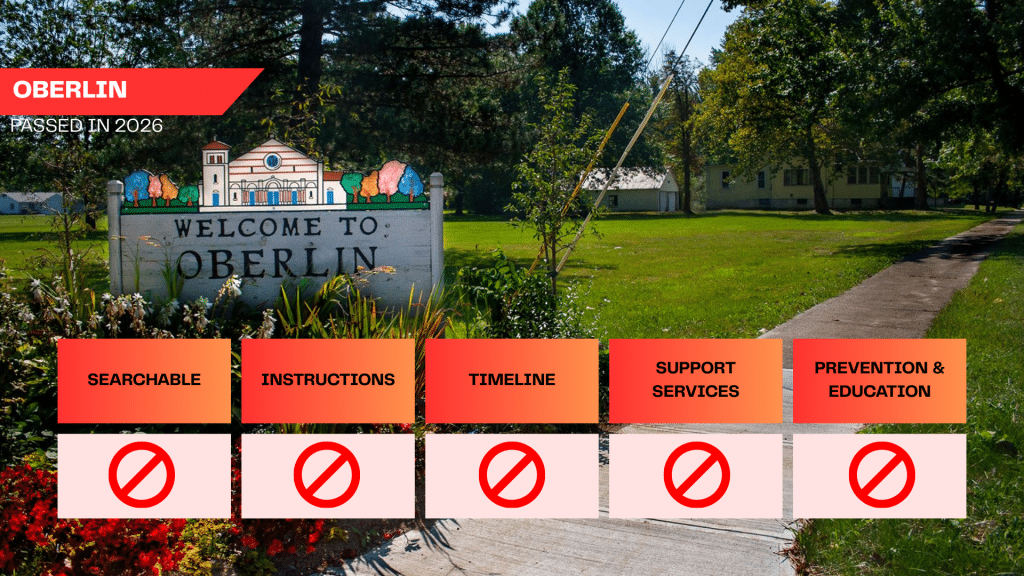
Though Oberlin’s ban recently passed, it is not searchable from the homepage and there are no clear instructions within the ordinance.
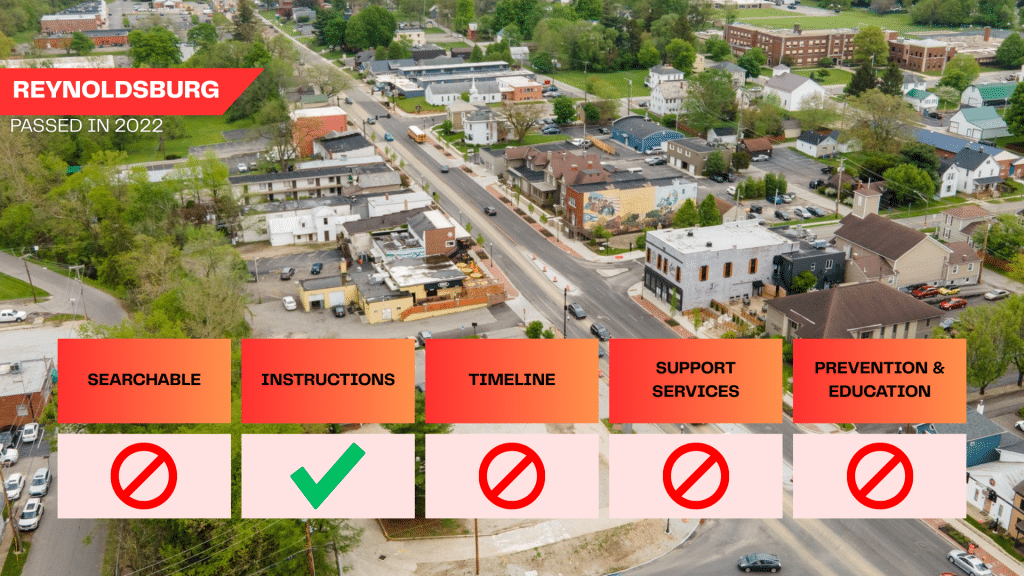
Instructions are located in Reynoldsburg’s municipal code under a different section than the ordinance itself.
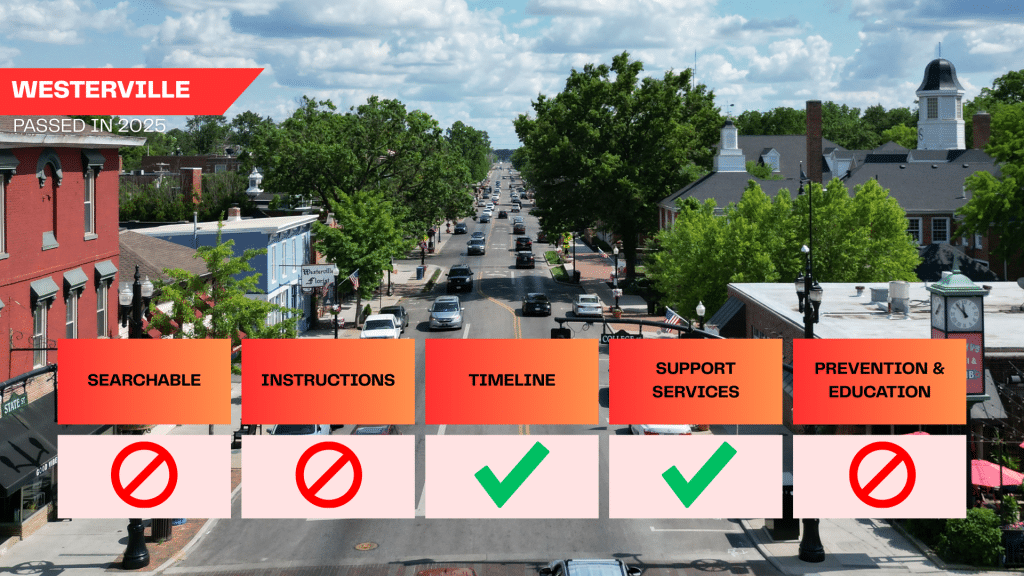
A complaint can be submitted through the form on Westerville’s non-discrimination ordinance page, which does not mention conversion therapy. Support services are available on its “Community Affairs” page.
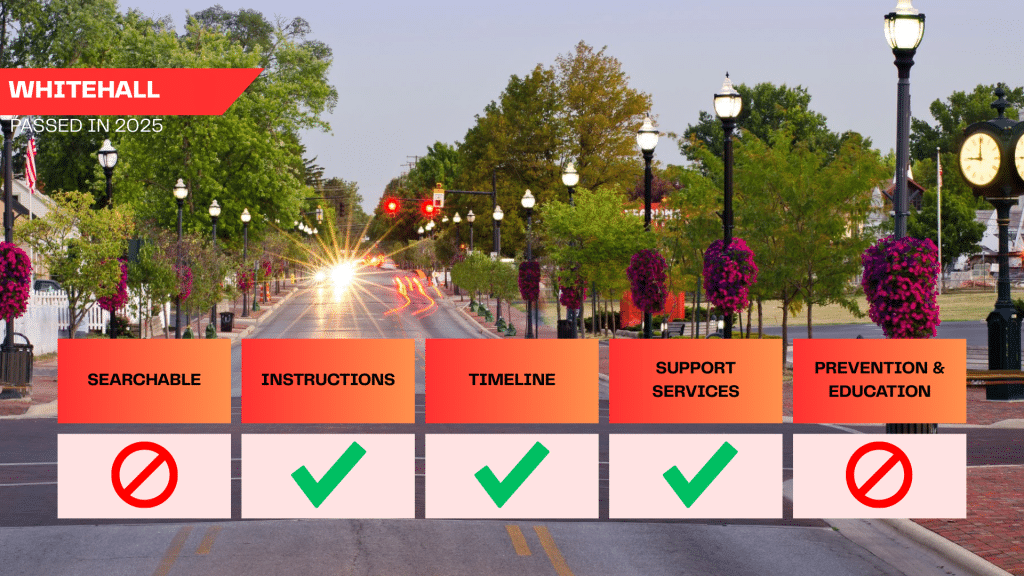
The ordinance has not been added to the city code as of writing, but instructions are listed including a timeline under the section of the city code prohibiting discrimination. The city has a general “community resource directory” online.
IGNITE ACTION
- These score cards were created to analyze whether the current bans are user-friendly. If you believe there is an error, or if your municipality made any changes since this article was published, contact us at editor@thebuckeyeflame.com.
- If you have experienced conversion therapy in Ohio, we want to hear your story. Please contact us at editor@thebuckeyeflame.com or ben@thebuckeyeflame.com.
Know an LGBTQ+ Ohio story we should cover? TELL US!
Submit a story!