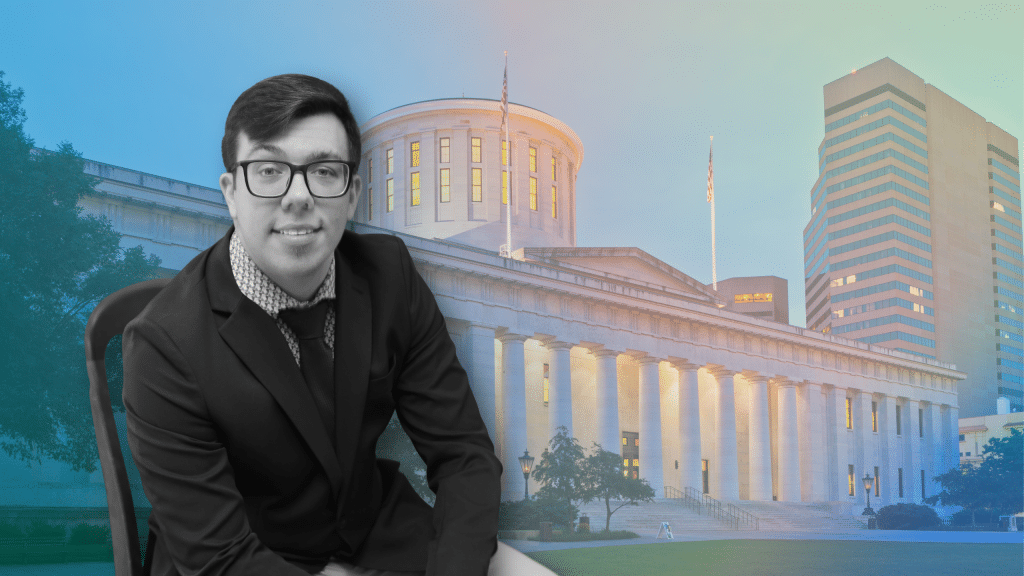
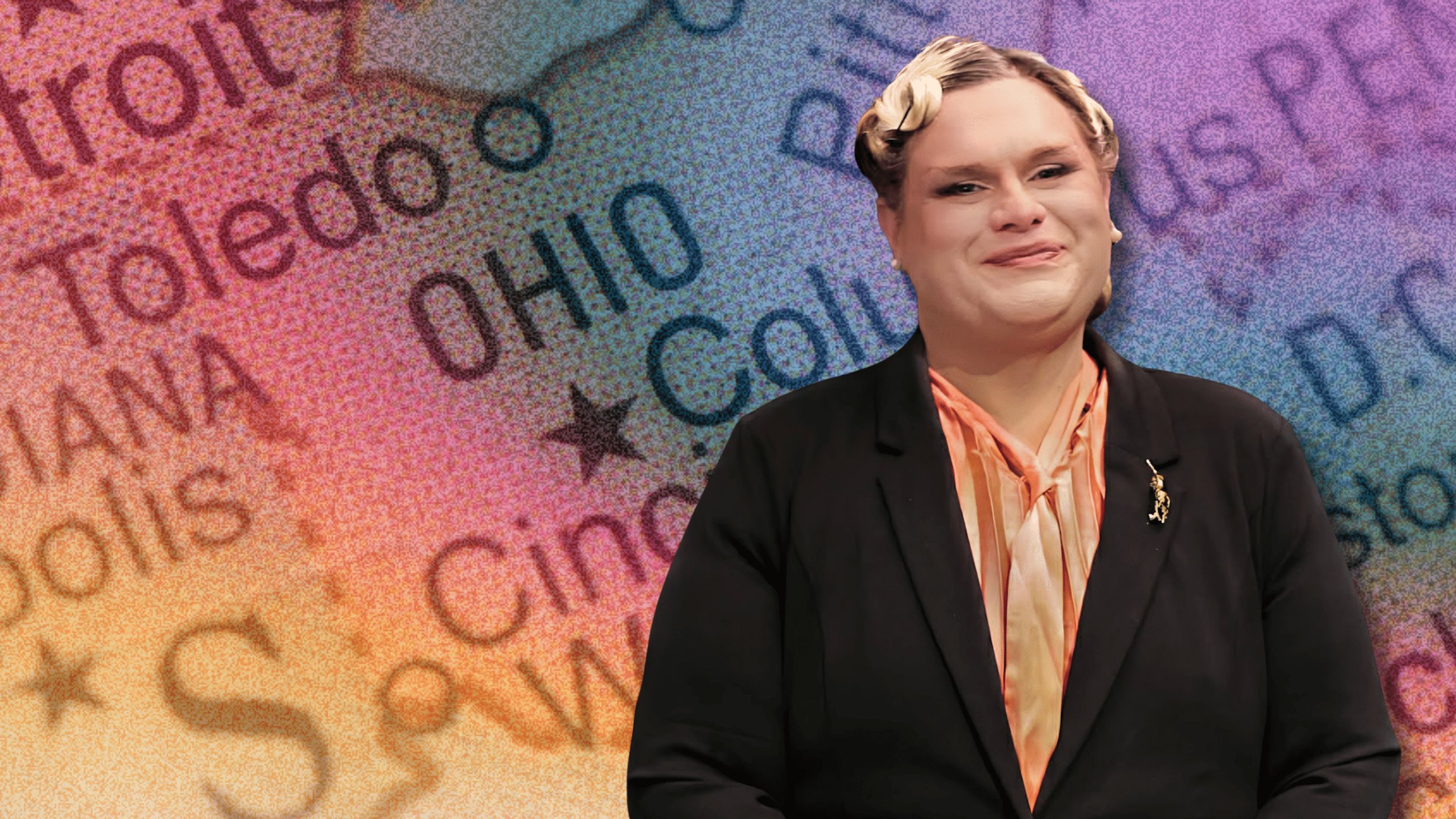
In rural Ohio, Paulding County and surrounding communities in Northwest Ohio have historically voted straight down the Republican party line. But Christopher Elder, a bisexual Libertarian running to represent the state’s 82nd district in the House of Representatives, believes party loyalty has caused a voting apathy that his midterm campaign can alleviate.
Embracing his bisexuality helped the 26-year-old candidate see the world in shades of gray rather than black-and-white.
“The whole message of being yourself in the LGBTQ+ community is being yourself in your own ways,” he said. “I can be bisexual in my own way; I don’t have to find the labels. What I want from my community is that if they are conservative, they don’t have to be anti-gay; they don’t have to be anti-people. They can be conservative in their own way; they can be liberal in their own way.”
Background
Elder was born in Defiance, Ohio, but spent most of his childhood until high school in southern Tennessee. Although he’s moved around a lot, he has lived in the village of Paulding for the last eight years.
For much of his adult life, he voted for conservative candidates, many of them in the Republican Party.
But after briefly attending Bowling Green State University, he started to reckon with his bisexuality. He faced an identity crisis and “slowly drifted away” from conservatism. After reading a book that asked Christians to practice loving people who were different from themselves, he thought about how he should love his own sexuality despite it not being seen as “normal” in his community.

He had some anxiety about whether he would have to conform to the expectations of others, such as wearing makeup, he said. A nonbinary friend explained to Elder how coming out is a different experience for everyone, and he “didn’t owe it to anybody” to do so.
That idea resonated deeply with Elder, he said. The college kid who was later called “MAGA Christopher” by friends was finding how Republican values were chafing against his own.
“I couldn’t stand supporting Trump any longer,” Elder said. “Republicans, at their roots, don’t seem to be very pro-people anymore.”
He began to enter “Democratic circles,” where he found “a lot of people with like-minded ideas,” but was frustrated with the two-party system.
“There’s always one person to hate no matter what side of the aisle you’re on, and I really want to see a different group of people – or multiple groups of people – that can come in,” he said. “We can run our state better that way.”
He currently works with kids with behavioral challenges at an alternative school, the Marsh Foundation, and studies social work at Mount Vernon Nazarene University.
He was inspired to run for office after reaching out to a Democrat in the Ohio Statehouse who had a similar background, Rep. Crystal Lett (D-Columbus) for an article he was writing for a college paper. Lett told Elder that she ran because she was fed up with how the state dropped the ball on helping families with developmental disabilities.
That sparked the desire in Elder to explore running for office.
“I thought about it for a long, hard time,” Elder said. “I just thought, well, why the heck not? There’s not a lot of people in my field, in my area advocating for kids and other families, so here we go.”
‘Another way’
Running in a third party can seem like a long shot, but Elder said his district is uniquely positioned to buck the mainstream parties.
During the 2012 U.S. House of Representatives race in Ohio, the Libertarian candidate had 4.6% of the total vote. Nearly 400 Libertarian voters were from Paulding County out of the 9,344 votes cast.
The national Libertarian Party believes people should face minimal intervention from the government, according to their platform. The party celebrated the legalization of marriage equality in 2015 and believes that individuals have the right to access any form of healthcare they want, including gender-affirming care.
“A good chunk saw another way,” he said.
While talking with voters, Elder learned that many were disillusioned with their ballot choices. He also found that ruby-red Paulding County had more supporters than he’d thought of some Ohio LGBTQ+ rights issues, such as the push for a nondiscrimination law.
Republican voters in his district are more accepting of LGBTQ+ people than others might imagine, he said. Both red and blue voters seem to have libertarian ideals.
If elected, he said he can use those overlaps to get policies passed that help the average person.
“We’re here for people,” Elder said. “I want to listen to you even if I disagree with you, and so I think I can pull on some of the ties I have with Republicans as well as the Democrats to find that middle ground.”
Elder wants to show that Ohio has more options than just blue or red, and he wants to support policies that encourage purple. He supports ranked-choice voting, which he sees as helping elect candidates from different parties and backgrounds since voters don’t have to choose only one option.
Ranked-choice voting, he said, would give constituents more of a voice in the process and reduce polarization.
“They don’t have to define themselves by party politics,” Elder said. 🔥
IGNITE ACTION
- To learn more about Christopher Elder’s campaign, visit his campaign website here.
- To register to vote or to check your voter eligibility status in the state of Ohio, click here.
Know an LGBTQ+ Ohio story we should cover? TELL US!
Submit a story!