
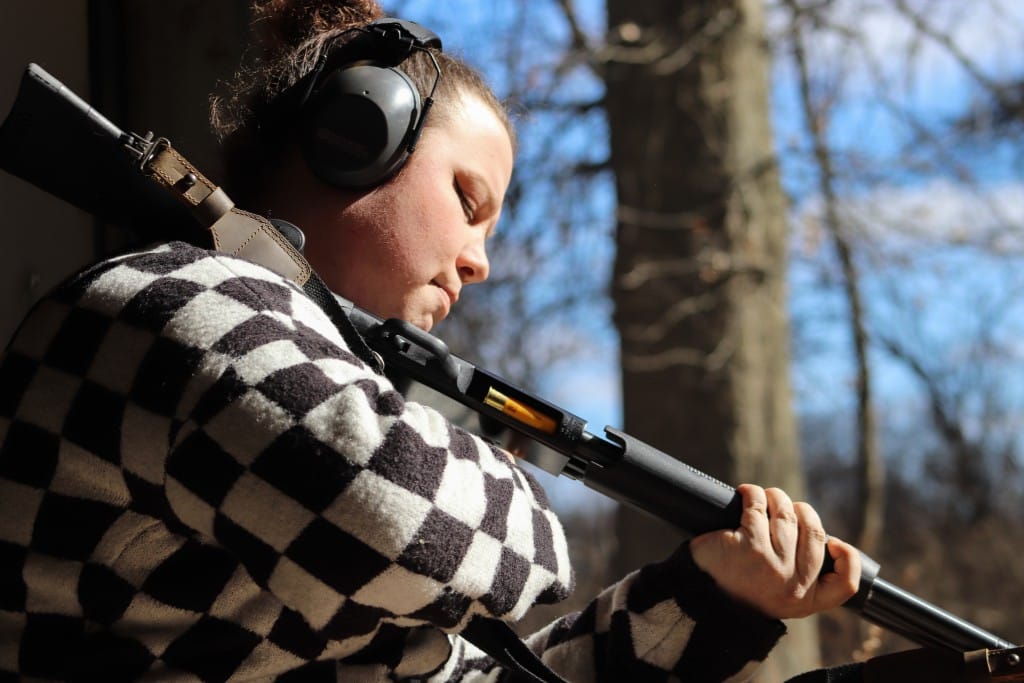
On a chilly February afternoon, Fifi carries mugs filled with Mexican hot chocolate across their family farm in Lorain County, Ohio. A goat watches from behind a rainbow fence as Fifi opens the small back door to a barn, kicking aside spent ammo casings.
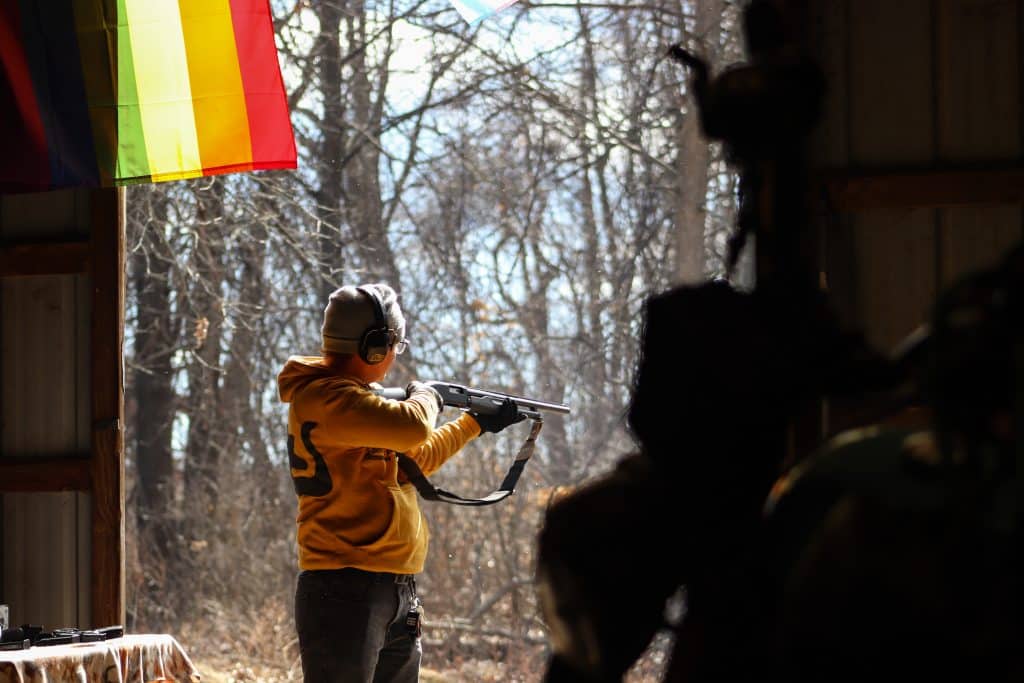
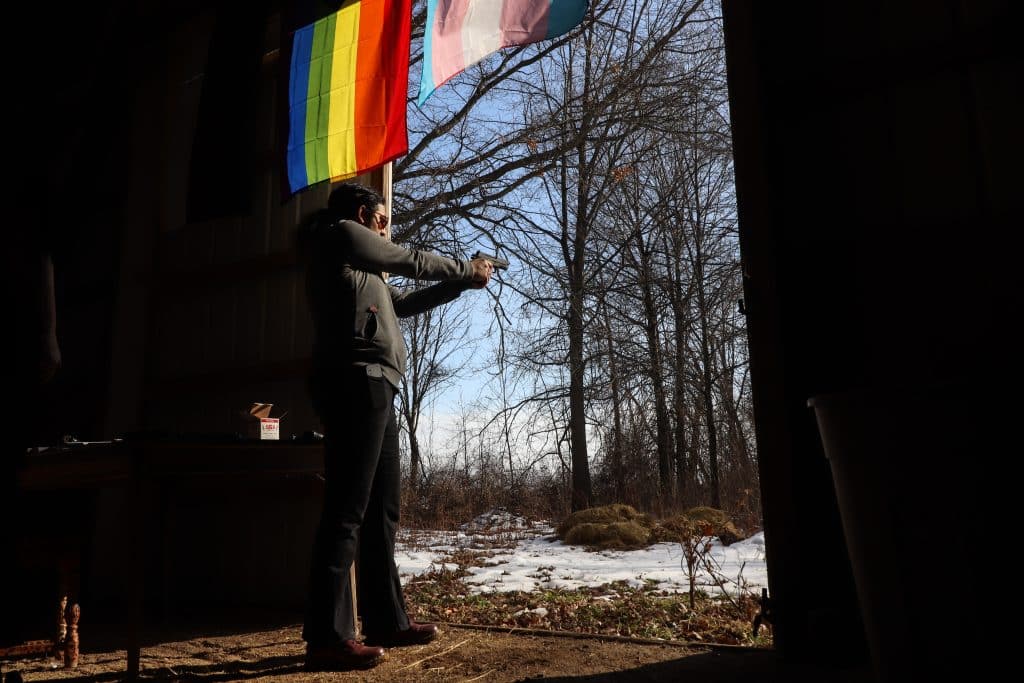
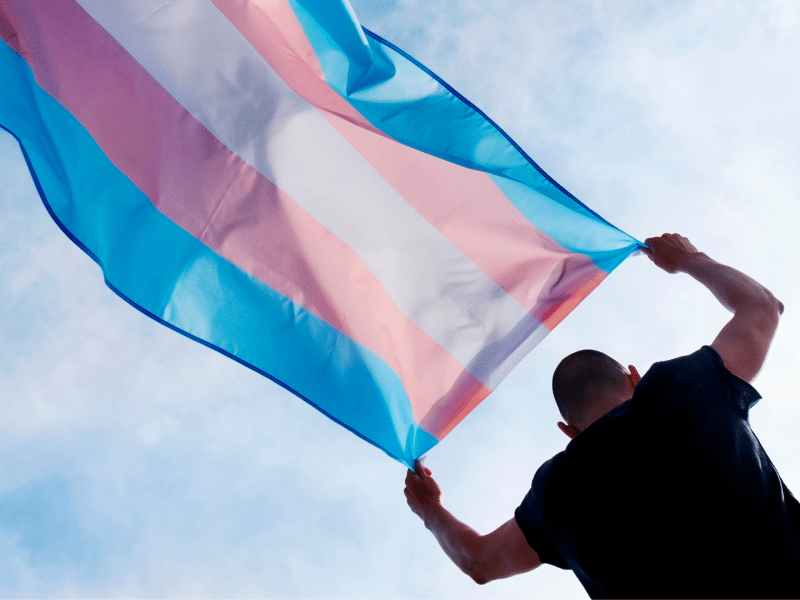
Inside the barn, motorcycle parts lean against a wall where antiques are displayed. Fifi sets down the mugs on a table near their best friend, Bella, who is working with a group of students. Behind them, three trans and LGBTQ+ Pride flags move with the wind.
Bella’s black boots and long witchy skirt kick up dirt as she moves around, checking a student’s grip on an AR-15.
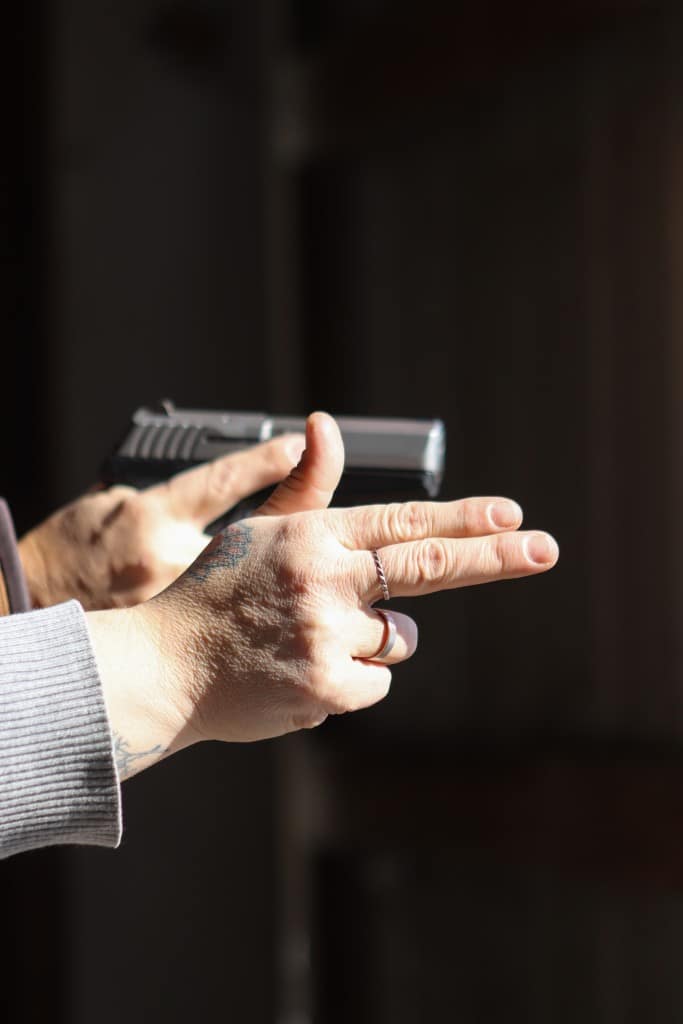
“Finger off the trigger until you’re ready to shoot — aim, and squeeze slowly,” Bella instructs.
The student squeezes the trigger as rounds go through the wide open barn door downrange to handmade targets at the back of Fifi’s farm.
All of the students are LGBTQ+. Some have never shot a firearm before, but felt safe enough to do it with the help of Fifi and Bella, two trans people of color. (The Buckeye Flame has omitted surnames and changed some first names upon request due to safety concerns.)
Fifi was inspired to host the class after they moved back home to Ohio in 2022. They had been living in Portland, Oregon and was shocked by the amount of anti-LGBTQ+ legislation moving through the Republican-controlled Ohio Statehouse. Rangegoers cited the legislation as key to their decision to own a gun and to learn how to shoot.
“I was just like, ‘Holy crap! It really is a much different environment out here,’” said Fifi. “There’s some hate for trans folks in Portland, but it’s just nothing like it is here.”
Since they began March of last year, Fifi said they have received “incredible feedback” for the class.
“People were smiling and happy and feeling comfortable [because] they have access to firearms for the first time in a safe place,” Fifi said. “To be able to offer that to people is incredible.”
Beginnings
Fifi’s father taught them how to shoot when they were 10, and they used firearms up until they were 18. After moving to Portland as a young adult, Fifi did not feel the need to use a firearm again until they began to explore their transgender identity in their early 30s.
Safety became more and more of a concern, Fifi said. They found themselves wondering how they will keep themselves safe when there are people who “hate me based on my existence.”
“That becomes a very fundamental part of your trans identity for a lot of people,” Fifi said. “The more you explore your identity, the more marginalized you can fall into a category.”
In 2019, they flew to Ohio and told their dad about their plans to ride their motorcycle back to Portland. Their dad insisted on them taking a firearm during the trip, so they bought a handgun and trained with it.

During the trip, Fifi said they camped in the Badlands, Yellowstone National Park and other “totally boondock areas where there are no facilities.”
“I never had to use it, but it really did make me feel a lot safer because I was a queer person on the trip by myself,” they said.
Feeling a need to connect with the queer motorcycle community, they started a Cleveland chapter of the LGBTQ+ motorcycle club Queers on Gears. Fifi said it was a “natural segue” into the firearm days, given motorcycle culture’s affinity for gun ownership.
There, they met Bella, who was born and raised in rural Clermont County outside Cincinnati to a military family. Her dad bought her a Daisy Red Rider when she was 5, and she has been a lifelong firearm enthusiast since.
She moved to Cleveland in 2014. After she lost her motorcycle community when she transitioned a year ago, she found a new one through Queers on Gears.
“This is all still fresh to me,” she said. “I’ve kind of liked more ‘male stuff’ for most of my life. The idea is kind of to pass that knowledge. I want to take what I know about being a cis man and use that in transition to help the people that are often marginalized by the system.”
Out on the range
Sarah B. steadies herself. She aims a 9mm handgun at three circular targets down range.
Beneath the LGBTQ+ Pride flags, she fires a single shot from the barn’s open back door. Metal targets hang from a handmade wooden stand. Piles of wet hay scatter the range and the trees and fields beyond.
“You can even aim a little higher,” Fifi says, adjusting Sarah’s arm from over her shoulder.
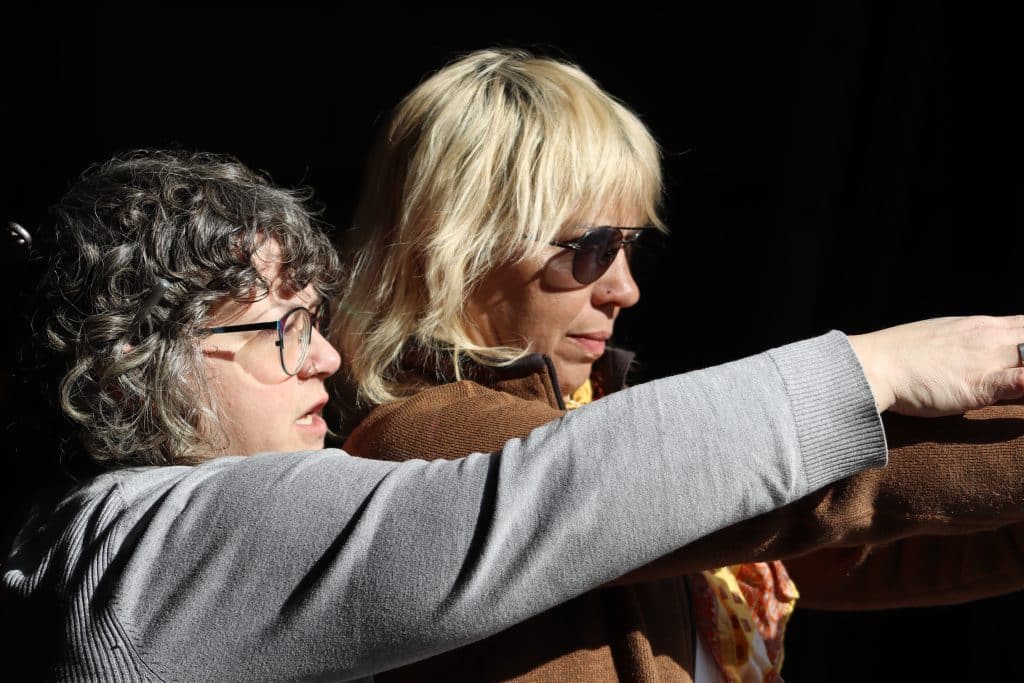
Sarah grew up in New York to a liberal household. She came to Cleveland after some time in Los Angeles. Aside from one summer in 1992, she’s new to firearms.
Because of her upbringing, firearms held a certain mystique.
“Oh my God, so if I touch this thing, am I suddenly going to start murdering people?” Sarah joked.
After Sarah helped Fifi organize and clean their house, Fifi suggested Sarah come to one of their monthly queer firearm days. She had thought about going to the local gun ranges before, but as a middle-aged lesbian, she thought it would be too risky.
After going to Fifi and Bella’s firearm days, she’s come back a “gun nut.”
“It was really terrific,” Sarah said. “It was very accessible, low drama, matter-of-fact.”
Allie, a trans Muslim from Texas, loved the “inherent fun and queerness of learning to shoot in a barn,” she said. But as a first-generation American and a Muslim, she was “hyper vigilant” about safety even before her transition.
She remembers having to shave her beard before she went to the airport and people making jokes at her expense.
“They don’t get it. They’re not living my experience. Like, the bad guys in ‘Call of Duty’ do not pray to the same God that I do,” Allie said. “I don’t necessarily think that a brown person with a gun is exactly smiled upon in Texas. It’s a very real thing you have to consider.”
Pros and cons
There have been murmurings of an increase in LGBTQ+ people owning firearms, but it’s still a small percentage. The desire for additional protection is warranted: A 2025 survey from the Williams Institute suggests LGBTQ+ people are five times more likely than their cisgender and straight counterparts to be victims of violent crimes. On the flip side, however, LGBTQ+ people have a disproportionately high risk of suicidality, and having a gun at home could increase the risk of suicide.
Fifi is actively engaged in these types of conversations. During the training, they note that if any gun owner is prone to a mental health crisis, they should identify a safe person in their lives to whom they can hand over any firearms safely.
And, ultimately, owning a firearm isn’t for everyone, Fifi said. They advocate for stronger gun laws – such as requiring classes and deeper background checks – and they know and listen to their friends who are victims of gun violence.
“There are absolutely, 100%, negatives about carrying firearms with you,” they said. “I very much want to make space for how dangerous and controversial guns are. That comes along with respecting the power of firearms.”
Carrying a concealed gun can be used as a de-escalation tactic, Fifi said. They gave an example: In November, Fifi and Bella were attacked by a man and his daughter in Amherst in a road-rage incident.
Fifi said the man shouted anti-LGBTQ+ slurs at the pair and assaulted them. While Bella was able to restrain the man for a time, the man broke free and escaped before the police could arrive. Though Bella was uninjured, Fifi sustained serious injuries but made a full recovery.
Both of them did not have their concealed-carry firearms with them that day, Fifi said.
“I feel like if I had my gun on me at some point, I could have stopped the whole thing from happening,” Fifi said. “I don’t think anybody is going to continue trying to assault you if you pull a gun and protect yourself.”
Visitors to the gun range had similar concerns. As Ohio and other parts of the country push anti-trans legislation, Allie and Sarah both said they have to protect themselves and their neighbors.
“I wonder how many people I walk past on a daily basis think that trans people are all freaky rapists,” Allie said. “People I’d hope would be standing up for us are silent. The only people that are going to save us are us.”
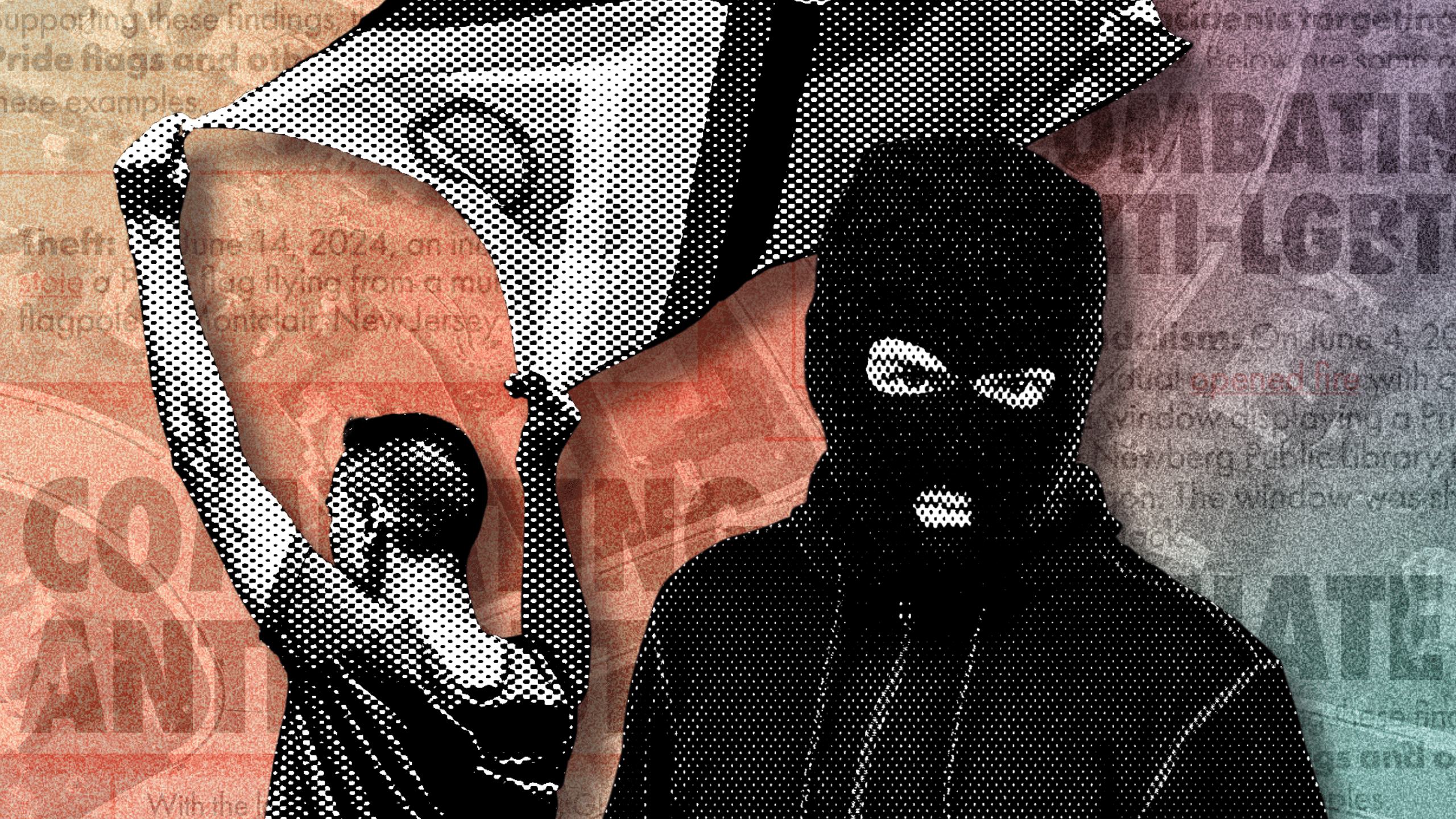
The Trump administration floated a flat ban on legal gun ownership for transgender Americans last year as part of a larger shift in conservative rhetoric that codes trans people as “mentally ill,” violent and dangerous. The discussions were most recently sparked by a mass shooting at Catholic School in Minneapolis last year, which officials said the shooting was carried out by a transgender person.
Since 2013, the Gun Violence Archive found that transgender people have committed just 5 of the more than 5,700 mass shootings in the United States.
Sarah, for her part, said she doesn’t know if she could concealed-carry, though she is strongly considering buying a handgun for home defense. Even then, she doesn’t know if she could shoot and kill another person.
“I don’t want to see anyone I care about die,” Sarah said. “If that means learning how to use a firearm appropriately, that’s what it means.”
For Fifi, the range isn’t just an educational opportunity. It’s an extension of their activism, inspired by Black revolutionaries such as the Black Panthers. As LGBTQ+ people become targeted for further oppression, Fifi said they look to the Black Panthers for inspiration and courage.
“Black revolutionaries have been through it all,” Fifi said. “The Black Panthers teach their syndicates and their members how to carry firearms, how to control attention in a room, how to demand respect and never once falter their morals or their ethics just to let someone take advantage of them.”
Bella sees instructing people on how to use firearms safely as part of their transition, to “help those often marginalized by the system.”
“I still have friends all over the place, on every sort of spectrum politically,” she said. “I try to take the ability to make those friends in every circle and use that almost as data, as a way to help people that are being hurt.”
After a long afternoon, people file out of the barn to their cars.
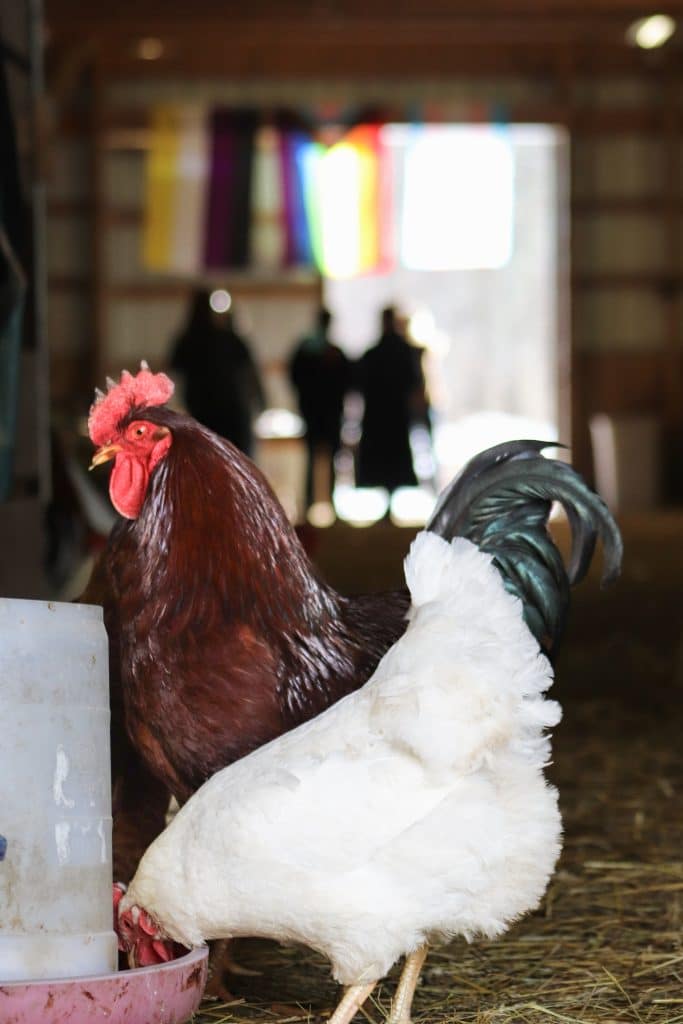
At the end of Fifi’s half-mile driveway, people hug one another and exchange phone numbers. Chickens chatter in the background. A handful of goats press their faces against the boards of a rainbow painted fence.
Fifi waves goodbye from outside the garage as the cars roll toward the road.
One month later, Ohio Republicans would advance another bill targeting transgender individuals. 🔥
Editor’s Note: Based on credible threats of violence, this story has been updated to obscure a location The Buckeye Flame previously named in Northeast Ohio.
IGNITE ACTION
- To learn more about the queer firearm days, contact the Community Alliance for Trading Skills by email CATScleveland@proton.me or on Instagram @cats_cleveland.
- If you are a young LGBTQ+ person in crisis, please contact the Trevor Project: 866-4-U-Trevor.
- If you are an transgender adult in need of immediate help, contact the National Trans Lifeline: 877-565-8860
Know an LGBTQ+ Ohio story we should cover? TELL US!
Submit a story!




Pingback: Roundup of links for 23 Mar. – gleanings