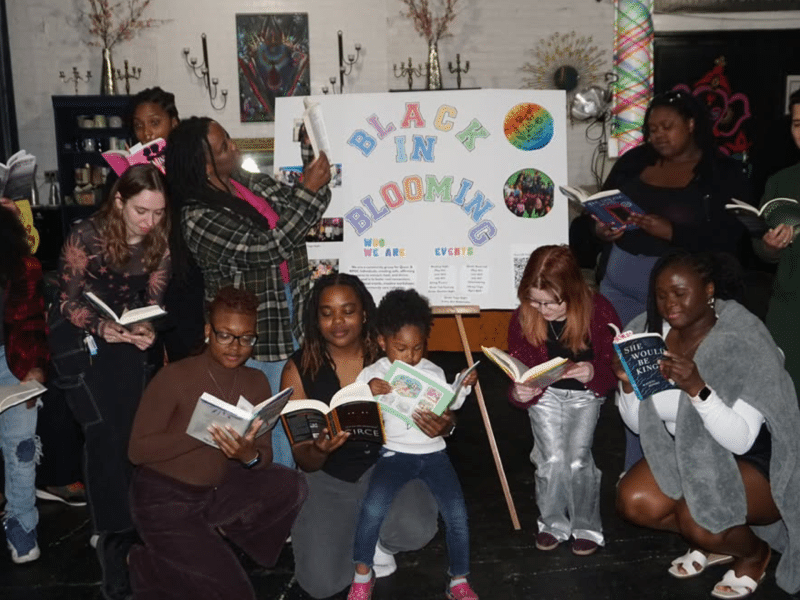
In April 2026, The Black Queer & Intersectional Collective (BQIC), a Columbus, Ohio-based organization, celebrated its ninth anniversary with music, pizza, snacks, and a few rounds of Jenga. It was a time for members and LGBTQ+ folks in the community to connect further and see where the organization is headed.
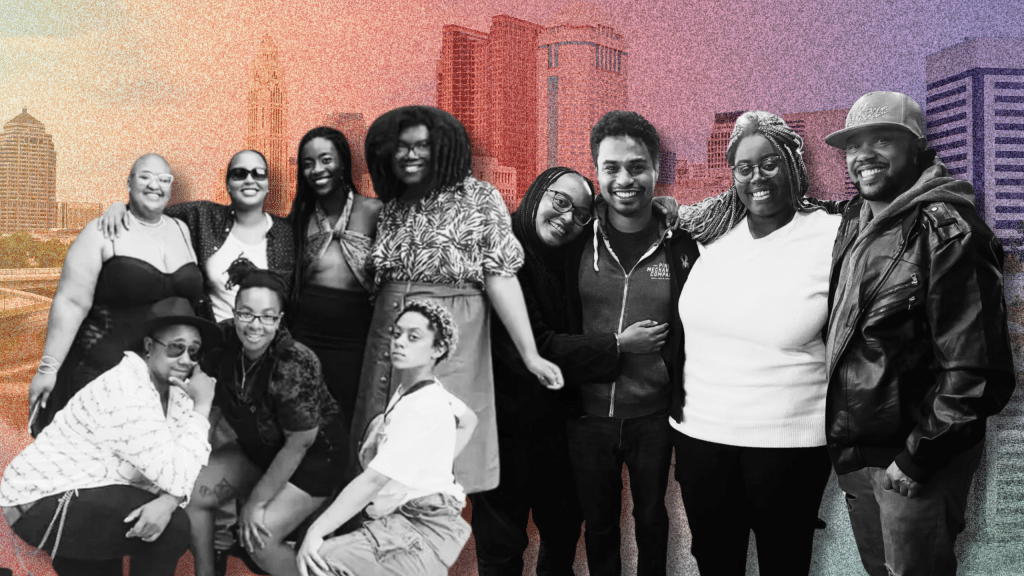
Nine years ago, Dkéama Alexis and Ariana Steele co-founded BQIC to create space for “creating a world where LGBTQIA+ people of all different backgrounds can be free and thrive” through community outreach and resources, according to Alexis’s informational video on BQIC’s website. Alexis and Steele’s push to start BQIC stemmed from not seeing their identities’ intersections acknowledged in other organizational spaces, namely Stonewall Columbus.
In a 2022 statement shared on BQIC’s website, the organization deemed Stonewall an “anti-Black organization” after four Black LGBTQ+ attendees of Stonewall Columbus’s Pride Parade (the Black Pride 4) were attacked and harassed by Columbus Police. BQIC organized a Columbus City Hall protest against the Black Pride 4’s pending convictions in 2018. The attacks resulted in the Black Pride 4 speaking out against the police force’s brutality. The protestors also accused the CPD of violence toward them during their arrests and trial.
This ultimately became the catalyst for the first Columbus Community Pride in 2017, a police-free alternative to Stonewall Pride that centers Black LGBTQ+ voices.
“BQIC came out of a desire to have a space by and for Black, LGBTQ people of color,” said Prince Shakur, BQIC’s communications manager. “And I think some of that is like, definitely centering around community safety and mutual aid.”
Charlie H.A. Stewart, core organizer and co-founder of Columbus Community Pride, says BQIC’s ninth year is all about “collaborations” and aligning BQIC with other growing or well-known organizations in the city to support them however possible.
Still, BQIC’s original focus on community and advocating for Black LGBTQ+ people in Columbus remains. Initiatives such as Free Resource Fridays, Speak Up! Spoken Word and Open Mic events, as well as an emergency fund, are among the ways BQIC directly helped Black LGBTQ+ locals in need. And now, BQIC is further supporting Black transgender people in Columbus who have needed more assistance under the Trump Administration.
“I think over time, it’s definitely been like, a lot about mutual aid, political education, advocating for trans, Black trans men,” Shakur said.
BQIC is betting on itself
Within the last two years, BQIC has been one of the many organizations speaking out against the dismantling of diversity, equity, and inclusion (DEI) programs and trainings, and the ongoing anti-LGBTQ+ initiatives. Shakur says the organization took action to determine what was needed beyond those who look to them for guidance and support by “continuing to develop our capacity.”
“I think that’s been a really big part of BQIC and Community Pride and being non-corporate,” he explained. “Like fundraising the money ourselves, working with community vendors, smaller businesses, working with local artists, doing and developing workshops. I think a lot of that is like building the infrastructure that people can tap into.”
Shakur added that BQIC’s work is akin to the work of The Black Panther Party.
“I think in a lot of historical moments, protest is a moment of civil unrest or a moment of people coming together.”
As a non-profit organization, BQIC has relied on its own resources to remain a trusted partner to the community.
“It’s the longer in-between work, where people show up for each other, and we actually have systems that people can trust to turn to,” Shakur added. “I think of the survival programs of the Black Panther Party, and how that’s like a model of having a prefigurative politic, like building a structure that people can trust, and then the community learns about it over time.”
“And I think it’s not, I guess, a protest in the traditional sense, but I think it is building the systems that make it easier for us to live and take care of each other and not rely on the state all the time. That, for me, is the biggest thing.”
Continuing Community Pride in the times of House Bill 249 and ICE
BQIC’s mission to further the liberation of Black LGBTQ+ people didn’t waver when blatant and unique challenges began affecting its community.
BQIC’s grassroots foundation equips it to deal with the Trump Administration’s anti-LGBTQ+ acts, including one that unabashedly affects LGBTQ+ Ohioans, with an emphasis on Black trans people.
Ohio’s House Bill 249, also known as the “Indecent Exposure Modernization Act” – the proposed ban on drag in public which has now advanced to the Senate and could become law by the end of 2026 – has affected an already marginalized community: the Black LGBTQ+ community.
If passed, the law could make it a felony for people in the community to live authentically. It’s something Shakur and the rest of BQIC’s team are “having conversations around.” However, he said the events Community Pride is known for, including its Burlesque show featuring drag and trans performers, will remain the same when Pride happens on Oct. 10, 2026, with a greater focus on creating a safe space throughout.
“We really just try to work with spaces in the community and folks where we organize or host events, where it’s trusted folks,” Shakur said. “We try to be really clear on what safety and security look like. Beyond that, it’s kind of just trying to be aware if there’s any, like, weird language or threats being made online, making people aware of that, making sure those safety measures are in check, and continuing to do what we’ve always done, because there have been periods in the past of higher repression, or like, certain communities being targeted.
“I think it’s just following through with our values that we already have, and not allowing fascism to tell us to be quiet.”
BQIC also hasn’t let the ongoing mass ICE deportations, which began in Columbus in late 2025, stop its members from speaking out. Shakur noted the org’s anti-ICE posts and programs – including its whistle-kit parties, which allow the community to speak openly about their fears and concerns regarding ICE – are part of BQIC’s awareness of all of its members’ intersections.
“I’ve seen it be really empowering to know that we think it’s important to be talking about ICE and immigration. To me, it’s just second nature because my family immigrated to the U.S., and it’s also such a part of abolition and looking at the violence of the carceral state,” he said. “It’s felt like a continuation of work we’ve done in the past. And focusing [on] how we’re trying to educate people a little differently than how we might have before, if it was strictly about, like, policing or abolition on a local city-based level.”
Looking forward
BQIC’s work in Columbus is far from over. The organization’s plan to collaborate and be more active within the city’s LGBTQ+ community, Shakur said, is to prioritize safety, security, and education for Community Pride attendees and any other BQIC events. However, he also wants to see expansion in BQIC’s future.
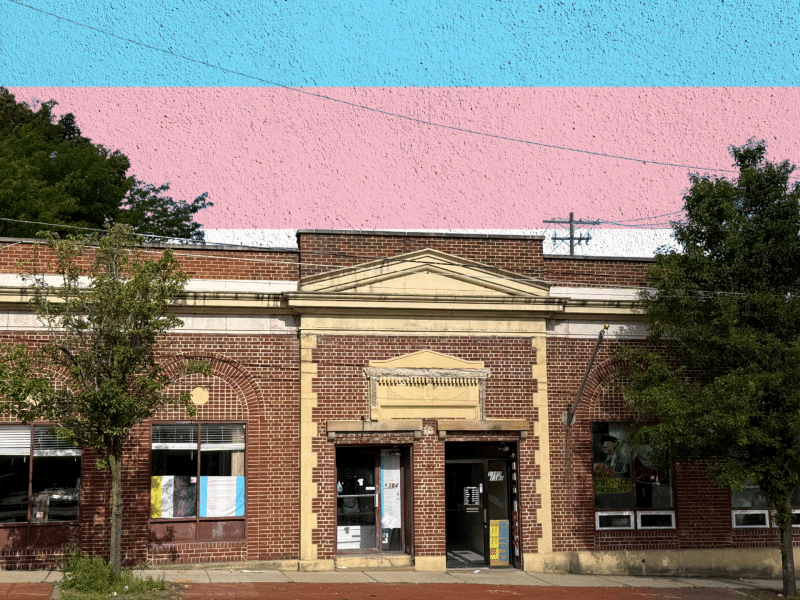
“One big thing that we’re pushing towards is an office space,” Shakur shared, adding he would like to see “support around that, and donations” from the city of Columbus. “Having a physical location that can kind of be like a point of unity is really important, and we’ve definitely had more of that sensibility in a lot of different ways in the past. I think we’re really wanting that back, especially as repression and fascism are more on the rise.”
In addition to finding a physical space, BQIC is also looking to expand into other areas of Ohio.
“Once capacity has kind of increased, a lot more is going to become, possibly even outside of, like, just folks organizing in central Ohio,” Shakur stated. “Like, maybe more things happening in Cleveland and in other parts of the state as well.” 🔥
IGNITE ACTION
- Learn more about BQIC by visiting their website here.
Know an LGBTQ+ Ohio story we should cover? TELL US!
Submit a story!