
LGBTQ+ Ohioan sues Bureau of Motor Vehicles again over ‘GAY’ license plate
Federal lawsuit alleges Ohio BMV has ‘arbitrary’ and ‘overbroad’ censorship rules for personalized license plates
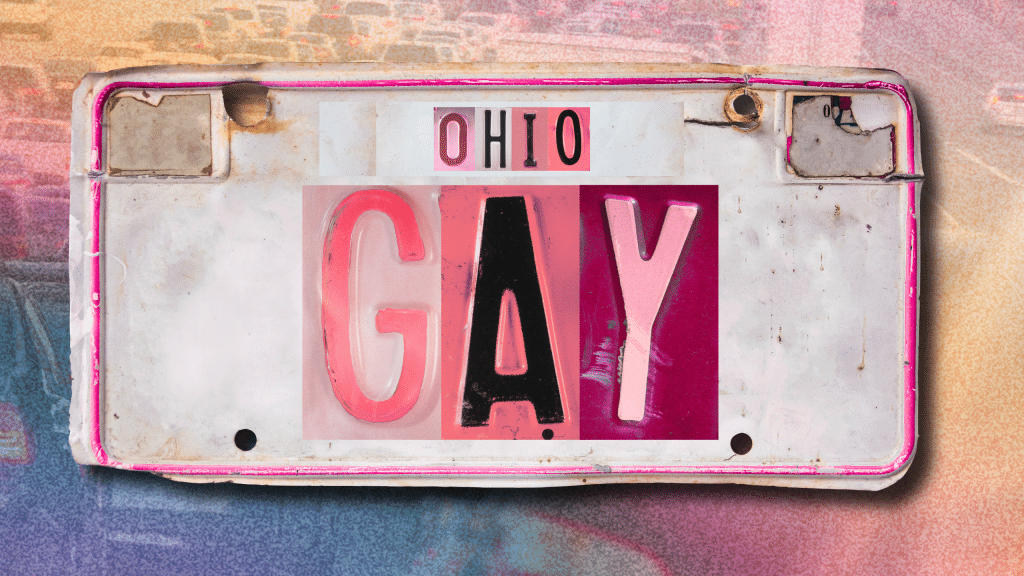
The LGBTQ+ Ohioan who filed a lawsuit against the Ohio Bureau of Motor Vehicles (BMV) last year after the agency rejected his application for a personalized license plate reading “GAY” has joined another federal suit against the agency.
Lakewood resident William Saki joined plaintiffs Jeffery Wosner and Patrick Corrigan in a new U.S. District Court lawsuit filed earlier this month, calling the BMV’s current interpretation of the state’s guidelines for personalized license plates “arbitrary,” “overbroad” and ultimately unconstitutional, restricting Ohioans’ First Amendment right to freedom of speech.

Saki’s original case was dismissed after the BMV said it had made an error and agreed to revisit current guidelines for personalized plates.
Now, the three plaintiffs are filing another suit, alleging the agency has failed to keep that promise.
Each plaintiff requested personalized license plates that “do not necessarily violate the Special Plate Screening Guidelines, but could be interpreted as having a meaning that would,” said plaintiffs’ attorney Brian Barnwell.
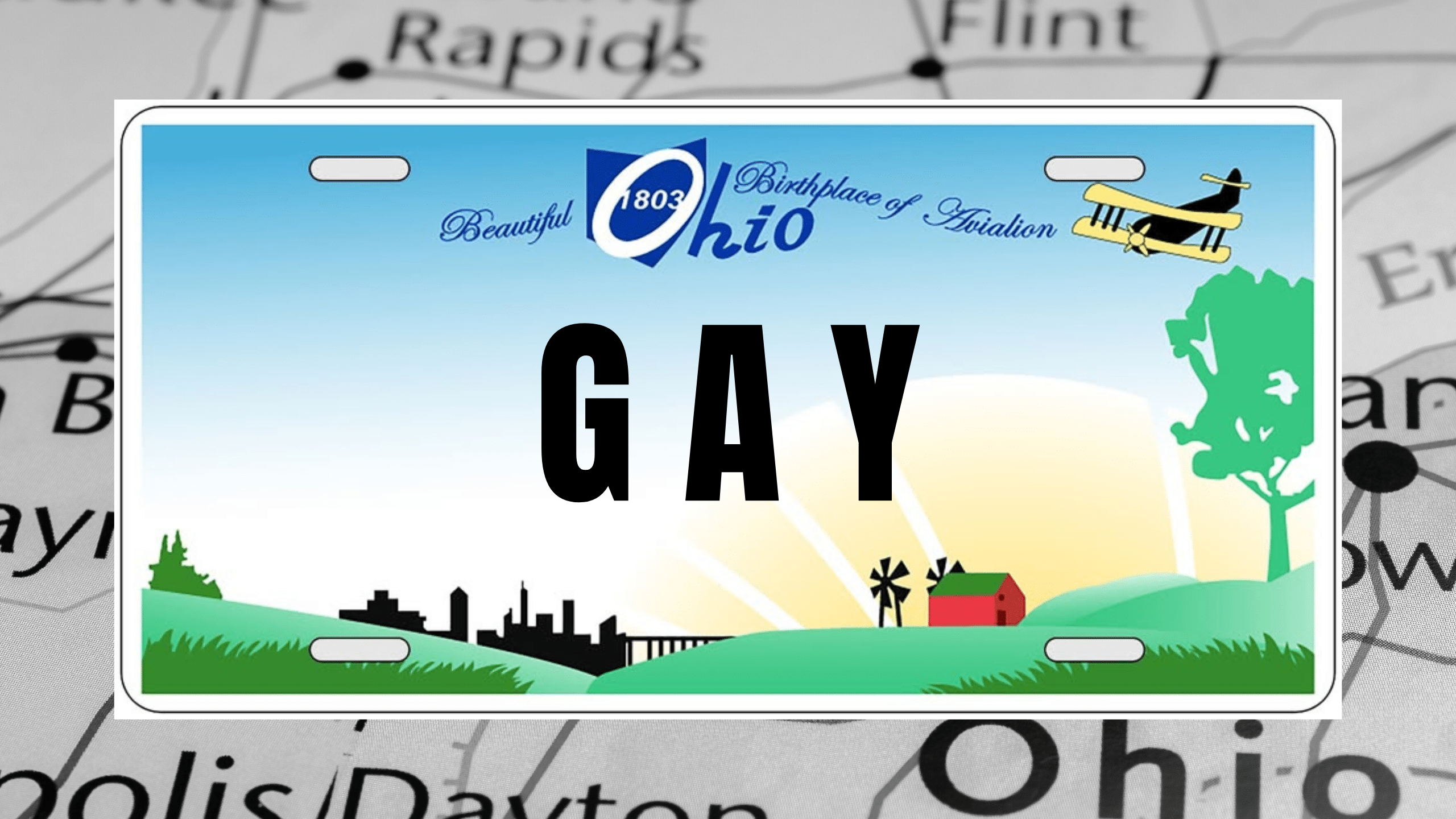
The plaintiffs are seeking a permanent injunction, requiring the BMV to approve their license plate applications and declaring the Special Plate Screening Guidelines unconstitutional – barring the agency from using them going forward.
Plaintiffs are also seeking the cost of attorney fees and other damages.
“It is important that all members of our LGBTQ+ community have a voice, whether we’re speaking out about all the injustice going on in the world or just asking for something fun and silly like personalized license plates,” Saki told The Buckeye Flame. “My hope is that Ohio follows the judge’s previous orders and makes it easier for everyone to get the personalized license plate that they want.”
‘GAY’ license plate case
Ohioans have been able to purchase personalized license plates since 1973. However, the agency did not establish rules for evaluating applications until 2003, after an Ohioan sued the agency for denying a personalized plate that read “RDRAGE.”
As a result, the BMV created a series of official guidelines, prohibiting personalized plates that are: “profane, obscene, sexually explicit, or scatalogical.” The rules also ban letter and number combinations that reference drugs, “advocate lawlessness” or may “provoke a violent response.”
Last year, Lakewood resident William Saki applied for a license plate reading “GAY” through the Ohio Bureau of Motor Vehicles (BMV) in advance of National Coming Out Day – October 11 – to “express a central part of his identity.”
When the BMV rejected the plate as “Inappropriate/Invalid,” Saki attempted to register “QUEER” and “HOMO” – both of which were also denied.
When Saki also attempted to register plates including anti-LGBTQ+ slurs, he discovered the BMV allowed “NO GAYS,” “NO HOMOS” and “NO FAGS.”
Ultimately, a federal judge dismissed the suit after the BMV said it “erred in rejecting” Saki’s application and agreed to review its database for other blocked words that do not meet the standard for “offensive, disparaging or socially insensitive” language.
According to the complaint, the agency did not reevaluate its database and failed to produce clear, publicly accessible instructions for Ohioans looking to appeal a personalized plate rejection.
While Saki’s initial request for a personalized plate that reads “GAY” was processed and approved by the BMV, Barnwell said the issue of censorship is far from resolved:
“If you want to call yourself GAY or HOMO or NEGRO or JEW or MUSLIM, that should be your own decision, not the BMV’s,” Barnwell said. “It’s a bit of a slap in the face that we had to file this case at all.”
‘F46 LGB’
Ohio BMV deputy registrar Charlie Norman told reporters with News 5 Cleveland the agency approves roughly 500,000 personalized plates each year. He also described a noticeable uptick in personalized plate rejections since 2019.
Between 2020 and 2025, the number of plates Norman’s four-person office denied jumped by more than 92%
Plaintiff Jeffrey Wonser also sued the Ohio BMV in 2024 after the agency rejected his personalized plate application for “F46 LGB” in 2022.
The complaint claims the numbers and letters could be interpreted to mean “f— the 46th president, Joe Biden, and Let’s Go Brandon,” a term commonly used to insult the former President during his tenure at the White House.
However, the plate also resembles the anti-LGBTQ+ slur “FAG,” and a possible reference to lesbian, bisexual and gay people via the acronym “LGB.”
Additionally, the message could also be interpreted as a pro-LGBTQ+ phrase “intended to reclaim a homophobic slur” – blurring the guidelines even further.
Saki also applied for a plate using the phrase, clarifying on his application that the acronym stands for “Fag love: Gavin and Bill,” a tribute to his partner.
Saki’s application was rejected, along with requests for plates reading: “HOMO,” “FAG,” “FAGGOT” and “CUNTY.”
Ultimately, a judge dismissed Wonser’s suit after determining the statute of limitations had expired. In 2024, he submitted a second application for a personalized plate reading “LGB F46,” which was also denied.
Intent vs. interpretation
The lawsuit highlights the difference between intent vs. interpretation.
Barnwell argues the string of characters “F46 LGB” does not directly violate the BMV’s guidelines because it has “no objective meaning.” Further, he argues that neither the BMV nor the individual is responsible for predicting the public’s interpretation of the plate.
For example, the BMV rejected the plate “FALICE,” for violating guidelines – apparently interpreting the phrase to mean “phallus.” However, the agency reversed its decision after confirming that “Falice” was the applicant’s legal middle name, and not an obscene or sexually explicit reference.
In another example, a BMV censor also rejected an application for a personalized plate that read “84HO,” believing it to be sexually explicit and derogatory. The agency later rescinded that decision and issued the plate after confirming it was for a 1984 Hurst Oldsmobile.
Barnwell said the rule gives the government “unbridled discretion to censor speech.”
“Mike DeWine says we should trust the state to decide which messages are fit for license plates, but it’s hard to trust him when he’s cutting special plates for literal Nazis but refusing to do the same for lesbians or Jews or anyone else who doesn’t belong in whatever painfully boring version of America he’s trying to impose on us,” Barnwell said.
“We’re hoping the Court will put a stop to it once and for all, and tell the BMV that gay people are entitled to free speech and equal protection of the laws,” he added. “And so are Jews and Muslims and Democrats and Republicans – and even the guy who tried to pay good money for a license plate that says ‘POOOOP.'” 🔥
Ignite Action
- To register to vote or to check your voter eligibility status in the state of Ohio, click here.
- To find contact information for your Ohio state representative, click here.
- To find contact information for your Ohio state senator, click here.
- If you are a young LGBTQ+ person in crisis, please contact the Trevor Project: 866-4-U-Trevor.
- If you are an transgender adult in need of immediate help, contact the National Trans Lifeline: 877-565-8860
Know an LGBTQ+ Ohio story we should cover? TELL US!
Submit a story!
Author

Related Articles

Black, Out, and Proud to host Melanated Health Forum centering Black LGBTQ+ health and wellness
Melanated Health Forum makes room for uncensored wellness conversations for Black LGBTQ+ people in Columbus

2025-26 Guide to Ohio’s LGBTQ+ Legislation (136th General Assembly)
To help you differentiate one bill from another, we have put together this easy-to-use reference guide to Ohio LGBTQ+ legislation.
Dayton Metro Library hosts 3rd annual ‘Summit on Trans Lives: Past, Present and Future’
The Oct 17 event will feature a range of educational workshops and a keynote by celebrated author George M. Johnson

Comments (1)
Comments are closed.