This story was made possible by a grant from the Fund for Investigative Journalism.
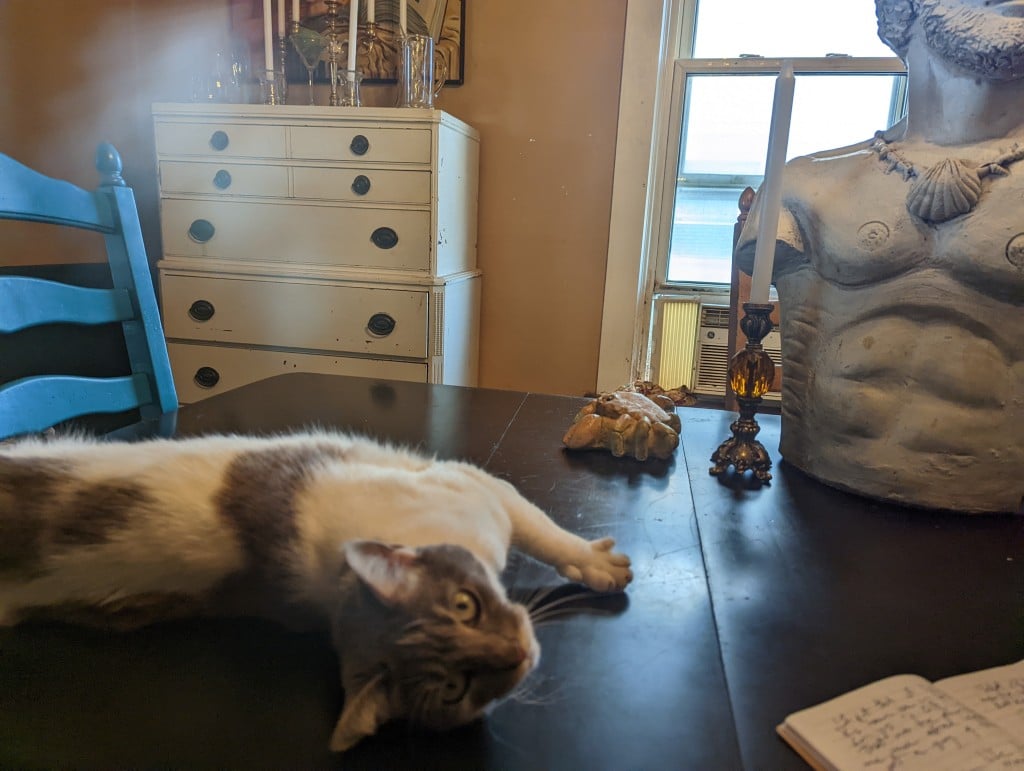
Jason Davis sat down in his sunny dining room on a recent fall day to tell his story. The room was graced with thrifted furniture and art, including a man-sized bust of Neptune and two crab sculptures from his sister, who got them because Davis is a Cancer sign. A cat named Sassy lolled on the table, demanding attention.
“Well, I can tell you I can talk about it now without crying,” Davis said of his arrest.

Davis, a gay man, is HIV-positive. If it hadn’t been for that, he never would have been charged with felonious assault. The police never would have had him sit on his porch in his underwear and a space blanket while his neighbor filmed the scene without Davis’ consent. He would never have pled guilty to a crime for giving consenting adult men oral sex.
As activists and some legislators discuss changes to Ohio laws that criminalize HIV, advocates say Davis’ case shows how Ohio’s felonious assault law can punish people with HIV for having safe, consensual sex.
‘Don’t think the cops are your friend’
Davis has had an interesting life. The 54-year-old grew up in Dayton, staying close to his family. He spent much of his youth making art, earning local fame and even appearing as the subject of a short film. But it was Davis’ sex life that made him famous on his block and landed him in the local news in 2021.
That story started around 2019, Davis said, when he finally realized his drinking was out of control. Davis’ home is beautiful now, but in the depth of his alcoholism, Davis says it was almost “a hoarder situation.” Tired of his living situation and worsening health problems, Davis abruptly quit drinking, pouring his remaining liquor down the drain.
For heavy drinkers, suddenly giving up alcohol can be dangerous, causing delirium and even death. Davis’ parents checked on him at home and discovered he was deep in withdrawal, incoherent and unable to care for himself. He was rushed to the hospital.
While in the emergency room, Davis received another shock. Doctors did a blood test and informed him not only was he HIV-positive, but, without medication, the virus had run wild. Some of the problems he had attributed to his drinking were actually caused by the virus.
Davis was reeling. Not only was he frightened of the implications for his own health, but he was also terrified that he had transmitted the virus to other men.
Davis says he’s not interested in serious monogamous relationships. Instead he would post advertisements on sites for other people interested in anonymous consensual sex, offering to give oral sex through a “glory hole” in his kitchen’s secluded back door.
Davis didn’t realize at the time of his diagnosis that HIV, according to the CDC, is rarely transmitted through oral sex. The active virus can be found in some bodily fluids, including blood and semen, but not in saliva. While someone could transmit the virus by giving oral sex if their mouth and the other person’s genitals were both bleeding, it’s much less risky than vaginal or anal sex.

But still delirious, confused and afraid, Davis called the cops on himself and told them he may have accidentally infected people.
“I thought I was doing the right thing,” he said.
Adam Reilly, an Ohio Health Modernization Movement steering committee member and educator at Caracole, an AIDS service organization in nearby Cincinnati, thinks that was a big mistake.
Reilly tells clients with HIV that they should never, ever disclose their infection status to a police officer. If an officer asks them to take any kind of medical test, he advises them to contact a lawyer immediately.
“Don’t think the cops are your friend,” he said.
HIV can make a legal act (like unpaid consenting sex with a fellow adult) illegal, or turnsomething that would normally be a misdemeanor (like sex work or spitting on someone) into a felony. For those reasons, clients with HIV need to be constantly on guard against police who are trying to find any crime they can charge, Reilly says.
Criminalizing HIV creates pervasive distrust between the police and people with HIV. It creates the same dynamic with police and anyone who’s gay or trans, Reilly believes, because police often assume gay men and trans people have HIV.
In turn, gay and trans people become more reluctant to report crimes committed against them, putting their safety at risk. They may also avoid getting tested for HIV, since Ohio’s HIV consent law only applies to people who have had a positive HIV test.
That means that the law discourages people from getting life-saving treatment that could also make their virus impossible to transmit, Riley said.
At the time he was diagnosed with HIV, Davis hadn’t done anything illegal. While it’s a crime to have oral sex in Ohio without disclosing a previous positive HIV test, Davis hadn’t tested positive before. The police took down his information but left without doing anything.
Then, Davis said, a social worker came in and helped him inform all the former partners he could, including some of the men who had visited his kitchen door. When he completed detox and rehab and finally returned home nearly two months later, he stopped posting ads online and removed the altered door. He returned to his life, started taking antiretroviral medications and stayed away from drinking.
But the Dayton Police Department didn’t forget about Davis.
Hooking up in the time of COVID
The Ohio Health Modernization Movement (OHMM), which is pushing Ohio to repeal laws that single out people with HIV, said in a report released last year that at least 214 Ohioans were prosecuted for HIV-related crimes between 2014 and 2020, including 77 arrested for felonious assault under a law making it illegal to have sex without disclosing a prior positive HIV test.

In response to a public records request from The Buckeye Flame, the Montgomery County Prosecutors’ office said it charged 17 HIV-related cases between 2014 and 2020, including four felonious assault charges. Three more HIV-related felonious assault cases have been charged since 2021, including Davis’.
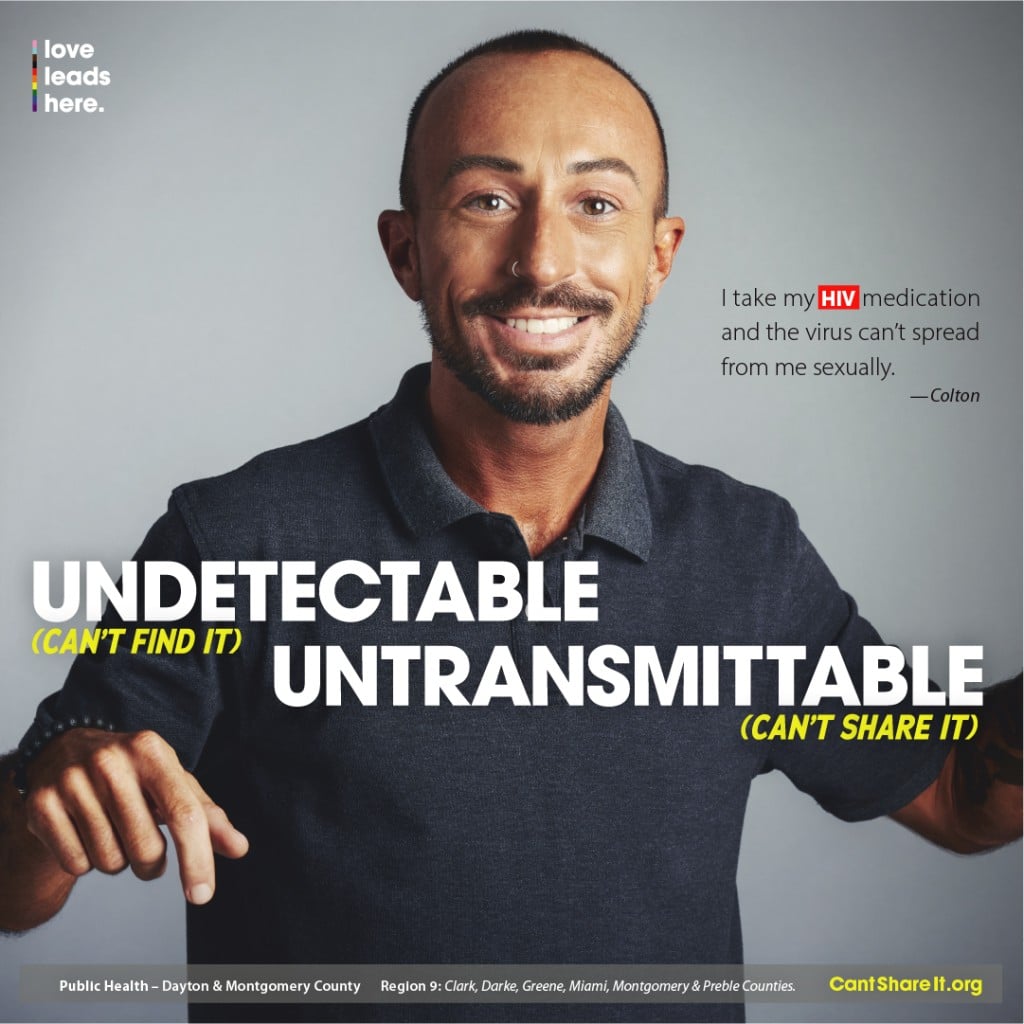
Over time, Davis learned more about HIV. Once he was diagnosed, he immediately started taking antiretrovirals, which lowered his virus load until it was undetectable. The CDC says that the virus can’t be transmitted if it’s so well-controlled it doesn’t show up in tests. Davis thought he was in the clear.
Then the pandemic happened.
Davis, who worked in the restaurant industry, lost his job and had to take a gig delivering pizzas. Like thousands of Ohioans, he was home alone and bored most of the day. And, like single people all over the world, he was struggling with physical isolation.
“Everybody was worried about hooking up and whatnot,” Davis said, “so I decided to install another glory hole.”
In a way, Davis thought he had health officials’ blessing. The head of New York City’s health department, in a bid to keep people from spreading the virus, suggested people who wanted to have sex with someone outside their isolation “pod” try using a glory hole. So did a Canadian health department. That way, partners wouldn’t breathe on each other, risking airborne transmission of the virus.
Davis’ new advertisement – which was saved by Dayton police and placed in Davis’ case file – was replete with warnings and caveats. Visitors were asked to practice social distancing. He hung a two-sided sign saying “vacant” and “occupied” they could use to indicate the porch was free. If gentlemen callers wanted to get frisky with each other, the advertisement stated they were required to wear masks. But it didn’t mention Davis’ HIV status, since he knew he couldn’t transmit HIV while properly medicated.
The police stored other posts Davis put online that demonstrated concern for his partners. One February ad saved to his case file announces Davis is not accepting any visitors for the day because “THE ROADS ARE GETTING BAD, AND I DON’T WANT ANYONE RISKING THEIR SAFETY.”
Davis didn’t come to the police’s attention right away. But, several months after the pandemic started, one visitor wrote someone else’s phone number on the outside of the door, perhaps as a prank, without Davis’ knowledge.
The person who owned the phone number began receiving cryptic texts from strangers, some of which were provided to police.
“So listen, can you please give me Information about where my number is?” the phone’s owner pleaded with one texter. “You’re like the 10th person.”
Some apologized profusely when they realized the number had been posted without the owner’s permission. A few, when pressed, mentioned the glory hole.
Eventually, someone provided the street name and said to look for a white house with a pumpkin on the porch. The phone’s owner went to Davis’ house and erased the number from the back door, then called the cops.
‘“I said, ‘I’m on medication.’”
The cops remembered Davis and the HIV diagnosis he had disclosed to them voluntarily. They saved images of texts received by the citizen whose number was posted and copies of Davis’ online posts inviting people to his home.
Reilly said that in his experience, people charged under Ohio’s felonious assault HIV law are reported by an angry former partner. But the law doesn’t require that anyone complain in order for charges to be brought, and it doesn’t require there to be any actual risk of transmission.
Meanwhile, Davis said he had no idea he had broken the law. So when a new caller visited his back porch, he had no reason to suspect it was a police sting.
Davis almost turned down the police officer who knocked on his door and asked for oral sex. Something about the man’s shoes was unattractive. Davis remembered they had velcro straps. He described them as “old man shoes.”
But Davis was bored, so he agreed anyway. The man said he needed to go back to his car and get a surgical mask. And then officers descended on Davis’ house.
The Dayton police department said it does not have body-camera footage of the arrest and didn’t respond to a request for an interview. Davis remembers the scene as utter chaos. He remembers a police van pulling up on the street with a loudspeaker – “like an ice cream truck,” he said – announcing that a warrant was being served.
“Nine people in full riot gear [were] coming down my street,” Davis remembers. “I mean, they were in vests. They had assault weapons. They had a battering ram.”
Multiple officers with weapons flooded his front porch, threatening to break down his front door, which was original to his house and inlaid with stained and etched glass. Davis answered it instead.
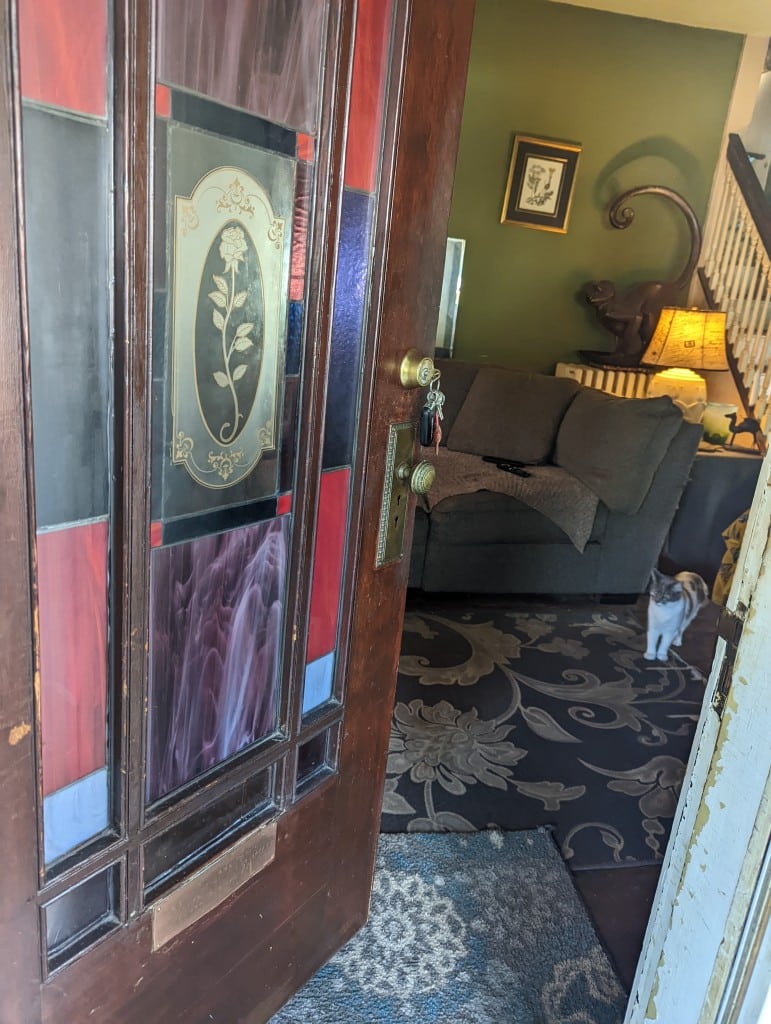
It was February, but Davis, who was in his underwear, was ordered to wait on the front porch as officers searched and photographed his entire house. Police gave him a metallic blanket to cover himself.
“The whole time I was [asking] them, ‘What is going on?’” Davis said. “I said, ‘I’m on medication.’ Repeatedly I was telling them I was on medication [and] I was undetectable.”
In fact, the police confiscated a CVS document about Davis’ HIV medication as proof of his status, leaving him a receipt.
Davis said officers took the plywood that formed the glory hole, which was covered in jokes, compliments and open invitations written by Davis’ partners, and leaned it on a police vehicle with the writing facing the street. Davis said he asked police to turn the board around so people couldn’t read it, but they refused.
“I’m sure [the neighbor] down the street has plenty of photos of it,” he added.
Davis was booked into the local jail. It was the weekend before Presidents Day, so Davis had to wait six days to see a judge and get out on bail. During the first few days of his stay, he said he was deprived of his antiretroviral medications – the only time since his diagnosis he’s failed to take them, he added.
‘I have grandchildren over here’
When he was released and got home, he found that someone had broken in and trashed his home. Cat litter was strewn everywhere.
Davis’ public humiliation didn’t stop with his own neighborhood. The police put out a press release that included Davis’ full name and a photograph of his house, as well as the name of the short street he lives on. The press release didn’t include his mugshot, but it said Davis’ photo was available upon request.
“Investigators are concerned that there may be other persons, over a period of years, whom have interacted sexually with Mr. Davis who may also be victims,” the press release said. Anyone who had done sex acts with Davis should seek testing immediately and contact the police, it added.
There is no indication in Davis’ case file that any of the men who received oral sex from him complained to police.
Local media picked up the story. One news outlet, WDTN, erroneously reported that Davis had been arrested for “knowingly infecting someone with a virus through sexual contact.” Davis saw a TV reporter standing in front of his house. He could hear her repeating the Dayton police’s claims that Davis had put people in danger.
The reporter interviewed a neighbor, Wanda Brennan, who said had seen people visiting Davis’ house and she was glad he was in jail. “I have grandchildren over here,” she added.
“I’d never spoken to that lady,” said Davis, who says he generally kept to himself. “Not one word.”
Davis said the reporter never knocked on his door or tried to speak with him, though he says he probably would have refused at the time. He recorded the news segment so he could find out what was being said about him, but he said he never had the stomach to watch it.
Davis wanted to fight the case, but his elderly mother, he said, just wanted the ordeal over. She begged him to accept a plea deal. In August, Davis pled guilty to an amended charge: attempted felonious assault.
Davis hoped the judge would take his side. His case was heard by Montgomery County Common Pleas Court Judge Mary Wiseman, whom The Buckeye Flame profiled in October 2021 as Ohio’s first out LGBTQ+ judge.
Davis was disappointed. He remembers Wiseman said something about the law being the law, regardless of her own opinion.
Wiseman told The Buckeye Flame she couldn’t discuss Davis’ case specifically, but she called Ohio’s HIV criminalization statutes “anachronistic and grossly outdated.” Specifically, she noted the law doesn’t take into account the fact that antiretrovirals make it impossible to transmit the virus, if they used a condom, or if the other person is taking HIV prevention medications.

“Ohio should join the many other states that have repealed or modernized their HIV criminal statutes,” she said in an email. “My job as a judge is to apply the law as written, but this area of the law needs immediate and wholesale review by the legislature, in my opinion.”
Wiseman gave Davis five years of probation, though the remainder of the time was waived on Oct. 19, 2023.
Once Davis was free and clear of probation, he started looking for ways to change the law, ensuring no one else would endure what he did. He started by searching the internet for articles about HIV criminalization in Ohio.
Davis quickly found an article from The Buckeye Flame titled “Dayton Man’s Arrest Shines Light on Ohio’s Outdated Laws on HIV Criminalization.” He was stunned. Unlike the local news stations that reported the arrest, this article didn’t name Davis, but the case was clearly his.
Davis filled out a comment form on the website.
“I just read the article about the Dayton man arrested for non-disclosure of his status in February of 2021,” he wrote. “I am that man.”
Davis didn’t have to spend additional time in jail, but he says he still hasn’t fully moved on with his life. When he looks for partners online now, he announces that he has undetectable levels of HIV.
His biggest anxiety now, he said, is about searching for new jobs. He wants to switch back from delivering pizzas to working in restaurants, but is horrified at the thought of potential employers finding out about his felony conviction, or seeing the press release and news article describing him as a predator.
With his side of the story in the world, he said, he hopes he can finally move forward.
“That’s the last hurdle in this that I have to face,” he said. 🔥
IGNITE ACTION
- Read the OHMM (“Enforcement of HIV Criminalization in Ohio: Analysis of Court Cases from 2014 to 2020”) report here.
- Read the Williams report (“Enforcement of HIV Criminalization in Ohio HIV-related criminal incidents from 2000 to 2022”) here.
Know an LGBTQ+ Ohio story we should cover? TELL US!
Submit a story!