
Ohio’s ‘outdated’ laws say one thing. But how do they reflect the actual science behind HIV transmission?
People living with HIV face strict criminal penalties across the state, often for behaviors that pose negligible (and sometimes nonexistent) risk to others.
In 1981, researchers at the University of California San Francisco published a new report detailing symptoms of an unknown disease among a small group of gay men in the United States.
Each patient had been infected with HIV (human immunodeficiency virus), the pathogen that leads to AIDS (acquired immunodeficiency syndrome).
By 1990, more than 100,000 LGBTQ+ Americans alone had died from health complications directly related to the virus, the majority of them gay and bisexual men.
Since the onset of the AIDS epidemic, dozens of states have enacted legislation to criminalize HIV exposure and transmission, codifying social stigma and language around the virus that experts have long considered medically and scientifically outdated.
In Ohio, a set of six laws still allows people living with HIV to be charged with strict criminal penalties – even for non-sex acts that pose near zero risk of transmitting the virus.

HIV laws in Ohio
In 2023, the Centers for Disease Control and Prevention (CDC) reported that Ohio and 33 other states have laws on the books that criminalize potential HIV exposure.
The national public health agency has called the laws “outdated,” acknowledging both the lack of medical research and widespread anti-LGBTQ+ stigma around the virus.

In Ohio, a person living with HIV can be required to register as sex offender for “failing to disclose” their HIV status, regardless of whether the virus is ever transmitted – via sexual contact or otherwise.
Ohioans can be charged with a crime related to HIV exposure regardless of whether:
- They used safer sex practices to limit the risk of HIV transmission, including condoms and/or dental dams.
- They engaged in sex acts that rarely, if ever, transmit HIV – like oral sex or penetrative sex with an object.
- They engaged in non-sex acts involving bodily fluids (including saliva, blood and urine) that cannot transmit HIV, except in extremely rare instances.
- They have an undetectable level of virus in their blood and are unable to transmit HIV to others.
What is HIV?
HIV is a virus that attacks the human immune system, weakening its ability to fight infection.
Symptoms of the virus most often appear between two to four weeks after the time of infection, and include night sweats, fatigue, swollen lymph nodes, sore throat, muscle aches and fever.
During the second stage of the infection, a person living with the virus may not experience any noticeable symptoms. However, the virus remains active within the body, replicating and increasing the amount of HIV present in the blood – often referred to as a person’s viral load.
Without treatment, the virus can lead to AIDS, the most advanced stage of HIV infection.
Because AIDS damages the immune system so severely, people living with end-stage HIV often die from complications due to “opportunistic infections” like pneumonia, Kaposi sarcoma and certain types of cancers.
With access to proper and consistent treatment, however, a person living with HIV can remain healthy thanks to antiretroviral therapy (ART) – a regimen of daily medications that help lower a person’s viral load over time.
When a person’s viral load is undetectable via testing, healthcare professionals widely consider the virus to be untransmittable, a concept often referred to as “Undetectable=Untransmittable” or “U=U” in public health campaigns.
After a person’s viral load has become undetectable, they “have effectively no risk of transmitting HIV to an HIV-negative partner through sex,” according to the CDC.
How is HIV transmitted?
HIV is transmitted via certain bodily fluids, including “blood, semen, vaginal fluids, rectal fluids and breastmilk,” according to the World Health Organization (WHO), the official public health agency of the United Nations.
According the international agency, HIV can also be transmitted via:
- “Unprotected vaginal or anal sex with a person living with HIV.” (In “very rare cases,” the agency also notes the virus may also be transmitted through oral sex acts involving a person living with HIV.)
- Blood transfusion of blood containing HIV.
- Sharing “needles, syringes, other injecting equipment, surgical equipment or other sharp instruments,” most commonly during intravenous drug use.
- From a pregnant person living with HIV to their infant during the process of pregnancy, childbirth or breastfeeding.
In addition to antiretroviral treatments that help people living with HIV manage the virus and its symptoms, people at a high risk of contracting HIV can also take a daily oral medication or bi-monthly injection called PrEP (pre-exposure prophylaxis) to help prevent them from contracting the virus entirely.
When taken as prescribed, PrEP can lower a person’s risk of contracting HIV via sexual contact by 99%.
For intravenous drug users, PrEP can lower the risk of contracting the virus via shared needles by more than 70%.
PrEP may also help protect pregnant people from contracting HIV – as well as from passing the virus to their infant while pregnant or breastfeeding.
Transmission and safer sex practices
A person may be more likely to contract HIV during certain types of sex acts.
Using safer sex methods like condoms and dental dams alone can reduce a person’s risk of contracting or passing HIV to a sexual partner between 90-95%. Coupled with PrEP, condoms and dental dams lower the risk of passing or contracting HIV to near zero.
According to the National Health Organization (NHS), HIV cannot be transmitted via penetrative sex with an object alone. However, the virus can be transmitted via objects like sex toys if they are shared or have not been properly cleaned or covered with separate condoms between new partners.
Transmission via oral sex
The likelihood of transmitting HIV via oral sex is extremely slim, according to the CDC.
Dr. Joseph Cherabie, assistant professor in the Division of Infectious Diseases at Washington University St. Louis, told The Buckeye Flame the highest likelihood of HIV transmission occurs from “mouth-to-penis oral sex.”
The virus cannot be transmitted via saliva, but could potentially be transmitted via semen if the person performing oral sex has open cuts or sores on the mouth.
Cherabie also listed bleeding gums and oral contact with menstrual blood or other sexually transmitted diseases (STIs) as heightened risk factors for HIV transmission via oral sex.
“Even so, it is much lower likelihood than acquisition [of HIV] from anal or vaginal sex,” he said.
Cherabie also said that the risk of HIV transmission by oral sex between two individuals assigned female at birth is “zero.”
“If the individual with HIV was undetectable, it can be considered zero,” he added.
Cherabie pointed to a number of studies to support his conclusion, including a 10-year study that observed zero HIV transmissions in heterosexual people who received oral sex among 8,965 acts.
The Buckeye Flame contacted four other HIV medical experts, who each agreed with Cherabie’s assessment of the negligible risk of transmitting HIV during oral sex between two individuals assigned female at birth.
Transmission via saliva
HIV cannot be transmitted via saliva, tears, sweat, urine or feces alone. Bodily fluids – including blood – pose zero risk of transmission through unbroken skin.
However, Ohioans living with HIV can still be charged with felonies and other “enhanced penalties” related to spitting, biting or exposing another person to their own blood or “any bodily fluid,” regardless of the risk of transmission it poses.
There are currently zero documented cases of HIV transmission via spitting, but the CDC does note rare instances of transmission via saliva that involve “severe trauma with extensive tissue damage and the presence of blood.”
In such extreme cases, HIV transmission via saliva can occur only through “contact between broken skin, wounds, or mucous membranes and blood or body fluids from a person who has HIV.”
“Outdated” laws around HIV
In 2017, the Ohio Supreme Court upheld the 2014 conviction of Orlando Batista, a Hamilton County resident who was sentenced to eight years in federal prison after allegedly engaging in sex acts without first disclosing his positive HIV status to his sexual partner.
The American Civil Liberties Union (ACLU) assisted Batista in appealing the decision.
Via an amicus brief, the ACLU said the law violated Batista’s constitutional rights – both “[compelling] speech in violation of the First Amendment,” by requiring him to disclose his HIV status and “[discriminating] against HIV positive people in violation of the Equal Protection Clause of the Fourteenth Amendment.”
In 2017, the Ohio Supreme Court upheld Batista’s conviction, allowing laws criminalizing HIV to remain on the books statewide.
In response, the ACLU released a written statement on the case.
Attorney Mayo Schreiber Jr., – then deputy director of the Center for HIV Law and Policy (CHLP), a Brooklyn-based legal and policy organization that advocates for the abolition of laws criminalizing HIV – said laws criminalizing HIV fail to consider advancements in science and medicine around the transmission, infection and treatment of the virus.
“This law, like all those that criminalize HIV, does not consider the actual risks of HIV transmission, how transmission occurs, or whether a person intends to transmit the virus,” Shreiber said.
ACLU staff attorney Elizabeth Bonham also contributed to the statement, noting a resistance among courts and lawmakers that also fails to consider the most accurate and up-to-date medical and scientific research.
“This law allows the state of Ohio to enter someone’s most intimate space, and control their bodies and their self-expression, based on who they are,” Bonham said. “[…] We cannot allow the fears and confusion of the past to guide our current policy on HIV.” 🔥
This piece was corrected to reflect an updated quote from Dr. Cherabie on the likelihood of HIV transmission during oral sex between two individuals assigned female at birth.
Know an LGBTQ+ Ohio story we should cover? TELL US!
Submit a story!
Author

Related Articles
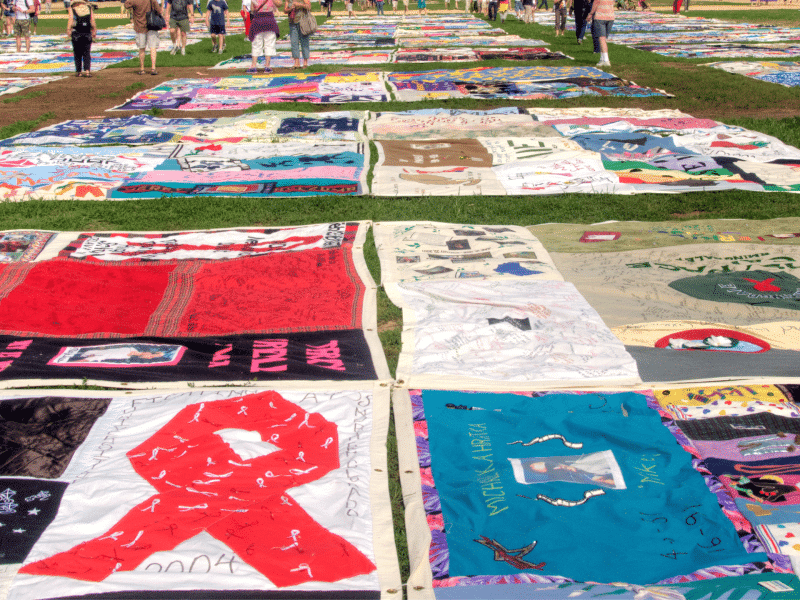
Six AIDS Memorial Quilt panels arrive in Dayton for ‘Wall Power’ exhibit
The panels are a powerful addition to the Art Institute’s ‘Spectacular Quilts’ show

HIV decriminalization supporters to hold first-ever Advocacy Day at Ohio Statehouse
Ohio still has six laws on the books that criminalize living with HIV. And the laws are actively enforced.

Audio This News is So Gay (8/26/26): Examining the Gap Between HIV Science & HIV Understanding
Featuring: Darian Aaron (GLAAD) and Jerrell Hardnett (GLAAD)

Comments (1)
Comments are closed.