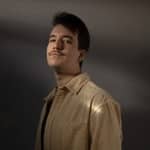
Since the 2024 general election, LGBTQ+ Ohioans have been looking to leaders who can champion equity across the state’s 88 counties. Among the 15 out LGBTQ+ candidates who ran for public office, Dr. Nathaniel Overmire has made history by being elected as Franklin County’s first LGBTQ+ Coroner. An osteopathic family physician from Fostoria, Ohio, Overmire has served in the role since December 2022 and ran unopposed for the seat.
But who is Dr. Overmire beyond the title? What drives his passion for public service and how does his leadership set an example for a more inclusive Ohio?
The Buckeye Flame sat down with Dr. Nathaniel Overmire to explore his journey, his historic win and what it means for LGBTQ+ representation in the state.
To listen, click play directly below or read our (edited) conversation beneath the audio link.
Dr. Overmire, congratulations on your recent reelection as Franklin County coroner. How did you arrive at this role and was this always a dream of yours?
Well, first, thank you so much for the opportunity to be here and speak with you today about this amazing opportunity. I’m so honored and privileged to continue serving as Franklin County Coroner for the next four years. I’m excited about the work ahead and the opportunities we have in this growing county with so many needs in our community. I want to be the elected official who fights for our community and for all the residents of Franklin County.
I arrived at this role a little bit by chance, but I’ve always been interested in advocacy. Public health has been a key interest of mine throughout medical school and residency. My first real opportunity in advocacy came during a health policy rotation with the Ohio Osteopathic Association, under executive director John Wills. He inspired me and got me involved in advocacy work, which shaped my career path.
During my residency at Grant Medical Center, my mentor, Dr. Sarah Sams, guided me through an advocacy-focused area of concentration. I learned how to write white papers, engage with state lawmakers and build those essential relationships. Over time, as an attending physician, I honed those advocacy and leadership skills, which eventually led to my appointment as Franklin County Coroner when my predecessor retired halfway through her term.
These past two years have been a whirlwind tour on how to be a good coroner, an effective elected official and a leader for an office of 65 people while representing a county of millions. I’m really excited about what’s ahead for Franklin County and the work we can accomplish together.
Growing up in rural Ohio, what was it like navigating your identity in a space where out LGBTQ+ leaders were few and far between?
So, I’m in my late thirties now. I remember growing up and there weren’t a lot of people who looked like me or who were out and talking about issues in our community like they are now. I don’t know if you recall, but I think it was Real World/Road Rules Challenge. There was a gentleman on the Chicago Real World season who really hit home for me. I thought, “OK, there’s finally someone who looks and acts like me,” or someone I could, you know, kind of look up to.
And I’ll be honest—some may disagree—but I’m straight-passing for the most part. So, I don’t face some of the barriers that many folks in the LGBTQ+ community have to deal with. There are a lot of barriers I haven’t faced, especially as a white guy. And because I’m fairly straight-passing, I haven’t had to deal with some of the barriers that many of our trans and nonbinary folks encounter. But I want to be in solidarity with those folks.
I still remember the days when we didn’t have marriage equality. Growing up, thinking I couldn’t be with someone I loved and marry that person—it hurt. I’ll never forget the day I woke up in 2015. I remember turning on the TV and I remember the pages at the Supreme Court running, so excited. That was a day I’ll never forget—the feeling of the Obergefell decision and how it changed the landscape for marriage equality.
I’m hoping we can continue to progress in ways that protect the rights of individuals, families and communities instead of breaking them down. Growing up in a rural community was tough at times. I tried to fit in as much as I could while also navigating my true identity and wanting to show my true authentic self.
Now, I get to do that and I’m really, really happy for it. I’m hopeful that I and others can continue to lead the way for people to show up as their true, authentic selves. I want to make sure that those in vulnerable situations feel seen and heard and that we empower them to show up authentically.
Throughout your career in public health I’m sure you’ve had plenty of challenging experiences. What’s the biggest shift you’ve noticed in stepping into the role of coroner and were there any surprises?
When I first started as a physician—so I graduated from med school in 2016—that was at the height of the opioid epidemic. I remember being thrust into a tertiary care center at Grant Medical Center, one of the busiest trauma centers in Ohio and the United States. All these people were coming to us with overdoses, having complications from overdoses, or being overdosed themselves.
Taking care of people with the disease of addiction and the mental health crises they were experiencing was a big challenge. Now, as coroner, I’m seeing the very end result. I get to put the pieces together and reflect on what I could have done better as a resident or as an attending, taking care of people who showed up in the ER or on the hospital floors.
Now, I’m seeing the end result of those who unfortunately pass from an overdose or a mental health crisis. I can take those experiences and help educate, share my perspective as coroner with physicians, advocates, stakeholders and policymakers in our community so that less people end up in the coroner’s office.
I envision a day when we don’t need as many forensic pathologists in Franklin County because we’ve decreased the number of overdoses, suicides and homicides in our community. It’s about taking that perspective from being overwhelmed as a resident with the number of overdoses to now seeing the impact of harm reduction strategies. Many of our local and state officials are doing great work to reduce overdoses, but we need to keep pushing forward. Let’s figure out more ways to continue reducing the number of overdoses we see in our community.
Running for public office is no small feat, especially here in Ohio. What made you step up and put yourself into the spotlight?
I believe in servant leadership. I want to serve—I’ve always wanted to serve—and that’s my calling: service. A lot has been given to me in my life. I grew up with an amazing mom who took care of me and two aunts who sacrificed so much for me. Now, it’s my time to sacrifice and give back.
It’s important for me to step up, to be in the spotlight and to showcase inequities and disparities. I want to bring awareness to the issues I care about so we can improve the health and well-being of all Franklin County residents, but also highlight vulnerable populations, bringing attention to their needs and finding ways to move forward to improve their lives.
Being the first out LGBTQ+ Coroner in Ohio is huge. What does that representation mean to you and why is it so important for the community?
I believe diversity makes the world go round. Having representation—whether it’s out gay elected officials, trans elected officials, Black veterans, or folks with disabilities—is critical. We need a diverse group of people who represent all of us.
I enjoy being in solidarity with these communities, working together in partnership and coalition-building to take the next steps toward improving the health and well-being of everyone in Franklin County.
My last question… from your unique vantage point in public health are there LGBTQ+ trends or issues that you think we as a community need to address?
One really important topic that I want to address, which impacts our community, is end-of-life care. This comes up all the time in my office and unfortunately, if you don’t have a living will or express your wishes in a legal document, we at the coroner’s office often have to rely on the legal next of kin to make decisions about your end of life.
This could include burial practices, ensuring your correct pronouns or identity are on your death certificate and more. We’ve had cases where someone identified a certain way, but because there was no legal determination before their passing, their next of kin made decisions that didn’t reflect their true identity.
For example, if you identify as a trans woman, it’s critical to document that legally—maybe even update your birth certificate—so your wishes are respected on your death certificate. Without legal documentation, the next of kin has the authority to make those decisions.
Now, no one can tell me what to put in the coroner’s section of the death certificate; I’m responsible for that part, which includes the cause and manner of death. But the rest of the certificate is often subject to the decisions of the legal next of kin—whether it’s your mom, dad, siblings, spouse, or children.
It’s really important to take proactive steps to ensure your wishes are honored. For me, it’s about respect and dignity and that’s something I care deeply about. 🔥
IGNITE ACTION
- To learn more about Dr. Nathaniel Overmire, click here.
- To check your voter eligibility status in the state of Ohio, click here.
Know an LGBTQ+ Ohio story we should cover? TELL US!
Submit a story!