
At a time when LGBTQ+ data is being erased from key federal repositories – leaving researchers scrambling to preserve and protect their work – an Ohio coalition has launched a community-needs assessment with the goal of improving health and social resources for LGBTQ+ individuals in Central Ohio.
“We need survey participants to make that goal a reality, “ said Dr. Joanne G. Patterson, a behavioral scientist in Ohio State’s College of Public Health and a scientific lead for the new initiative.
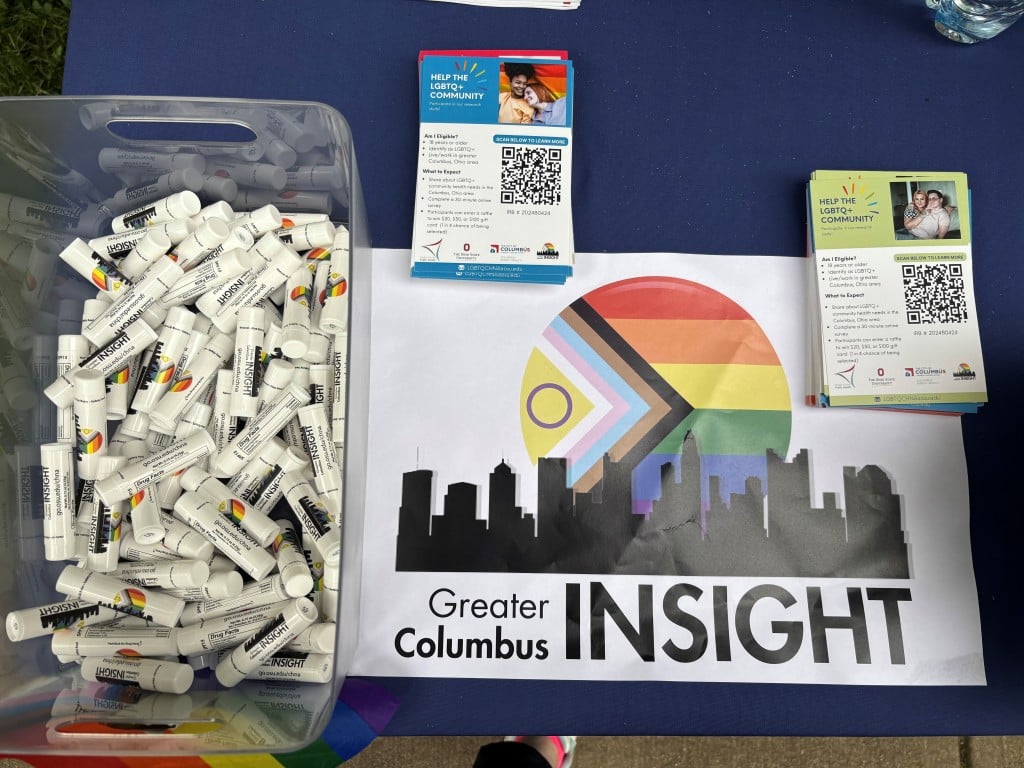
The Greater Columbus INSIGHT is the first comprehensive study of its kind in the region, representing a partnership between OSU’s researchers, Columbus Public Health (CPH), Franklin County Public Health (FCPH) and multiple LGBTQ-serving organizations.
The project began over two years ago when a collaborative of LGBTQ+ researchers at OSU met with Heather Pennington, who was then the Columbus Public Health Liaison. Pennington had been networking with LGBTQ-serving organizations that expressed a need for LGBTQ-specific health data to help them better serve the local community.
“We talked to each other as researchers and asked, ‘How can we step into the gap?”, said Patterson.
Convening community leaders
The researchers began by convening community leaders to define their geographic scope of focus – Franklin County and the six counties surrounding it – and to get a sense of some of the more pressing health issues that the community was experiencing, everything from access to stable housing to availability of LGBTQ-specific medical care.
These community conversations led to the creation of an advisory board of LGBTQ+ and allied community leaders who have helped develop the study, create recruitment strategies and think through how data can be shared back out to the community.
Project leaders highlight that advisory board members are valued active partners in the research effort who are involved in all parts of study design and dissemination.
“This is an outside-in process where the insight is coming from the community and the researchers act as resources to help the community get what they need,” Patterson said.
Survey time
The next step in the study is the quantitative survey, which asks individuals to respond to a wide-range of questions: everything from their current health needs, to broader LGBTQ+ community needs, to even whether they plan on staying in Ohio.
Researchers have set a goal of 1,200 completed surveys. So far, a little over 200 have been completed.
Initial results suggest a need for more respondents who are over the age of 55 and more who identify as trans/gender expansive.
Dr. JaNelle Ricks, associate professor of health behavior and health promotion at OSU and another scientific lead on the study, said researchers need a wide variety of respondents for the results to actually represent the thoughts of the community.
“If we’re thinking about being able to do meaningful work to support the lives of our community, we need to hear from that community to find out what would make the most difference for them,” said Ricks.
Researchers have a year to collect this data – hoping to reach the goal of 1,200 surveys by Pride 2026 (June).
INSIGHT researchers say survey responses are especially important at this point in time given that the lack of local data makes it difficult to provide evidence to support policy decisions that improve — and don’t harm — the health and well-being of the LGBTQ+ community.
“Reliable data can help us advocate for policies and programs to make sure the LGBTQ+ community is not ignored when decisions on resources are being made,” said Patterson.
When they finally have the data in hand, stakeholders want the study results to be useful: numbers that organizations and funders can utilize to help build greater infrastructure to support the LGBTQ+ community.
“So many of our health disparities and inequities fall hardest on the LGBTQ+ community,” said Ricks. “We need to hear everyone’s voices in this survey to comprehensively make a real difference.” 🔥
Ignite Action
- Take the survey.
- First, go here to take the screener. Or scan the QR code at the bottom of this page.
- The screener takes less than 5 minutes. This helps the team to determine if you are eligible to participate.
- If you are eligible to participate, you will receive an invitation from Qualtrics to complete the full survey via email.
- Survey participants will be entered into a raffle. Participants have a 1 in 4 chance of receiving a $20, $50 or $100 electronic gift card via Virtual Incentives.
- If you choose to participate, please remember that you can skip any questions you are not comfortable answering.
- Questions? Email the team to get more information:
Know an LGBTQ+ Ohio story we should cover? TELL US!
Submit a story!





Pingback: Ohio survey to collect LGBTQ+ health data - news21th.com