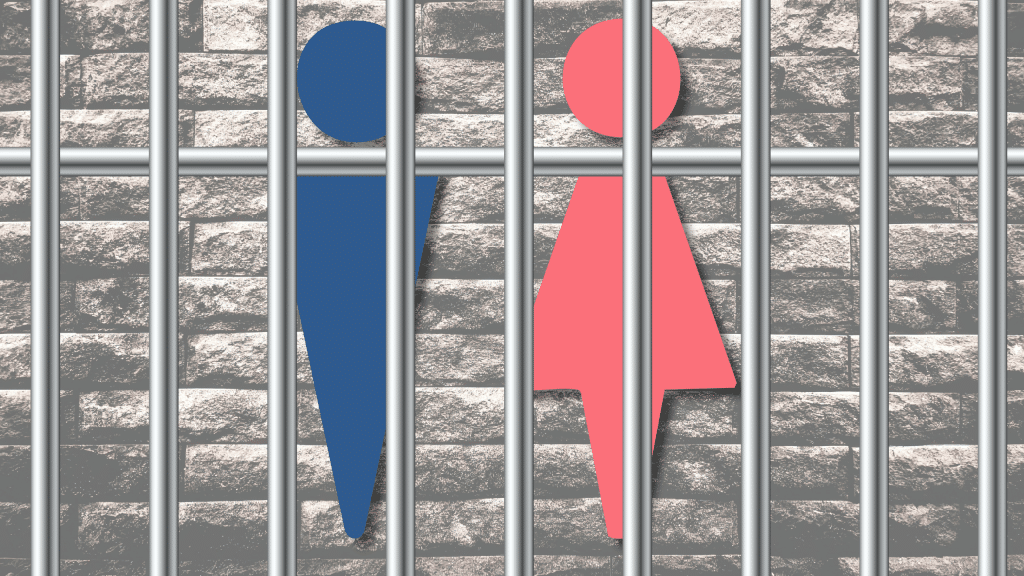
An Ohio Republican lawmaker has introduced a bill to ensure that all incarcerated people in state custody are housed according to the state’s definition of “biological sex” – despite this already being the practice in Ohio.
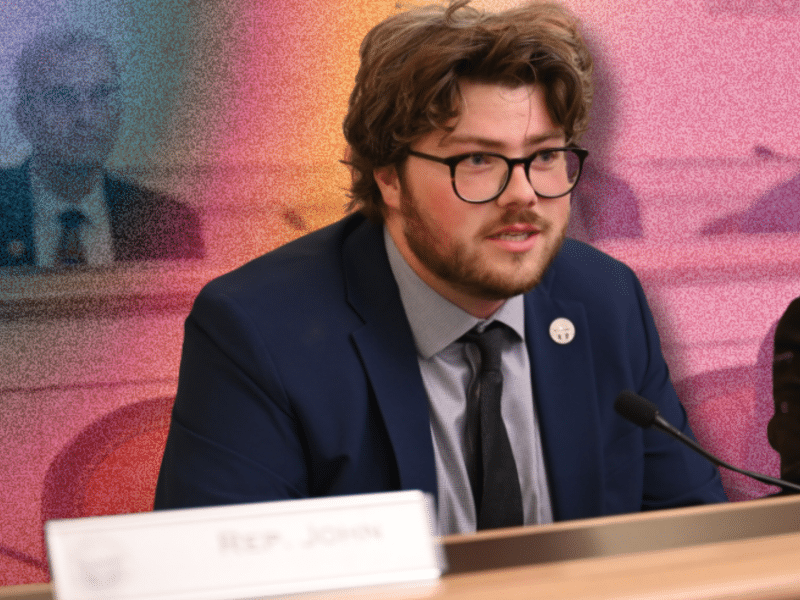
Rep. Josh Williams (R-Sylvania Twp) introduced HB 796 on March 25. The bill has not yet been assigned to a committee.
The text of the bill would update current language in the Ohio Revised Code to mandate that Ohio jails separate inmates by biological sex.
This definition of “biological sex” was passed by the Ohio legislature in 2024 as part of HB 68, the SAFE Act, which banned gender-affirming care for Ohio’s minors.
Just weeks ago, a Kentucky legislator introduced a bill similar to the one in Ohio, to segregate incarcerated people in the state based on Kentucky’s the state’s definition of “biological sex” and ban the state’s Department of Corrections from providing gender- affirming care.
Fighting for space
In Ohio, one trans woman has been fighting for years to be housed in a women’s facility. Riicara Janel Dior, who transitioned in 2011 and began receiving hormones in 2020, says she was raped while incarcerated at a men’s prison and is now isolated from other prisoners, instead of being transferred to a women’s facility as she has repeatedly asked — and been denied.
Dior’s lawsuit, which seeks an order that she be sent to a women’s prison, is currently pending before the Supreme Court of Ohio.

Sexual assault and the Trump administration
Ohio HB 796 comes just days after the Trump administration announced federal investigations into Maine and California’s placement of trans incarcerated women in women’s facilities. That announcement is part of President Donald Trump’s current crusade against trans people, which began on the first day of his second term when he issued a spate of executive orders targeting the small, vulnerable number of trans people in federal custody.
One of Trump’s executive orders mandated that trans women be housed with men, and instructed the federal government to roll back protections for trans people under the Prison Rape Elimination Act. Making good on that mandate, the U.S. Department of Justice (DOJ) late last year issued a private memo that revealed plans to remove those protections in federal, state and local prisons; jails; and youth detention facilities.
In another order, the Trump administration barred the federal government from funding gender-affirming care for trans people. In response, the ACLU filed a class action lawsuit against the Trump administration — though the government has already begun swapping any transition-related care with therapy and anti-depressants under a new policy released in February.
While the Trump Administration has repeatedly falsely claimed that trans women are a danger to cisgender women behind bars, data from the DOJ itself shows that trans incarcerees face significantly higher rates of abuse than cisgender incarcerees. Additional studies have repeatedly shown that trans people are routinely verbally, physically and sexually abused by prison staff and fellow incarcerated people.
Though the Trump Administration recently withheld data about trans people from sexual violence reports, the most recent data from the DOJ, released in 2014, shows that nearly 40% of trans incarcerated people said they had been sexually assaulted in the past year.
Bills coincide with political ambitions
Rep. Williams is currently a candidate for the U.S. House of Representatives, hoping to challenge incumbent Rep. Marcy Kaptur to represent the Ninth Congressional District in Northern Ohio, if he makes it out of a crowded Republican primary field.
In this 2025-26 General Assembly since he announced his candidacy, Williams has introduced 99 bills as a primary sponsor, compared to the 30 bills he introduced in the 2023-24 General Assembly.
Among those 97 bills are various pieces of anti-LGBTQ+ legislation, including:
- HB 249 (“The Indecent Exposure Modernization Act”), which would ban drag and gender performance in public spaces where minors are present.
- HB 262, to designate “Natural Family Month,” to celebrate only heterosexual married couples with children.
- HB 693 (“The Affirming Families First Act”), to grant protections to parents who reject their trans children.
Williams has repeatedly made his feelings on trans Ohioans explicitly clear.
“I do believe that individuals exist that believe they are the opposite sex,” Williams said at an HB 693 hearing on March 11. “I think it’s a false belief, and I think it’s harmful for our society to affirm said false belief.” 🔥
IGNITE ACTION
- To access The Buckeye Flame’s Ohio 2026 LGBTQ+ legislation guide, click here.
- To register to vote or to check your voter eligibility status in the state of Ohio, click here.
- To find contact information for your Ohio state representative, click here.
- To find contact information for your Ohio state senator, click here.
Know an LGBTQ+ Ohio story we should cover? TELL US!
Submit a story!