
This piece was made possible through the support of Neighborhood Family Practice.
Sponsored Sponsored content A Lifeline Long Overdue: New Cleveland-based health clinic specializes in LGBTQ+, Latino care
Neighborhood Family Practice is bringing culturally rooted, community-based care directly to one of the city’s most underserved communities
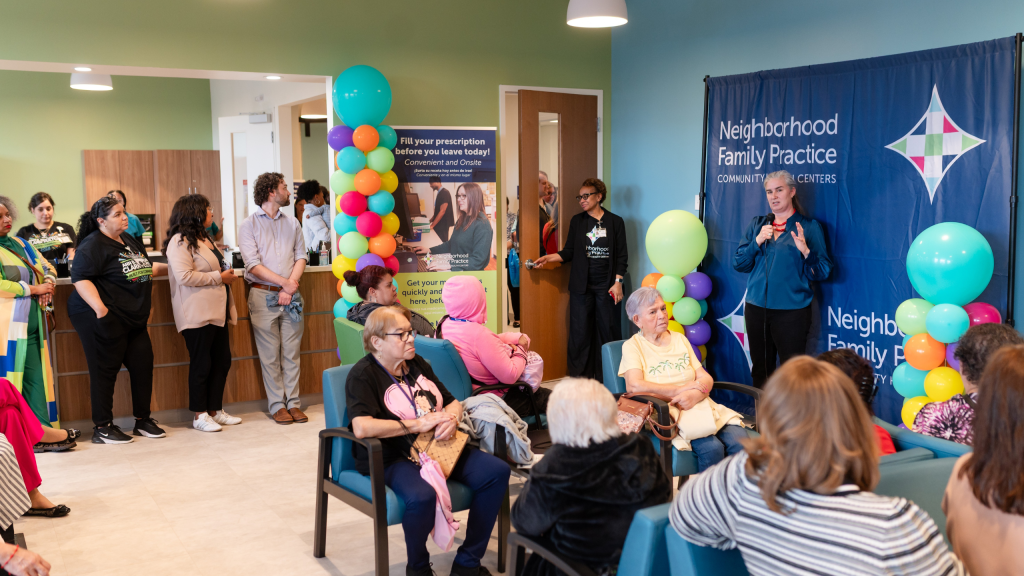
For many residents in Cleveland’s Clark-Fulton neighborhood, getting to a doctor’s appointment isn’t necessarily the hardest part.
Of course, there can be challenges like catching the right bus or rearranging a work shift. But specifically for LGBTQ+ residents in one of Cleveland’s largest Latino neighborhoods, there are bigger concerns: whether you’ll be understood in your own language, if you will have to explain your identity in a space that wasn’t built for you, or whether the care you need even exists.
Located in the heart of Clark-Fulton, Neighborhood Family Practice’s new community health center is hoping to address and improve on these access concerns by providing a space where patients can connect with a diverse care team that includes Spanish-speaking providers, comprehensive primary care, behavioral health, prenatal and women’s health services, and—within the next year— pharmacy services.
“When a quality health care provider chooses to put down roots in a community, it sends a message to our residents that they matter,” said Emily Lee, PhD, CHES, executive director of Metro West Community Development Organization. “It means people can get the care they need close to home, without having to navigate transportation barriers or take time off work to travel across the city.”
One-stop shop
For many, the decision to expand into Clark-Fulton was long overdue.
“Honestly, it was the healthcare disparities that brought NFP to Clark-Fulton,” said Jennifer Castellano, a queer person and NFP’s Latine/Hispanic community engagement coordinator. “Looking at the numbers of the high infant mortality rate, we always want to stay in the neighborhoods that need us the most.”
NFP will offer group-based programs like centering prenatal care, chronic pain support, and breastfeeding education that foster community and connection alongside individualized care for those who prefer a more private setting. These integrated services make a huge difference as patients have been navigating systemic gaps like limited pharmacy access and inconsistent insurance coverage.
“There’s a lot of pharmacy closures,” Castellano said. “People didn’t know where to go to get their medicine or specific programs tailored to their needs. Now, patients have all the access right here. It’s a one-stop shop for a lot of people.”
Is the space safe?
For LGBTQ+ Latino residents, access to care goes beyond standard healthcare disparities. It’s about whether the space feels safe enough to walk into.
At the Clark-Fulton location, much of the staff reflects the community they serve: many are Latino, bilingual, and in some cases, queer patients themselves.
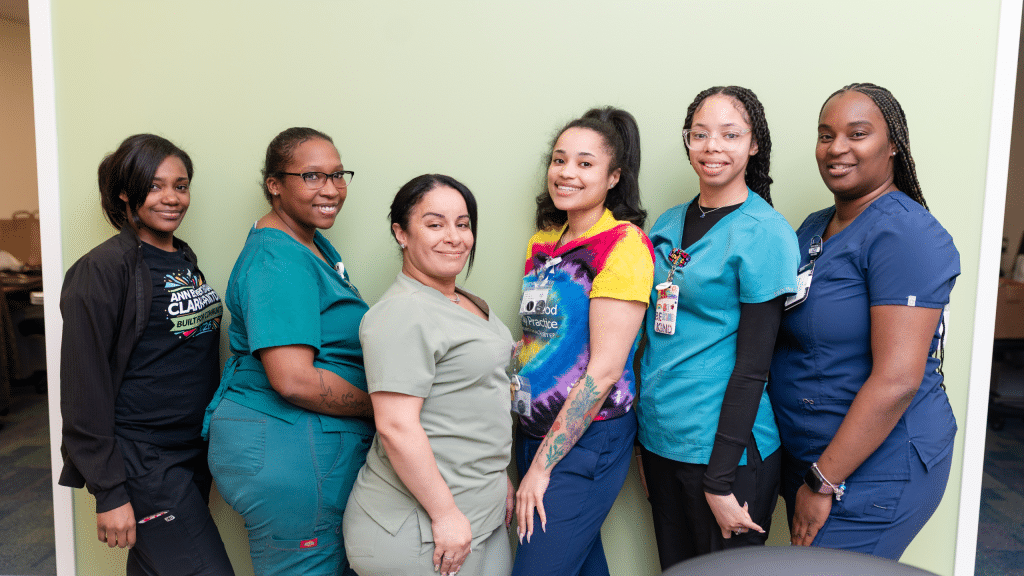
“As a queer Hispanic/Latine person in Clark-Fulton, having local access to medical services support is a lifeline,” said Kelvin Matos Sánchez, civic engagement coordinator at Young Latino Network & Avanzamos Unidos. “It helps us break down the systemic barriers our comunidad has faced for way too long. By making sure these resources stay available to all of us, we’re building a stronger, more resilient neighborhood where no one is left behind.”
The new center is also intended to be a community hub, with plans to utilize a new community room for future programming, events and health education. “We know that one of the things our local community struggles with is socialization,” Castellano said. “Places to socialize, be safe and learn different things for our own health.”
That kind of environment builds familiarity, and over time, familiarity builds trust. For many in Clark-Fulton, especially those navigating overlapping identities, the impact of having this trust is even more immediate.
Castellano sees that sense of belonging extend across identities. “It’s just a welcoming environment,” she said. “I’m not just saying that because I work here. I experienced it myself.”
As more healthcare systems centralize and services move further away from the communities that need them most, efforts like NFP’s push in the opposite direction, toward bringing care closer, making it more personal and rebuilding trust along the way. NFP’s goal for this new location is simple: meet people where they are and provide high-quality care in a space where everyone feels seen, respected, and supported.
“No one should ever have to miss a doctor’s appointment or go without care simply because getting there is too hard or they don’t feel comfortable,” Lee said. “That is what equity looks like, and that is what our community deserves.” 🔥
IGNITE ACTION
- Learn more about Neighborhood Family Practice’s health and wellness services by visiting their website or giving NFP a call at (216) 281-0872.
Know an LGBTQ+ Ohio story we should cover? TELL US!
Submit a story!
Author

Related Articles

Black, Out, and Proud to host Melanated Health Forum centering Black LGBTQ+ health and wellness
Melanated Health Forum makes room for uncensored wellness conversations for Black LGBTQ+ people in Columbus

2025-26 Guide to Ohio’s LGBTQ+ Legislation (136th General Assembly)
To help you differentiate one bill from another, we have put together this easy-to-use reference guide to Ohio LGBTQ+ legislation.

Ohio gets a failing mark on sex education policy from national group
Ohio’s curriculum stresses abstinence as a general policy and requires only some instruction about sexually transmitted infections.

Comments (1)
Comments are closed.