
Queer Craft Society helps LGBTQ+ Columbus through loneliness epidemic via crafting kinship
While crafting is far from a new hobby and is often passed down through generations in marginalized communities, a current wave of craft meetups is on the rise.
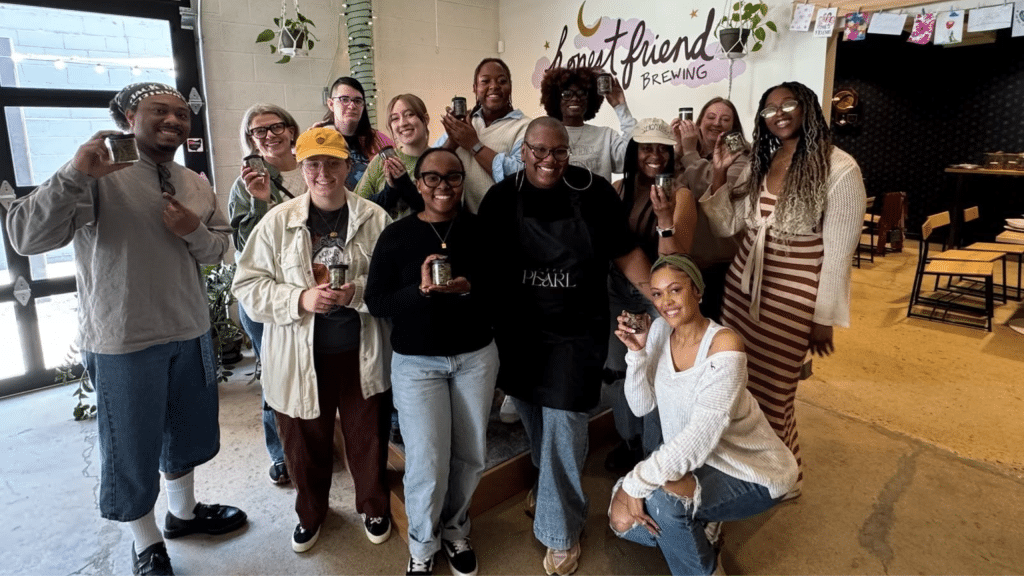
On Tuesday nights, Columbus LGBTQ+ citizens and allies can take a break from their phones to get crafty with it.
From 6-8 p.m., Nykeia Jackson Jones, the founder of Queer Craft Society, hosts a weekly Queer Craft Night at Columbus’s East Market. Each week, crafters gather with their craft, their choice of delectable eats from the market, and discussions ranging from the reasoning behind their craft to weekly catch-ups, or whatever else they do — or don’t — want to unpack.
Jackson Jones craft night steps away from the typical craft-night formula by encouraging guests to bring whatever project they want to work on, rather than sticking to a single craft. Some people might come in to color, while others use the time to make more progress on a portrait they’re painting.
“I just wanted a free-for-all where people can just be like whoever they want to be in that moment for those two hours,” Jackson Jones said of craft night’s concept. “I knew that there were other queer craft-adjacent events that were happening around Columbus, but nothing that was more free-flowing in the moment of like a ‘bring-your-own-craft.’”
“It also feeds into how I identify as being like a queer woman,” she continued. “I want to express myself in this way, or I want to do this in this way. So that was the overall vibe of what I wanted.”
Jackson Jones, a Southeast Texas native who moved to Columbus and works as a Senior IT Auditor for a healthcare tech company by day, accidentally created Queer Craft Society after deciding to devote Tuesdays to painting and other crafts. She invited her friends to meet at Two Dollar Radio Headquarters, a coffee shop on Parsons Ave., and soon, more people followed. The momentum pushed Jackson Jones to revive the shop’s queer craft night with her own vision in mind. After changing the name to Queer Craft Society and creating an Instagram account, the word quickly spread.
“I thought it was gonna be maybe like my friends and maybe like two other people,” Jackson Jones admitted.
“We’re more disconnected, even though we’re more connected digitally”
Jackson Jones doesn’t have many rules for craft night, but her absolute non-negotiable is: “Don’t be weird,” and she means it. The rule can be found in Queer Craft Society’s Instagram post, where she further warns attendees, “You will be banned if you make anyone uncomfortable or hold views that are detrimental to the community that we’ve built.”
The clause helps make Queer Craft Night a safe space for everyone who comes. It’s something many LGBTQ+ people struggle to find in a community, especially in a society that’s become lonelier within the last decade.
A report from the National Library of Medicine states Americans are suffering from loneliness and self-isolation, an epidemic that increased after the COVID-19 pandemic. In Ohio, Dr. Madelyn Hill, an assistant professor of instruction at Ohio University’s College of Health
Sciences and Professions, conducted research that found 54% of students between the ages of 18-24 reported feeling lonely. The study also showed female and Black students were particularly lonely on campus. Additionally, a study from the National Institute of Aging showed a rising number of Ohioans aged 65 and older. It showed that loneliness has been linked to “higher risks for health problems such as heart disease, depression, and cognitive decline.”
For LGBTQ+ people of color, loneliness is an even more prevalent issue. Dr. Ashley Hicks, Ph.D., a Columbus-based marriage and family therapist who uses her work to assist BiPOC and LGBTQ+ people in their interpersonal relationships, says there is an added layer of loneliness attached to their experience.

“If you exist in a society and have any identity that is not white, cisgender, male, affluent, Christian, or any of the the categories of identity that we say are the most valuable, that are the dominant category, then part of your very existence is lonely because you live in a society that says you don’t belong here or you have less worth and value,” Hicks said. “Even if you have great people in the world, you’re living in a world that wasn’t built for you. That says you don’t belong here, right? And then if you have any interpersonal difficulty that sort of has you feeling isolated, that’s very lonely as well.”
In addition to being isolated at the “systemic level,” Hicks said the digital age continues to cause teenagers, young adults, and 30- and 40-somethings to struggle to find real-life connections.
“We’re more disconnected, even though we’re more connected digitally,” she added. “That’s a phenomenon that we are experiencing across our country, our world — and for Black folks, for folks of color, for queer folks, for queer folks of color, it is magnified.”
Hicks shared that while crafting is far from a new hobby and is often passed down through generations in marginalized communities, the current wave of craft nights and meetups is something she’s seen more in her practice. She said she’s worked with clients who prefer to bring their craft to sessions to help manage their anxiety and depression in a therapeutic setting.
Creating with your hands has also been linked to assisting with substance abuse recovery. Hicks said those who may struggle with their substance use can use crafting to boost their confidence and have something to look forward to outside of using. While hosting a sober environment wasn’t Jackson Jackson Jones’ sole intention when hosting Queer Craft Night, she said many of the people who come to craft night prefer to be sober and focus on their creativity.
“It’s not that you have to be sober,” Jackson Jones stressed. “You just have to be creative. You have to create.”
“Here, I can just exist as myself”
Though Jackson Jones has created a space for anyone to enjoy themselves, she’s aware that not everyone matches her extroverted personality and can find the public space intimidating. Rather than forcing everyone to talk through icebreakers or other interactions, Jackson Jones checks in on her guests intimately, which she credits to her “very good Southern manners.”
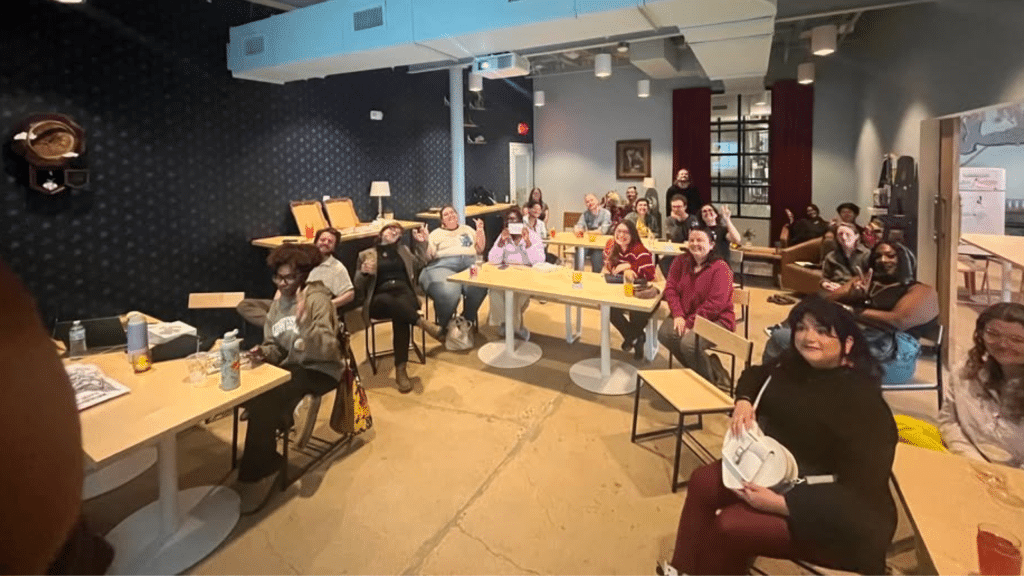
“I’ll just like, talk to them and just check in and make sure everyone’s good and comfortable in the space,” she said. “And that’s just like something that I kind of just learned from my mom and my parents in general because like anybody that comes over to your house, you gotta make sure that they’re good.”
Queer Craft Society’s Queer Craft Night also helps Jackson Jones, who needed a consistent space to create and decompress from her technical job.
Selah, a full-time creative, has attended craft night since the beginning and said she’s found the same retreat by making something new for fun and in an inclusive environment.
“It’s definitely awkward because a lot of the queer spaces in Columbus are really white and really white men, especially in the crafting scene, and you kind of feel like you’re automatically written off because you’re joining their space,” Selah said. “And rather than it becoming inclusive, or just having those conversations about the shared identity that you do have, it becomes like ‘Oh, I’m the Black person in this group, or I’m the queer person in this group.’ When here, I can just exist as myself, and I’m not questioning a lot of things.”
Now that Queer Craft Society has built its community, Jackson Jones has partnered with other LGBTQ+ organizations in Columbus. In June 2026, Queer Craft Society joined Queer Art Club, LezRun and Queer Cannabis Collective for its first Big Gay Field Day, encouraging community members to return to their childhoods for an afternoon of playground fun. Jackson Jones hopes to see Queer Craft Society continue to take on more partnerships and possibly receive a grant for more free events in the future. However, she’s proud of how Queer Craft Night has become a place where people can feel a little less alone.
“I’m learning about the difference between being an event organizer versus a community organizer,” Jackson Jones said. “I read an article about it where it was just like ‘event organizers care more about like the size and quantity of the events and people that they put on and the publicity behind it, while community organizers are focused more on like the community aspect of like making people meet one another, learning more about each other and actually growing together.”’
“At the end of the day, Queer Craft Society could still be 10 people showing up weekly, and I would still be happy,” she continued. “Yeah, we reach good numbers on a craft night, but it’s really not about that. It’s more about how you’re building with one another and creating those like lifelong bonds in our young adulthood, and adulthood in general.” 🔥
IGNITE ACTION
- Learn more about the Queer Craft Society by visiting their website here.
Know an LGBTQ+ Ohio story we should cover? TELL US!
Submit a story!
Author

Related Articles
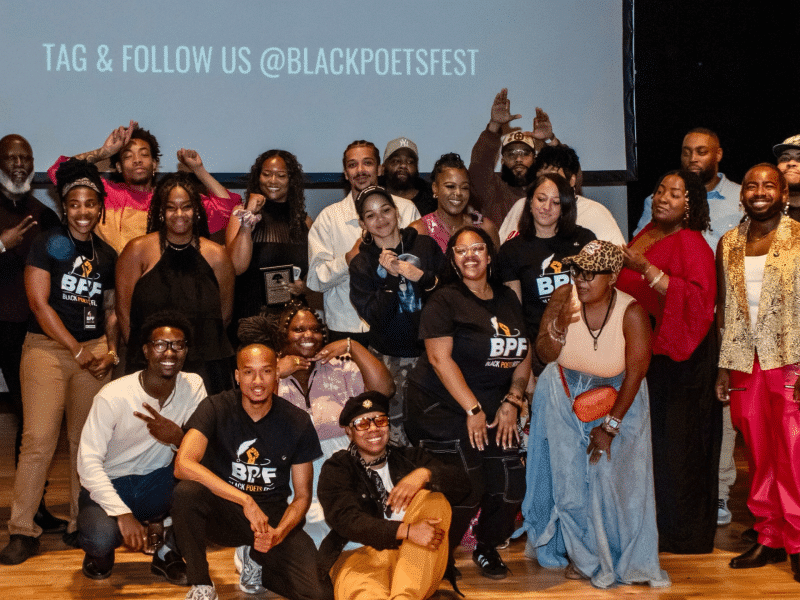
Black Poets Fest in Columbus builds a home for Black artists – LGBTQ+ definitely included.
‘This space belongs to us, without confusion or apology.’
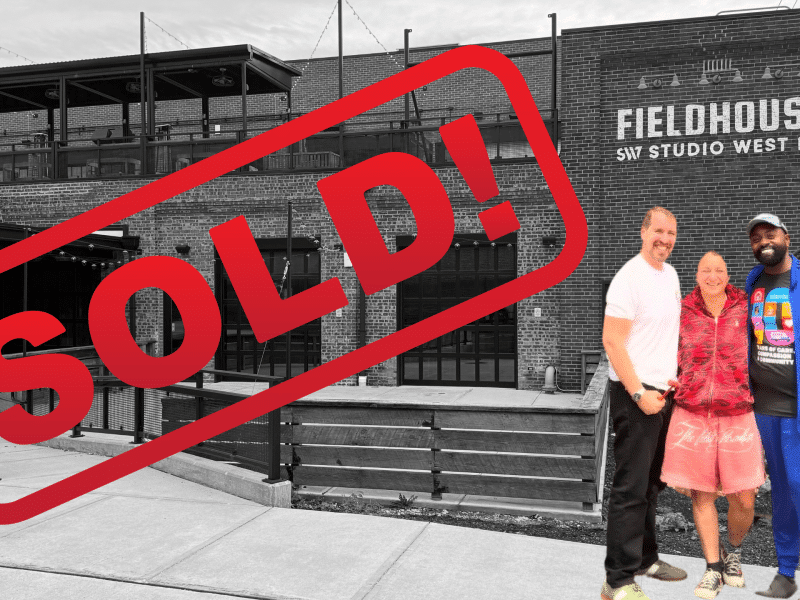
The doors that closed on Studio West 117 will open to a new space centering connection and well-being
A $4.1 million winning bid paved the way for a vision to preserve the entertainment and food amenities alongside new health and wellness services.
Ohio is a hotbed for queer cryptids. Yes, queer cryptids.
Ensconced in shadows and myth, cryptids often live along the edge of two worlds, almost invisibly.
