
Lame duck begins today. Here are 4 things LGBTQ+ Ohioans need to know.
The next 8 weeks in the Statehouse will be absolutely wild and we all need to understand how this works.

The midterm elections are now over and the incessant anti-trans commercials have blessedly stopped.
The blue tsunami flipped the U.S. House of Representatives and Senate to Democratic majorities, even as ballot measures to ban transgender student-athletes from playing on girls’ sports teams passed in Arizona, Colorado, Nebraska and Washington. In a pro-LGBTQ+ development, Missouri voters defeated an abortion ban that would also have restricted gender-affirming care for trans minors.
Here in Ohio, Democrats swept the races for governor (Amy Acton), U.S. Senator (Sherrod Brown), attorney general (John Kulewicz) and secretary of state (Allison Russo), losing only the race for state auditor to Republican Frank LaRose, the only statewide contest in which a candidate (Democrat Annette Blackwell) was a Black woman.
Significantly, Democrats were also able to break the supermajority in the Ohio House: a numerical superiority Republicans have held since 2013, which allowed them to override a legislative veto by the Ohio governor, as they did with the ban on gender-affirming care vetoed by Gov. Mike DeWine in 2024.
That supermajority status will remain unchanged in the Ohio Senate. In Ohio, the House and Senate both need a 3/5 majority vote (a supermajority) to override a veto.
Attention now turns back to the Ohio legislature, which has until December 31 to pass bills before this two-year General Assembly ends. Bills that do not make it through both the Ohio Senate and House by the end of a two-year cycle must start the process all over again in January.
This results in a mad dash called “lame duck,” the period between an election and the date a new legislative session starts in January, when legislators about to lose power in the Statehouse attempt to pass as many bills as possible.
Republicans will hold their supermajority until the end of the year, even though many of these legislators either lost their races on Election Day, lost in a primary in March or are leaving office altogether. Adding to the frenetic pace will be the attempt to get bills to a Republican governor before a Democratic governor takes office in January.
With over two dozen LGBTQ-related bills still on the table, here’s what LGBTQ+ Ohioans can expect out of Lame Duck:
1. Likely movement on the Drag Ban
The only bill that has made it out of a committee is HB 249, the Indecent Exposure Modernization Act. This bill would ban an individual from “recklessly [engaging] in an adult cabaret performance in a location other than an adult cabaret” and impose penalties all the way up to a fourth-degree felony if individuals are found in violation while performing in front of minors. Widely regarded as the “Drag Ban,” HB 249 not only passed out of the Judiciary Committee in March, but passed the entire Ohio House a few hours later. The bill now heads to the Ohio Senate, starting in the Judiciary Committee, chaired by Theresa Gavarone (R-Bowling Green), who has a documented history of anti-LGBTQ+ votes.
2. Another push for (some) parents’ rights
Keep your eyes on HB 693 (“The Affirming Families First Act”), a bill designed to protect parents who reject their trans children. These “protections” include ensuring parents’ “right” to subject their children to conversion therapy, to only use the child’s legal name/pronouns when addressing them and to decline consent to mental health services, all without repercussions from courts or children’s services agencies. Although HB 693 has not made it out of the Judiciary Committee, bill co-sponsor Rep. Gary Click (R-Vickery) posted on social media about the bill as recently as September 24, as this is a priority of The Heritage Foundation, the primary architect behind the anti-LGBTQ+ presidential transition plan Project 2025.
3. Guaranteed hearings on some LGBTQ+ equality bills
According to Ohio House rules, all bills introduced before May 15, 2026, must receive a hearing before the conclusion of this General Assembly at the end of 2026. That means that a host of LGBTQ+ equality bills will have at least one hearing, including the Ohio Fairness Act (to enact LGBTQ-inclusive nondiscrimination protections), a bill to ban conversion therapy statewide and HB 327, “The Parents’ Rights to Inclusion, Diversity, Equity (PRIDE) Act.” These bills likely won’t get more than one hearing, but they are guaranteed at least that airtime to speak to a wider audience about increasing LGBTQ+ protections in Ohio.
4. Every bill, everywhere, all at once
And then there’s the wildcard: legislators’ proven ability to attach any bill to any other bill. Although Ohio has a one-subject rule in the Ohio constitution that is supposed to prevent unrelated bills from being mushed together in a single bill, Ohio Republicans have repeatedly flouted this rule. Banning trans female participation in athletics was tacked on to the bill banning gender-affirming care. Mandating that public schools provide release time for religious instruction was added to a bill forcing teachers to out LGBTQ+ youth to parents. Thus each time the full Ohio House and Ohio Senate meets – typically once a week until the end of December – a bill like “Natural Family Appreciation Month” could be added onto a bill expanding family tax credits.
No matter what happens, The Buckeye Flame will be there covering all of the latest LGBTQ+ legislative developments and connecting you to what you need to know coming out of the Columbus Statehouse. Bookmark our Ohio LGBTQ+ Legislative Guide, which we will update daily until this current General Assembly comes to a close. 🔥
IGNITE ACTION
- Click over to our 2025-26 Guide to Ohio’s LGBTQ+ Legislation by going here.
- To find contact information for your Ohio state representative, click here.
- To find contact information for your Ohio senator, click here.
Know an LGBTQ+ Ohio story we should cover? TELL US!
Submit a story!
Author

Related Articles
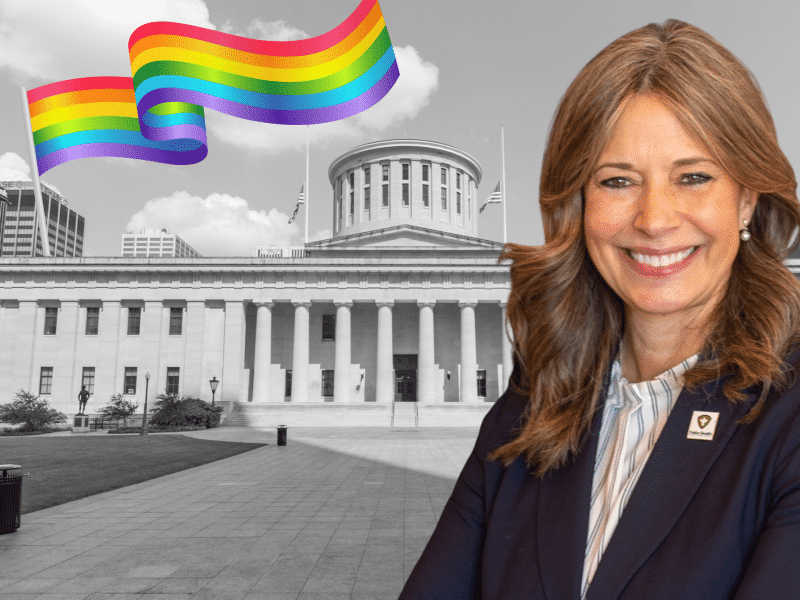
An open letter to Governor-Elect Dr. Amy Acton on addressing LGBTQ+ health disparities
‘LGBTQ+ Ohioans and people living with HIV should not simply be the subjects of policy discussions; instead, they should have a meaningful role in shaping the policies that affect their lives.’

How did Ohio’s out LGBTQ+ candidates fare in the 2026 midterms?
Seven out LGBTQ+ candidates ran for public office in Ohio’s 2026 midterms. Here’s how they fared.

Xenia School Board members want to warn parents about YMCA’s gender inclusion
District has had “no safety incidents occurring at the YMCA during school-sponsored activities”


