
An mpox ‘outbreak’ was declared in Ohio. But what does that mean?
Nearly half of all of Ohio’s 2024 mpox cases have been located in one county.



On April 25, the Cuyahoga County Board of Health issued an alert of an outbreak of mpox.
Formerly referred to as monkeypox, mpox is an infection caused by the mpox virus. It is characterized by lesions on the skin that start as a rash and can spread from the face to the rest of the body. According to the Cuyahoga County Board of Health, mpox can be spread by:
- Close contact with a person infected with mpox virus
- Coming in contact with materials such as clothing, bedding or towels that are contaminated with the virus
- Touching mpox lesions on another person’s skin
- Coming into contact with respiratory droplets or secretions from the eyes, nose and mouth of a person with mpox
While mpox spreads through close physical contact, including sexual contact, it is not considered to be a sexually transmitted infection.
Nor is it a “gay” infection.
Although researchers have found a disproportionate number of mpox cases in the LGBTQ+ community, health experts have cited two factors that have led to higher detection of mpox among men who have sex with men: regular testing for sexually transmitted infections and health providers being on alert.
“In a way, maybe we are a victim of our own success that people are coming forward and our sexual health services are picking it up,” Andrew Lee, professor of public health at the University of Sheffield, told The Washington Post.
Symptoms can show up anywhere from 5 to 21 days after exposure and may include:
- A rash that may be located on hands, feet, chest, face, mouth or near the genitals
- Fever
- Muscle aches
- Headache
- Swollen lymph nodes
- Exhaustion
- Cough or sore throat
A person is no longer infected when the lesions have completely healed and the scabs have fallen off.
State of the outbreak
According to the Ohio Department of Health’s Summary of Infectious Diseases in Ohio dashboard, there have been 33 confirmed cases of mpox in Ohio since the start of 2024.
Nearly half of those cases – 16 of 33 – have been in Cuyahoga County. Those infected ranged in age from 17 to 44 years old.
Nearby Summit County has had six cases in 2024 with Franklin and Hamilton Counties having three each.
In August 2022, the United States government declared the mpox virus a national public health emergency.
Although the 33 mpox cases in 2024 pale in comparison to the 393 cases in 2022, these current numbers are already higher than the 28 cases seen in all of 2023.
Given the introduction of the mpox vaccine in 2022, which drastically reduced the number of cases, this 2024 uptick is defined as an outbreak due to the unexpected increase in cases.
“Outbreaks are defined when more cases of disease are seen than what would be expected for a given time period and population,” the Ohio Department of Health told The Buckeye Flame in an email.
Protect yourself
The Center for Disease Control details five steps for protecting yourself against mpox:
- Get vaccinated. The JYNNEOS vaccine is recommended for prevention of mpox. Use the Mpox Vaccine Locator to find nearby healthcare locations that provide mpox vaccinations.
- Learn steps you can take to lower your risk of mpox during sex or at a social gathering.
- Avoid close, skin-to-skin contact with people who have a rash that looks like mpox.
- Avoid contact with objects and materials that a person with mpox has used.
- Wash your hands often.
The Cuyahoga County Board of Health also encourages those who believe they may have been directly exposed to mpox to get tested with a healthcare provider as soon as possible. There is no self-test available for mpox.
It is not currently known if a previous mpox infection provides immunity against future infections.
Healthcare providers have been encouraged to keep mpox in mind during all screenings.
“Any provider seeing a patient with lesions and/or a rash, particularly if they are part of the identified at-risk population (Black male MSM), should be tested for mpox,” the Board of Health wrote in a release. 🔥
IGNITE ACTION
- Use the Mpox Vaccine Locator to find nearby healthcare locations that provide mpox vaccinations.
- Get tested if you believe you have been exposed to the mpox virus.
Know an LGBTQ+ Ohio story we should cover? TELL US!
Submit a story!
Author

Related Articles

Ohio House bill protecting the rights of parents with LGBTQ+ children gets first hearing
Ohio Democrats spoke on the Parents’ Right to Inclusion, Diversity and Equity (PRIDE) Act, which would reverse some of the state’s anti-LGBTQ+ laws.

Ohio Republican lawmaker goes on anti-trans rant in hearing to deny trans adults insurance coverage for gender-affirming surgery
Rep. Josh Williams is a failed candidate for the U.S. House of Representatives in his final months in the Ohio legislature
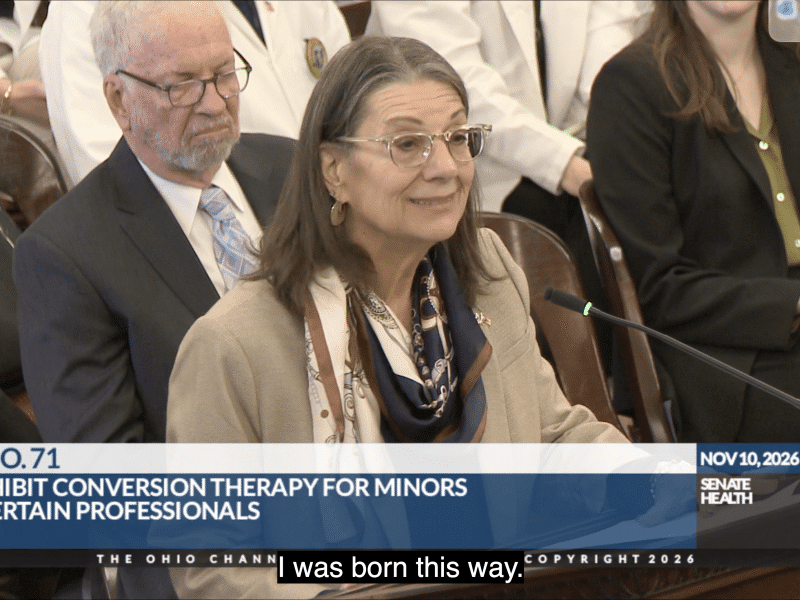
Ohio lawmaker quotes Lady Gaga lyrics in hearing to ban conversion therapy on minors
Tuesday’s hearing in the Health Committee lasted less than four minutes.


