
Advocates say Ohio bill would unjustly penalize people living with HIV
Andy’s Law is meant to make work safer for correctional officers, but it could have other severe consequences
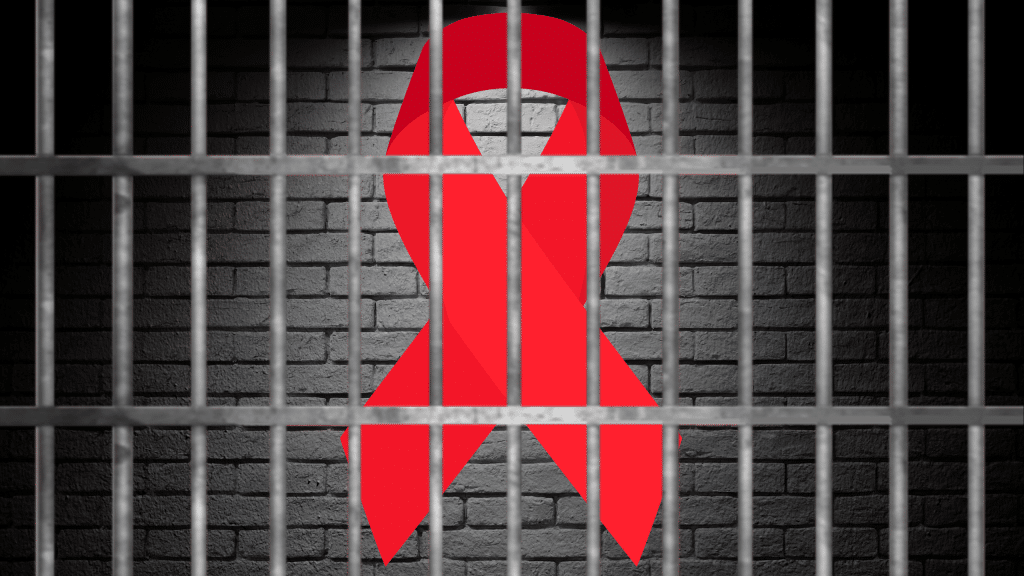
HIV education and prevention advocates are calling for changes to a bill designed to increase safety for Ohio corrections officers but that also has the potential to unjustly increase prison sentences for people living with HIV.
HB 338 would enact Andy’s Law, a set of provisions that increase penalties for crimes committed against correctional officers. One section of the proposed law would add a mandatory prison sentence of seven years to the crime of felonious assault and a mandatory prison sentence of at least three years to the crime of harassment with a bodily substance.
Contained within the crimes of “felonious assault” and “harassment with a bodily substance” are two of the six laws in Ohio that criminalize certain acts – including sex – for people living with HIV, or that substantially increase penalties for them compared to people who do not have the virus. These laws impose stiff penalties – regardless of whether the virus is or can be transmitted. In some situations, the law also requires sex offender registration.
Additionally, HB 338 would change policies and procedures with the intention of increasing “good behavior” of inmates, including banning educational opportunities and tablet use and limiting visitation rights to those in high-security facilities.
The bill is named after corrections officer Andrew Lansing, who was killed by an inmate at Ross Correctional Institution on Christmas Day 2024. The bill passed the Ohio House in November with bipartisan support – only three Democrats voted against it – and has had three hearings in the Senate Judiciary Committee, most recently on June 10.
Advocates say the two new mandatory penalties created by Andy’s Law would create serious unintended consequences for Ohioans living with HIV.
According to a 2024 study released by OHMM and the Equality Ohio Education Fund, from 2014 to 2020, there were at least 214 confirmed HIV-related prosecutions in Ohio, of which over half (120 cases) came from the state’s “harassment with a bodily substance” law and about a third (77 cases) came under Ohio’s felonious assault law. The remainder (17 cases) were related to sex work.
Additionally, the research shows that Ohio’s HIV criminalization laws disproportionately impact Black communities, with at least 36% of defendants identifying as Black. Statewide, 29% of all defendants (62 people) were Black men.
“HB 338 seeks to improve correctional facility safety for officers and staff; however, it also sweeps in and increases penalties for two of the six HIV statutes which the Ohio Health Modernization Movement (OHMM) has targeted in recent years,” said Josh Meek, OHMM Steering Committee Member.

At the June 10 hearing, advocates urged lawmakers to reconsider parts of the bill that would increase sentences of prisoners living with HIV who cannot transmit the virus, but would be sentenced as if they could.
Adam Reilly, associate director of prevention at Caracole — a Cincinnati-based non-profit dedicated to ending the HIV epidemic — explained that the six laws on the books that unfairly target people living with HIV were written before current HIV treatment advances and medical understanding. The laws are focused on whether an Ohioan living with HIV has disclosed their HIV status to their sexual partners, regardless of whether they can transmit the virus.
“According to the CDC [Centers for Disease Control], a person living with HIV who is on treatment and maintains an undetectable viral load has zero risk of transmitting HIV to their sexual partners,” Reilly testified. “That means, under current law, if you’re living with HIV, you can get a second-degree felony for consensual sex that involves zero risk of transmitting HIV.”
In his testimony, Meek highlighted the same issue with harassment with a bodily substance: that actions are criminalized where transmission is not even possible.
“We believe this sentencing is disproportionate to the alleged harm, especially since in some circumstances there is no risk of HIV being transmitted,” he submitted in written testimony.

Meek told The Buckeye Flame that the over 80 opponent or interested-party testimonies submitted for the June 10 hearing was an indication that “there is still much work to be done.” He said there is hope that the Judiciary Committee excludes the HIV-related statutes – felonious assault from failure to disclose HIV status and harassment with a bodily fluid – from the mandatory sentencing.
“Since HB 338 didn’t pass before the summer recess, it seems the legislature has decided to take additional time to review the bill, which is a good indicator of the possibility that these changes will be included,” Meek said.
The Buckeye Flame reached out to Judiciary Committee Chair Nathan Manning and the bill’s primary sponsors, Reps. Mark Johnson and Phil Plummer, for comment, but no response was received before this publication date. 🔥
This work was supported by the 2026 CNP Media Fund.
IGNITE ACTION
- Read the updated report “The Enforcement of HIV Criminalization in Ohio” by going here.
Know an LGBTQ+ Ohio story we should cover? TELL US!
Submit a story!
Author

Related Articles
Six AIDS Memorial Quilt panels arrive in Dayton for ‘Wall Power’ exhibit
The panels are a powerful addition to the Art Institute’s ‘Spectacular Quilts’ show

HIV decriminalization supporters to hold first-ever Advocacy Day at Ohio Statehouse
Ohio still has six laws on the books that criminalize living with HIV. And the laws are actively enforced.

Audio This News is So Gay (8/26/26): Examining the Gap Between HIV Science & HIV Understanding
Featuring: Darian Aaron (GLAAD) and Jerrell Hardnett (GLAAD)

Comments (1)
Comments are closed.