
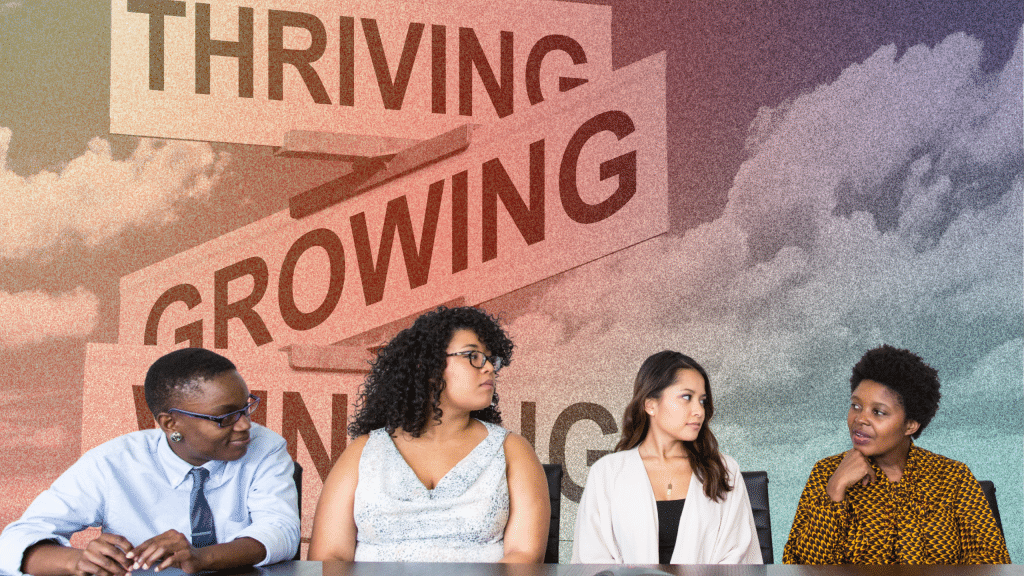
Black LGBTQ+ women aren’t safe in Cleveland, but they’re finding ways to thrive
In 2020, an analysis by Bloomberg CityLab ranked Cleveland as the worst city for Black women to live. For Black LGBTQ+ women, the struggles are real.
Photographer Natasha Herbert moved to Cleveland from Hawaii when she was a baby. Raised by her grandmother in an environment she realized wasn’t for her. Herbert found creativity as an escape and, ultimately, a realistic career path. After graduating from Michigan State University, she worked as a multimedia artist before developing her photography business, Natasha Herbert Photography.
Convinced she had found her calling, Herbert began making plans to expand her career in Los Angeles. “I was like, ‘I’m never going back to Cleveland.”’
However, her grandmother wasn’t in good health, so she came home to spend time with her. “Thankfully, I did because she did pass in 2013, and I’m just happy that I did spend that time here.” Herbert’s return to her hometown proved to be exactly what her business needed. She is one of the city’s most sought-after luxury wedding and events photographers; her photos have been featured in national magazines, and in 2022 she received the Allen E. Cole Excellence in Photojournalism award from the Western Reserve Historical Society.
Although Herbert has prospered, she’s also experienced the city’s stark inequalities as an openly Black lesbian. In 2020, an analysis by Bloomberg CityLab ranked Cleveland as the worst city for Black women to live. In response, Chineye Nkemere, principal and co-founder of the racial and gender justice think tank Enlightened Solutions, started a project called Project Noir, surveying 1,324 Black women, including women who identify as LGBTQ+, in Northeast Ohio to hear their concerns directly.
While the Bloomberg researchers looked at data, “they never actually took the microphone and asked Black women about their experience … So, I was like, ‘What if we just asked Black women here in Cleveland? I’m a researcher; I live in the city. Let’s just ask Black women about their experiences.’ And that’s how Project Noir was born.”
Multiple Black women in Cleveland talked of facing systemic racism in the workplace, healthcare and education–and that there is a need to make the city safer for Black women, with an emphasis on Black LGBTQ+ women.
Project Noir research on LGBTQ+ women in the workplace
Black LGBTQ+ women were among the interviewees who told of facing racial discrimination in the workplace, including microaggressions. These narratives of lived experience helped spearhead the landmark passage of the CROWN ACT in Cuyahoga County, which protects against discrimination in work and other public spaces based on race-based hairstyles.
“That is a workplace discrimination issue, and now we have the ability in Cuyahoga County to bring that up to the Civil Rights Commission,” Nkemere said. “You can bring that up as an issue if you feel discriminated against in your workplace, and you think it is based on texture, your textured hair. Now we have the pipeline to be able to say, ‘Oh, you can go to the county.’ That was not even possible in years past.”
Black LGBTQ+ women struggle to receive proper healthcare in Cleveland hospitals
Nkemere shared that Black LGBTQ+ women also reported being mistreated by healthcare professionals across all healthcare systems, including highly regarded institutions. She said the experiences Black women have revealed through Project Noir show the city’s healthcare system remains “the most troubling here in this region.” In addition to navigating microaggressions due to their race, Black LGBTQ+ women also faced being dismissed when seeking help for their mental health, Nkemere stated.
“I’ll narrow it down to the two themes that I saw the most for Black women that were the most troubling: bedside manner and callousness,” she said. “What we saw is Black women are getting care; they’re going in, they’re getting their physicals, or they’re doing that preventative care, but there’s an issue of inadequate bedside manner, especially for critical care. So, especially for queer folk, let’s say you are going in for preventative care; you’re trying to make sure that not just your mental health is together, but your sexual health is together. Some doctors are dismissing the concerns of queer folks, some of the mental health issues that people might be having, not necessarily because of an issue with them, it’s you’re living as a queer person in society, obviously you’re anxious, obviously you’re going to have anxiety about things, and doctors are dismissing individuals and saying, “Oh, you need to relax, or “Oh, it’s not that big of a deal, or pushing certain things that might not necessarily align with an individual’s, desire.”
“It’s that callousness that many doctors are having,” Nkemere continued. “And for me, I saw this most persistently in queer spaces around mental health, and then that kind of preventative care.”
Callous bedside manner was something Herbert experienced firsthand. She struggled to pay for healthcare early in her career and said that, when she was obligated to go to the emergency room for care for issues such as leg pain several years ago, she was brushed off by doctors.
“You would hear them say, ‘Black people can tolerate pain more,’” Herbert said. “[That] what I’m experiencing is just not pain. It’s just like, you know, give me some like Ibuprofen and send me on my way.”
“And I just feel like that’s not the care that our like white counterparts would experience,” she continued. “You know, they’re really trying to dig deep and figure out what is wrong with you. I have experienced that in the healthcare industry quite a few times, and it doesn’t feel good, and it doesn’t feel safe.”
Cleveland’s Black LGBTQ+ community is helping each other stay safe
Black women have historically uplifted their communities in times of adversity. Herbert uses her art to advocate for Black maternal healthcare, an issue Nkemere deems the “shame of this region.” One of Herbert’s photography and videography clients is Birthing Beautiful Communities. According to its website, it aims to “educate, support, and empower expectant mothers at every stage of their pregnancy and postpartum transition” through labor support, life goal planning, childbirth and parenting, and support groups.
She also uses her artwork and influence to give back to Cleveland’s Black LGBTQ+ community. One of Herbert’s initiatives was her photography program for inner-city youth, Creative Impact Fund Project: The Avenue Cleveland, where she taught inner-city youth to “challenge their creativity while simultaneously teaching them all of the processes of photography.” In 2025, she launched Club 227, a party series catered to Black LGBTQ+ women as “a way for them to have a good time and vibe out at night.”
Community-driven initiatives like these are just one way Cleveland’s safety rating can improve, especially through a Black and LGBTQ+ lens. Nkemere said one of the obstacles in her research was the ongoing negative biases some within the Black community have towards LGBTQ+ people.
“The limitations are our own limitations,” she stressed. “We know that we live in a puritanical society, specifically Western, you know, Western society is very homophobic, and they’re very queerphobic, and I would actually add that they’re femmephobic, to be quite honest.”
Herbert agreed there’s more outreach needed in Cleveland’s LGBTQ+ community, especially for those of color. However, while Cleveland still has many hurdles to overcome to be considered safe for Black women, she has been able to find support and love in her hometown.
“It’s gotten to the point where I’m like, you know, I don’t care. This is me. This is who I am, and I make sure people can feel it, see it, or experience my presence. I’m Black. I’m a woman. I’m queer. You’re going to accept it, or you don’t, you know. And so, I think for me, I’ve been able just to show people that’s who I am, and I think the more unique I am, the more people see me as more authentic. They’re like, ‘You know what? She got it going on. She’s successful. I’ve heard from other people and other queer people that said, ‘Natasha, people actually look up to you. They actually see you as somebody who’s a grinder. You got it.’” 🔥
Know an LGBTQ+ Ohio story we should cover? TELL US!
Submit a story!
Author
Related Articles
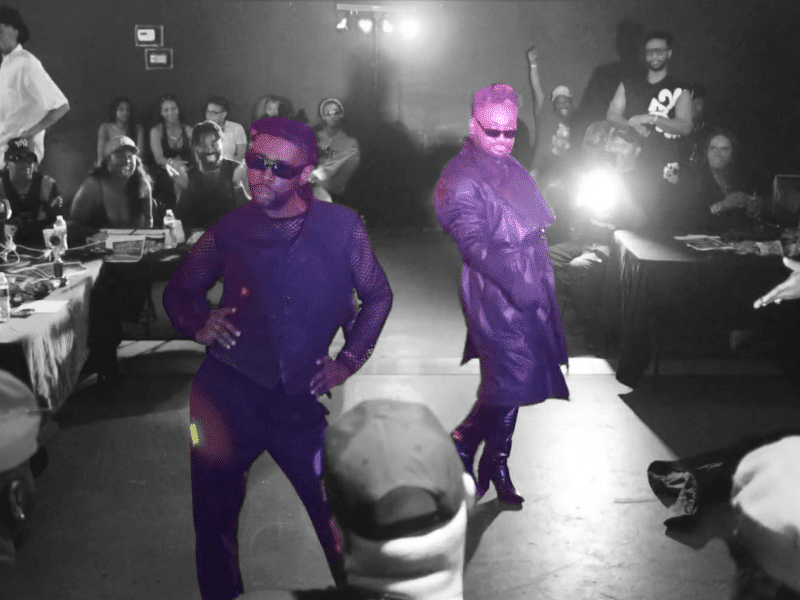
Pump The Beat!: Ohio’s ballroom scene as a queer community haven
For many people in the scene, ballroom is the foundation for their social and personal lives, and keeps many folx healthy, happy and safe.
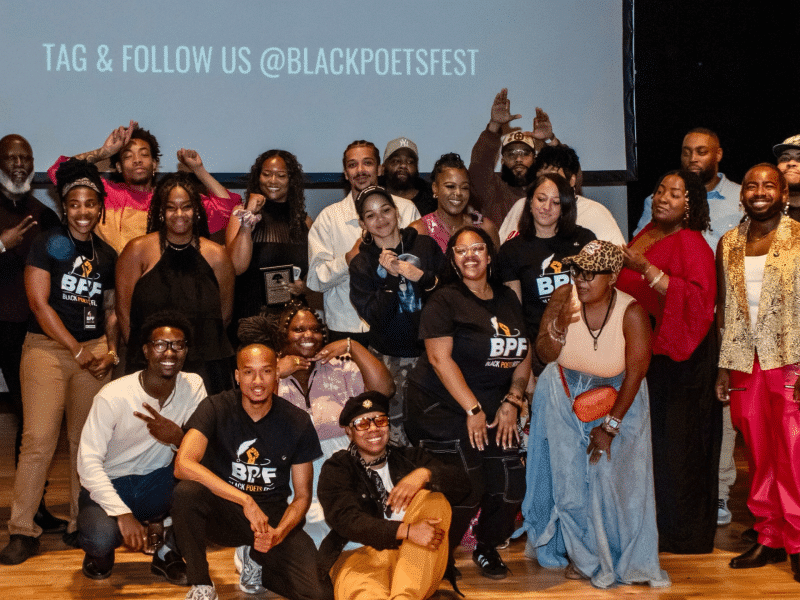
Black Poets Fest in Columbus builds a home for Black artists – LGBTQ+ definitely included.
‘This space belongs to us, without confusion or apology.’
A Gospel of Their Own: How BIPOC LGBTQ+ Ohioans are navigating faith spaces
The church can be a source of deep pain, while the faith, music and spiritual traditions formed there can remain deeply meaningful.
