
10 things LGBTQ+ Ohioans with disabilities should know before hitting the polls
Accommodations include curbside voting, assistive technology and extra time and assistance with your ballot
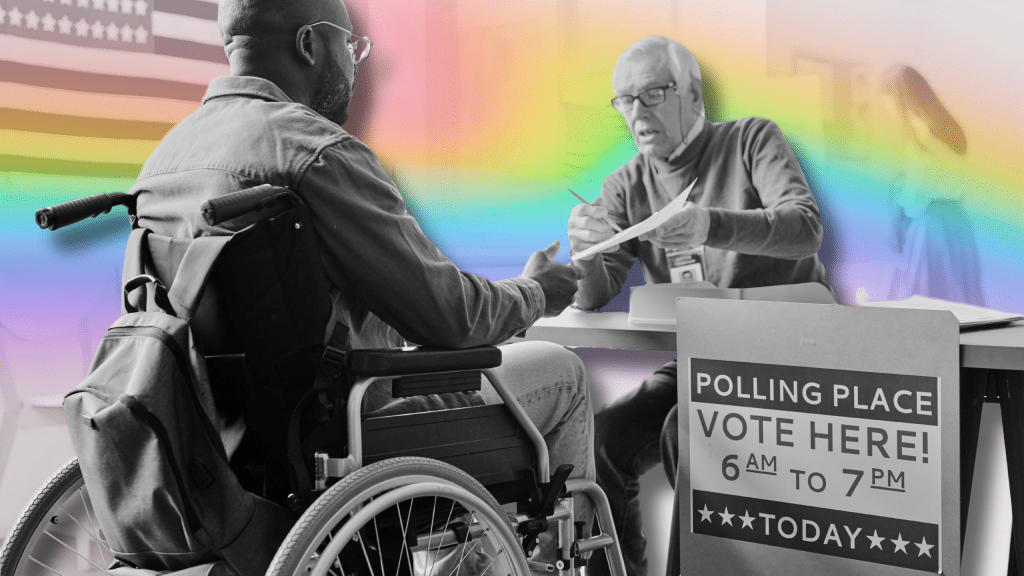
If you are an LGBTQ+ Ohioan living with a disability, you have the right to access accommodations during the voting process – even if poll workers are unfamiliar with them.
A growing body of research suggests that LGBTQ+ people report living with disabilities at much higher rates than their straight, cisgender peers. Researchers point to “chronic stigma and discrimination” as part of the reason, particularly in healthcare and medical settings and for transgender and non-binary people.
With more than 11% of Ohioans over the age of 18 identifying as LGBTQ+, likely thousands of LGBTQ+ people across the state are living with physical, mental and psychological disabilities that could impact their ability to vote in-person on November 3.
We know requesting disability accommodations in-person on Election Day can feel overwhelming, so we’re outlining exactly what to expect as part of our “Out at the Polls” voting series.
Here are 10 things you should know before casting your ballot:
1. Can I bring someone to help me vote?
Yes. You can bring a friend, family member or caregiver to assist you at the polls. However, Ohio law forbids legal employer, a union representative or any candidate whose name appears on the ballot from assisting you.
The person you choose to assist you at the polls is allowed to accompany you inside the voting booth, and can assist you in reading and marking your ballot. However, they are not allowed to influence your vote or change your vote without your consent.
If your polling place uses voting machines, the person assisting you is allowed to touch the screen and make selections at your direction. They may also assist in handling any assistive technology poll workers have provided.
They may also handle your ballot to tear the strip from the bottom of your paper ballot and then place it into the scanner that counts each ballot, as directed by the poll worker.
2. Do poll workers have to accommodate me?
Yes. Voters with disabilities are protected by federal law under the Americans with Disabilities Act (ADA).
Passed in 1990, the landmark legislation overhauled public accessibility standards and transformed nearly every area of public life for Americans with disabilities – including education, employment and civic engagement.
The ADA’s accessibility standards cover the entire voting process, requiring polling places and poll workers to accommodate Americans living with disabilities from “physical conditions affecting mobility, stamina, sight, hearing, and speech to conditions such as emotional illness and learning disorders.”
If a poll worker is unable or unwilling to accommodate your disability:
- Call the Ohio Secretary of State’s office at 877-SOS-OHIO (877-767-6446) for immediate help on Election Day.
- Call or text Election Protection via the Election Protection Hotline at 866-OUR-VOTE (866-687-8683) to speak with a trained volunteer.
- Report incidents directly to the Ohio Secretary of State’s ADA Coordinator at 614-387-6039.
3. What should I do if my polling place isn’t accessible?
To meet federal accessibility requirements, every polling place in Ohio must have:
- Accessible parking
- Barrier-free entrances and routes to the voting area
- Accessible voting machines
Most polling places are already accessible in order to comply with federal law. However, you may still arrive at a polling place that does not comply with accessibility requirements outlined in the ADA.
If your polling place does not meet basic accessibility requirements:
- Call the Ohio Secretary of State’s office at 877-SOS-Ohio (877-767-6446) for immediate help on Election Day.
- Call or text Election Protection via the Election Protection Hotline at 866-OUR-VOTE (866-687-8683) to speak with a trained volunteer.
- Report incidents directly to the Ohio Secretary of State’s ADA Coordinator at 614-387-6039.
4. Can I vote from my car?
Yes. Registered voters in Ohio can request to cast their ballots from the curb outside their designated polling place.
When you arrive at your polling place, look for marked accessible parking spaces. Some polling places even have parking spaces dedicated to curbside voting, so be sure to check. Once you’re parked safely, send a friend, family member or caregiver inside to let poll workers know you’re ready to vote.
Two poll workers – each from a different political party – will confirm your voter registration and bring your ballot to the car. Once you complete your ballot, the poll workers will take it back inside your polling place to process it.
If you’re planning to drive to your polling place alone, call your county board of elections ahead of time to let them know when you’ll be there. That way, they can send poll workers to meet you at the entrance.
5. What should I do if I need assistance reading my ballot?
Bring a friend, family member or caregiver and let the poll worker know immediately that the person will be accompanying you inside the voting booth in order to accommodate your disability.
If you are voting solo, you can request that two poll workers – each from a different political party – accompany you inside the voting booth. Poll workers are required to assist you in reading and marking your ballot upon your request for accommodation.
Technically, voters in Ohio are only allowed 20 minutes inside the voting booth, but voters with disabilities can ask poll workers for extra time. Remember, your right to vote is protected by law.
6. What should I do if I need assistance marking my ballot?
Every polling place should have at least two devices designed to help voters mark paper ballots or make selections via a voting machine.
If you need assistance signing your ballot, ask a poll worker if your polling place has a signature stamp or other assistive technology available.
In some cases, you may need to submit an attorney-in-fact form allowing a friend, family member or caregiver to legally sign your ballot as your proxy. Be sure to check with your county board of elections about the specifics ahead of time.
While you do not need to provide proof or documentation of your disability to receive other accommodations, you will need a doctor to sign the form confirming you are “physically unable to sign” legal documents on your own behalf.
7. Are there assistive technology options available for voters who are Deaf, hard of hearing, blind or living with low vision?
Yes. According to the Ohio Secretary of State’s website, larger polling places may have access to assistive technology, including:
- Audio ballots
- Braille and tactile lettering
- Large print or zoom text
- Adjustable screen height or tilt
- High-contrast display settings
- Sip-and-puff devices
- Touch-screen or push-button navigation
Your polling place is required to provide you with these technologies by law. However, rural counties may not have access to the same technologies.
To be sure poll workers have the assistive technology you need to vote ready when you arrive, the Ohio Secretary of State’s website recommends calling your county board of elections before Election Day.
If poll workers tell you they do not have the assistive technology you need on site:
- Call the Ohio Secretary of State’s office at 877-SOS-Ohio (877-767-6446) for immediate help on Election Day.
- Call or text Election Protection via the Election Protection Hotline at 866-OUR-VOTE (866-687-8683) to speak with a trained volunteer.
- Report incidents directly to the Ohio Secretary of State’s ADA Coordinator at 614-387-6039.
8. Do I have to show any documentation about my disability?
You do not have to offer any proof of your disability in order to receive accommodations while casting your ballot.
You do not need to provide any private medical information to poll workers, including notes from a doctor or other health care professional or paperwork confirming a diagnosis.
9. Can I use my phone while I vote?
Yes. Ohio does not have any law on the books against using your phone inside the voting booth.
Which means you can use your phone to view lists of candidates, ballot measures or even pre-filled sample ballots. This may be a particularly useful tool for voters with disabilities.
10. What should I do if poll workers are not willing or able to accommodate me?
Remember, if you are an LGBTQ+ Ohioan living with a disability, your right to vote is protected by federal law.
If you experience voter discrimination or suppression at the polls, please report it to your county board of elections.
You have a right to vote – and you have options.
- Call the Ohio Secretary of State’s office at 877-SOS-Ohio (877-767-6446) for immediate help on Election Day.
- Call or text Election Protection via the Election Protection Hotline at 866-OUR-VOTE (866-687-8683) to speak with a trained volunteer.
- Report incidents directly to the Ohio Secretary of State’s ADA Coordinator at 614-387-6039.
Ignite Action
- To learn more about voting in Ohio, or to report illegal election activity, visit 866ourvote.org.
- To speak with a trained volunteer, call or text Election Protection via the Election Protection Hotline at 866-OUR-VOTE (866-687-8683).
- To register to vote or to check your voter eligibility status in the state of Ohio, click here.
- To find contact information for your Ohio state representative, click here.
- To find contact information for your Ohio senator, click here.
- If you are a young LGBTQ+ person in crisis, please contact the Trevor Project: 866-4-U-Trevor.
- If you are an transgender adult in need of immediate help, contact the National Trans Lifeline: 877-565-8860
Know an LGBTQ+ Ohio story we should cover? TELL US!
Submit a story!
Author

Related Articles

Two Ohio trans elected officials support voting for Acton (but don’t excuse her comments)
A public statement has earned praise, pushback and more allegations of censorship against the Ohio Democratic Party.
Out at the Polls: The Buckeye Flame’s Ohio LGBTQ+ Voter Guide
Welcome to our five-part voter series, where we break down everything LGBTQ+ Ohioans should know before hitting the polls.

Insiders say the Ohio Democratic Party is censoring criticism of anti-trans ads
Two posts pushing back against Rep. Marcy Kaptur’s anti-trans ads have been removed.
