
Pump The Beat!: Ohio’s ballroom scene as a queer community haven
For many people in the scene, ballroom is the foundation for their social and personal lives, and keeps many folx healthy, happy and safe.
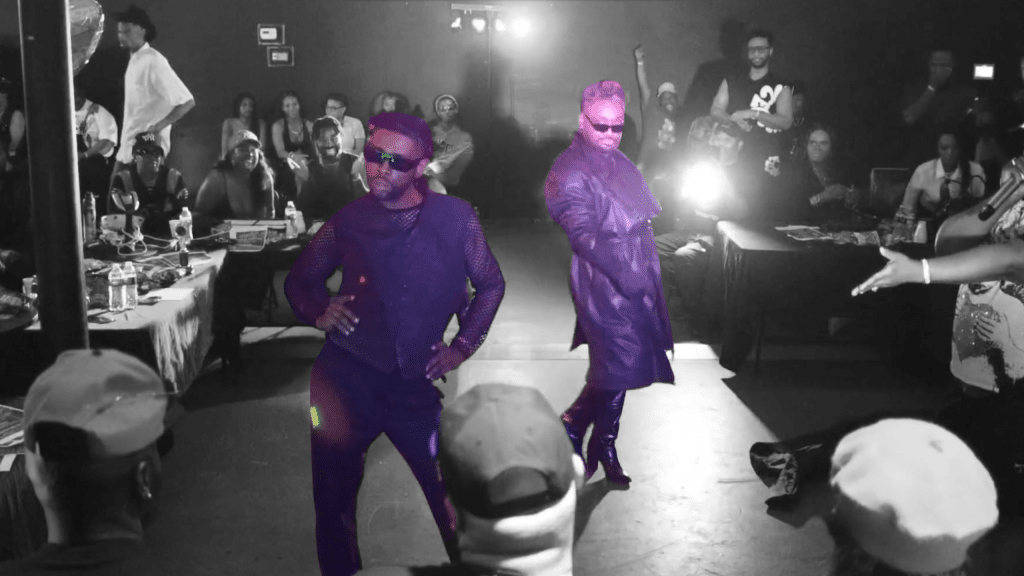
Under low colored lights and a bassy beat, nine judges sit on a stage podium as they watch Midwest talent walk, strut and dip at the Blaque Ball. A grand-prize trophy, adorned with a blacked-out Thing a la Addams Family, gleams in the corner as strewn clothes and props (effects, as ballroom walkers say) hide under tables labelled with the names of houses – Chanel, Prodigy, Schiaparelli, Ebony.
Blaq, who’s been hosting iterations of his namesake ball for over five years, paces throughout the room, making sure everyone and everything are set up for success. This is his ninth year hosting the ball, but with a new venue comes new potential problems- a bad speaker or slippery floor, perhaps. Fortunately for him, and those of us spectating the event, no qualms arise.
Ciara Ebony dons a smile as she waits for her categories to be called. She’s not new to the ballroom world – a space that, for some, is only known through movies and television. After two decades of walking balls and earning her status as a Legend – one of the highest esteems bestowed upon someone in this community – she knows what’s expected of her.
When the ‘Realness’ category is called, Ciara makes sure she’s “unclockable,” from the swish in her hips as she walks, to the glossy lip she puckers for the judges. Then, she turns it around when they call for “Sex Siren,” returning to the stage in a scandalous two-piece bedazzled lingerie set that gets cheers and whoops and wins her another trophy.
Ciara sees ballroom as more than a competition. Just as much as she awaits her categories, she’s eyeing the room making sure her “kids” – the queer youth and adults of the next generation, who are bringing their perspectives to the ballroom scene, and look to her for guidance and support – are doing OK, too.
“Being a mother can be very challenging due to the pressure it puts on you at times,” she reflects. The responsibilities range from giving advice on life, to networking to find job opportunities for community members, to opening her own home for one of her own who finds themselves unhoused – responsibilities that someone’s blood-borne or traditional family structure either cannot or will not pick up. Ciara worked with several other women in ballroom to found SISTAHS, a nonprofit centered on health and wellness for queer people of color.
Such is the basis of what ballroom has become to her and others: not just a dog-and-pony show of expensive outfits and explosive performances, but a haven for queer folk who want support and connection that is hard to find with straight counterparts. Over a third of queer and trans youth have seriously considered suicide, and those living in unwelcoming communities or families are twice as likely to attempt suicide, according to the Trevor Project. For many people in the scene, ballroom is the foundation for their social and personal lives, and keeps many folx healthy, happy and safe. That, for Ciara, means more than trophies and prizes.
How ballroom makes llfe changing leadership
Tyree Lauren has dedicated himself to the behind-the-scenes work that creates the glitz and glamour we know to be ballroom – the funding, the food on the table, the logistics of it all. As the Father for the OKI (Ohio, Kentucky, Indiana) region of the House of Lauren, these are his chosen responsibilities following over 25 years of walking in balls.
As a Father, Tyree’s role is similar to Ciara’s – ensuring the ‘kids’ are supported and well taken care of. But he also has an added weight in defying the traditional father role, which for some looks like a cold, spartan authority. His role is more on the functional side – planning and providing greater opportunities for the ‘kids’ to set them up for success. This, he believes, is what is expected of someone who is a Legend in the scene – to support others.
“I will team up with … any type of leader to help stop the violence,” he says. I would love to collaborate with anybody out there.”

Tyree’s wish reflects a Columbus which is both disproportionately affected by youth violence and facing increasing alt-right hate in the streets and in politics. During Tyree’s youth, he went under the wing of the House of Ebony. Fashion and runway were always his calling, and through several categories and houses, he ascended into not only becoming legendary for his bizarre looks and runway presentations, but a recognizable and responsible leader for houses. Now as a Father of the House of Lauren, he believes that sponsoring balls and supporting the next generation of ballroom is what’s important. “The ballroom community provides … a safe space, a way to network, a way to get away from [everyday] life.”
Although Tyree no longer walks the Runway category – an injury has forced him to rest and recover – he has no plans on stopping his dedication to ballroom anytime soon. “I’ll probably find a new category,” he says. “Ballroom has always brought me comfort.”
Right now, his focus is in maintaining the OKI Ballroom Alliance – one of many power structures of the international ballroom circuit which recognizes which balls in the region are approved for awards and can “build resumes,” for those seeking status.
It typically takes 10 years to become a Legend, and over 15+ years to become an Icon. But those years aren’t just about walking in balls; they’re also about your contribution to the greater LGBTQ+ community, whether financially, physically or otherwise. Tyree is one of those who handle both – using his network and savings to fund and sponsor categories for cash prizes, and leading house practices, or “labs,” that bring members of the House of Lauren – along with any interested individuals or potential members – into one place to socialize and practice for upcoming events. For some people, Tyree may fill a Father role more than their blood parent; for others, he may be their only Father figure.
Room to grow, room to play and room to slay
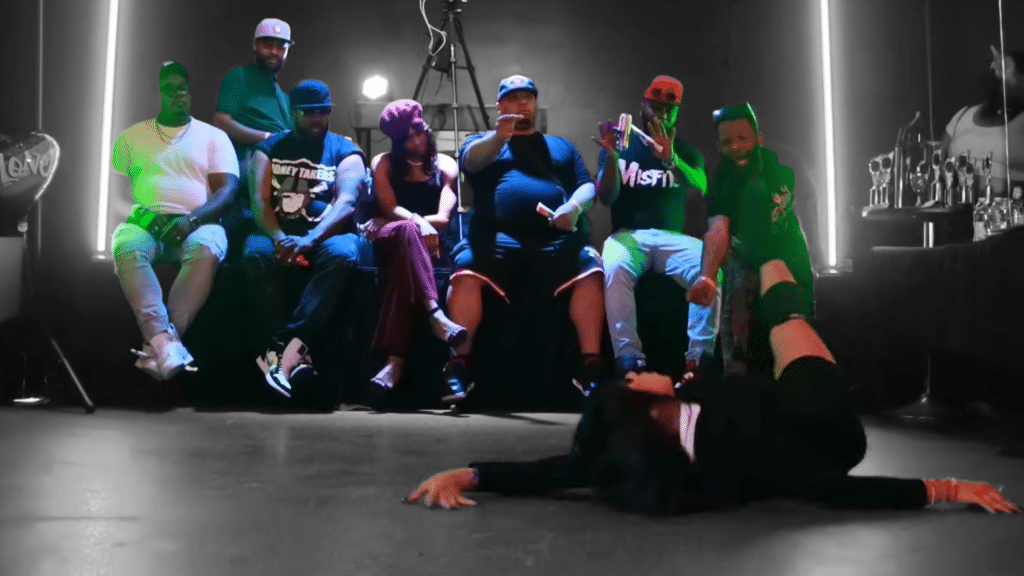
In Cincinnati, Nautii is splitting his free time between bodybuilding in the gym and planning the Merry C*ntmas Kiki Ball. At 22, he’s made a name for himself as a “Butch Queen Vogue Fem” and “Sex Siren” in both the mainstream ballroom – the Paris is Burning of it all – and kiki ballroom – a stage set for the younger teens and 20somethings, the next generation of queer and trans folk.
After discovering ballroom clips on social media, “I wanted to be able to experience it,” he says. He began walking after finding a ball on Facebook, where most of the ballroom community lives. It’s ironic, given how progressive and culture-shifting the scene is, for most of the community and its organization to congregate on the older social network, but we must remember ballroom legends and icons can be well into their 50s and 60s. Alas, many of the even older folks who built the foundation of ballroom have been lost to the AIDS crisis, incarceration, or death.
Nautii says his experiences in ballroom have given him community and perspective. “When I look back on myself as a teen, I don’t think Nautii would know he could be such a presence,” he says. “This is what I always [dreamed] of doing, but … I was too scared.”
The confidence he’s gained shows when he walks into a ball and walks 007, which for ballroom, means you don’t have a house or the representation on a judges panel. In spite of this, he’s managed to snag several wins and even a nomination for Midwest’s Catboy Sex Siren. He says it best: “When I step on the floor, I feel seen by many … Ballroom has [molded] me into someone that loves uncomfortably new environments.”
However, Nautii also notices a glaring concern in the ballroom scene – the reinforcement of heteronormative dynamics and standards and how that impacts nonbinary or gender-nonconforming individuals. Often in ballrooms, categories are split based on masculine or feminine gender expression, which leaves those who exist in the androgynous out in the cold.
“GNC [categories] are not respected,” he says. Yet, “this scene was founded off not being accepted in society and creating a space to call their own… These categories are needed for the acceptance of our community.”
Nautii hopes to remedy this with his inaugural kiki ball this December, where he’ll have more categories for GNC individuals.
He credits his relationships with trans elders as the backbone of his ballroom experience. “When I’m having conversations with trans individuals, I feel like a newborn baby taking in their knowledge about [their] life experience … and how they became so beautiful.” 🔥
Know an LGBTQ+ Ohio story we should cover? TELL US!
Submit a story!
Author

Related Articles
The Trans Handy Ma’am is taking her tools on tour, promoting new book with stop in Ohio
Mercury Stardust’s home maintenance content helps LGBTQ+ people live with dignity. Now she’s taking her book on the road.
Six AIDS Memorial Quilt panels arrive in Dayton for ‘Wall Power’ exhibit
The panels are a powerful addition to the Art Institute’s ‘Spectacular Quilts’ show
How the lack of LGBTQ+ storytelling in rural Ohio inspired a rising queer influencer
Gav Galvan amplifies queer history to help those like him who grew up without it.
