
Meet the Florida nonprofit sending hundreds of transgender Ohioans gender-affirming supply kits
The Queer Trans Project has sent more than 500 trans Ohioans custom gender-affirming supply kits worth a total of nearly $30,000
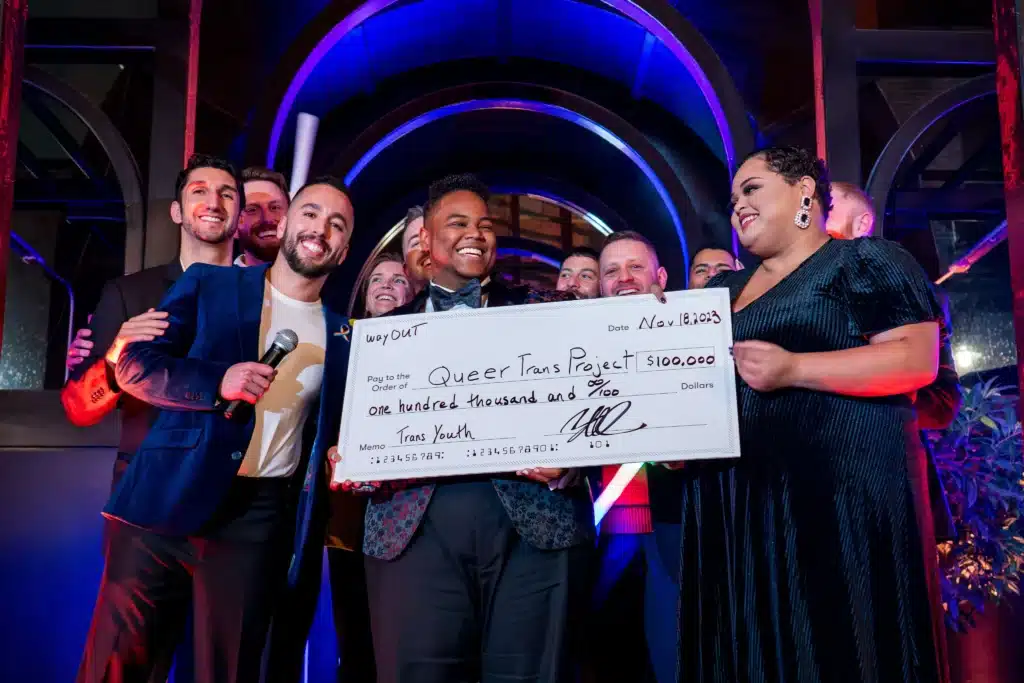
When Cielo Sunsarae and Alexis Williams launched The Queer Trans Project in 2021, other LGBTQ+ people looking for help and resources often thought the Florida-based nonprofit was fake.
The group provides gender-affirming supply kits and travel assistance to transgender and non-binary people across the country – including more than 500 Ohioans in the last year alone.
“Trans people thought we were a scam and that we were going to take the information and harm them,” Williams said. “It was a huge barrier to reaching the world.”
Williams and Sunsarae have bridged that gap by appearing as themselves on social media, explaining The Queer Trans Project and allowing themselves to be visible as an LGBTQ+ couple.
Over the last five years, Williams said inquiries have exploded.
In 2026, Ohioans visited The Queer Trans Project’s website more than 20,000 times and received more than 580 customized gender-affirming “Build-a-Queer” kits worth a total of nearly $30,000 in supplies and materials.
But Williams said that fear still lingers – especially among LGBTQ+ Ohioans, who are facing restricted access to gender-affirming medical care and threats to their medical privacy across the state.
“With all institutional shifts and the closing of institutions, there is the lack of gender-affirming care.” Williams said. “We’re getting huge inquiries. We’re getting a lot of pings in Ohio.”
‘They wanted to help other people’
It is more difficult than ever before for transgender Americans to access gender-affirming healthcare – including prescriptions for hormone replacement therapies (HRT).
Williams and Sunsarae founded The Queer Trans Project to help fill that gap with fewer barriers by offering services at no cost, with no age restriction and no geographic requirement.
To date, the nonprofit has distributed more than $1 million worth of gender-affirming resources to trans and non-binary people living in all 50 states.
But in 2021, Sunsarae was in the midst of his own struggle with gender dysphoria.
“They just had so many questions. They were experiencing so much dysphoria and depression,” Williams said. “They came to me and said they wanted to help other people. In the midst of all their dysphoria, they wanted to help other people.”
That year, the couple used a $500 grant to found The Queer Trans Project.
How it works
The Queer Trans Project restocks four times per year, offering gender-affirming supply kits via a quarterly lottery system.
“Our biggest goal is to be readily available all the time, but right now we have launches.” Williams said.
Their largest restock to-date is scheduled for November 17 at 8 p.m. and will include more than 5,000 gender-affirming items.
“You go to the website and you pick out what you need. There are videos and a guide so you can choose ahead of time,” she said. “We even have early access for people of color and people who are disabled and need extra time on the website to navigate.”
The group’s signature “Build-a-Queer” kits are fully customizable, with no standard “masculine” or “feminine” option.
Williams said the most requested items include chest binders, packing underwear, GenderGrip, silicone packers and health bundles. Often, people mix and match items to meet very specific needs.
“Gender is a spectrum, and what people need is maybe not what’s in a random box packed by someone else,” Williams said. “We really want people to be able to choose exactly what they need and what suits them best.”
Williams said the group’s most recent summer restock sold out in under eight minutes, totaling $106,250 in gender-affirming items. She said the overwhelming response highlights the growing need for accessible gender-affirming resources across the country.
“I think there’s a lot of layers to why bringing these things to someone’s door is extremely important,” Williams said. “Not everyone has a LGBT center – and not every LGBT center is trans-inclusive. That’s a big issue we’re having, where the T is being separated from LGB and we don’t have comprehensive care.”

With support for transgender civil rights at an all-time low – and access to safe and legal gender-affirming medical waning – Williams said it’s particularly important that trans and non-binary people have access to items that can help alleviate the symptoms of ongoing gender dysphoria while they arrange other care.
When trans and non-binary people have access to basic gender-affirming items like chest binders and other supportive undergarments, their mental health and overall quality of life can drastically improve.
“People aren’t seeing the importance of social transition, like using binders and packers,” Williams said. “It’s more than just tangible free items. It’s things that really could save lives and really benefit people’s mental health and give them another reason to stay another day.”
Travel assistance
It is more difficult for transgender Americans to safely and legally access gender-affirming healthcare now than in any time in recent history.
To help mitigate that change in access, The Queer Trans Project also partners with Elevated Access, a network of volunteer pilots who provide free flights to trans and non-binary people seeking healthcare outside of the states or counties where they live.
In June, Cleveland Clinic pledged to offer $2 million of “detransition” healthcare at to cost to patients as part of a settlement with the U.S. Department of Justice over alleged large-scale medical insurance billing fraud.
The massive, international hospital system also agreed not to offer most types of gender-affirming healthcare for transgender youth for the next two decades.
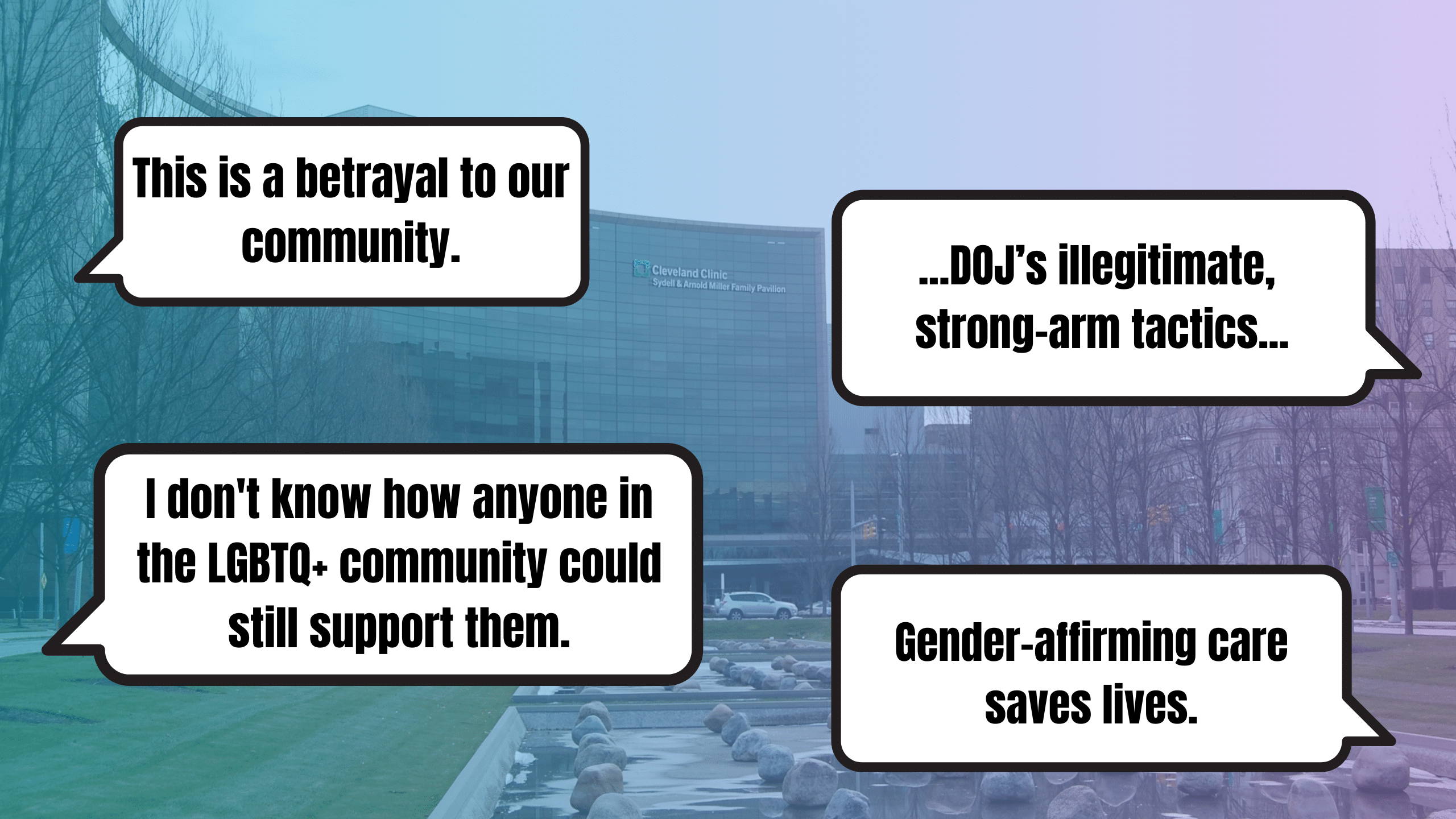
Williams said the nonprofit received an uptick in requests for travel assistance from Ohioans in the wake of the settlement.
“In Ohio, whenever these things happen, we’re seeing an influx of flight requests for trans people to go get the care that they need,” Williams said. “We don’t know anyone in Ohio. We don’t have board members in Ohio. We’re not actively marketing in Ohio, so this is all organic. People are just finding us through social media or through Reddit threads.”
According to data from the Movement Advancement Project (MAP), roughly half of all transgender youth now live in states that either ban or heavily restrict gender-affirming medical care for trans youth.
Ohio lawmakers passed a blanket ban on gender-affirming medical care for transgender youth in 2024 – including most types of talk and family therapies. Across the state, gender-affirming clinics have stopped treating transgender youth.
For transgender adults, a slew of anti-transgender policies have also made gender-affirming medical care increasingly difficult to access.
Nine states currently ban Medicaid from covering most gender-affirming healthcare for adults – which disproportionately affects low-income trans and non-binary people with few other resources.
Ohio Rep. Josh Williams (R-Sylvania Twp) proposed House Bill (HB) 838 earlier this year, which would make Ohio the tenth state to ban Medicaid from covering gender-affirming healthcare if passed.
In Florida, where Williams and Sunsarae still live, elected officials passed a bill limiting transgender patients’ access to care via nurse practitioners and telehealth options – requiring physicians to oversee their care in person.
A Data for Progress poll released in March 2024 indicates up to 24% of the 1.6 million trans adults living in the United States report their healthcare has either been “disrupted or discontinued.”
“It’s to the point now where we’re constantly having to move people around the country to be able to get the care they need because of the politics and the different things happening in different states,” Williams said. “Some people are flying all the way to Portland [Oregon] and back just to get HRT. I think we really aren’t talking enough about it.”
“People are scared,” she added. “They’re not getting the care that they deserve. They’re having to export themselves to go to other states and counties wherever it is safe or may be safe enough just for them to find a clinician or surgeon to assist in their process.”
‘Trans people are superheroes’
When Sunsarae came out to Williams as transgender, the couple were still newly out as lesbians, living in a state with some of the most restrictive anti-LGBTQ+ laws in the country.
“I was so scared,” Williams said. “Cielo was the first trans person I knew that I was able to meet and really be intimate with. Before they transitioned, we were just two lesbians just navigating that post-COVID, which was already intense in the South. Now I’m just scared for them to use the restroom.”
“It’s like you’re instantly walking into a world of uncertainty at the height of anti-trans rhetoric,” she added.
In the midst of that fear, Williams said she has found both purpose and beauty in her work with Sunsarae.
“I feel like trans people are superheroes,” Williams said. “It is really beautiful, what Cielo has done thus far – and it’s beautiful to continue to do it even amidst all of their identity and journey. I’m along for the ride, figuring out myself now, too.”
“To some people, it might seem odd that you would want to help others while you’re suffering, but I think that’s the best part of activism and being in these spheres,” Williams added. “A lot of times we have really brave, selfless people that step up even when they’re going through the worst things.”
As anti-transgender legislation and policy continue to climb and support for transgender civil rights weakens, Williams said The Queer Trans Project is positioned to weather the storm.
“No matter what [lawmakers] pass, we are going to continue to advocate for our community no matter what,” she said. “People are afraid of services like ours stopping. But we’re not stopping. No matter what. 🔥
Ignite Action
- To learn more about The Queer Trans Project, click here.
- To add your email to the notification list for The Queer Trans Project’s Nov. 7 gender-affirming kit lottery, click here.
- To make a donation to The Queer Trans Project, click here.
- To learn more about Elevated Access, click here.
- If you are a young LGBTQ+ person in crisis, please contact the Trevor Project: 866-4-U-Trevor.
- If you are an transgender adult in need of immediate help, contact the National Trans Lifeline: 877-565-8860
Know an LGBTQ+ Ohio story we should cover? TELL US!
Submit a story!
Author

Related Articles

Trans blacksmith forges connections to her body and community in rural Ohio
‘It’s a dying art and a very meaningful and welcoming space, especially to queer folks’
U.S. Senate candidate Greg Levy’s socialist campaign draws LGBTQ+ voters in contentious midterms
‘The only way to really fight for trans equality for LGBTQ+ liberation is to fight for socialism and overturn capitalism for good.’

Who is ‘obsessed with men playing in women’s sports’? JD Vance says Democrats, but Ohio Republicans can’t get enough.
Republicans mentioned transgender-related topics 31 times at recent Ohio campaign events, vs. Democrats’ zero times.
